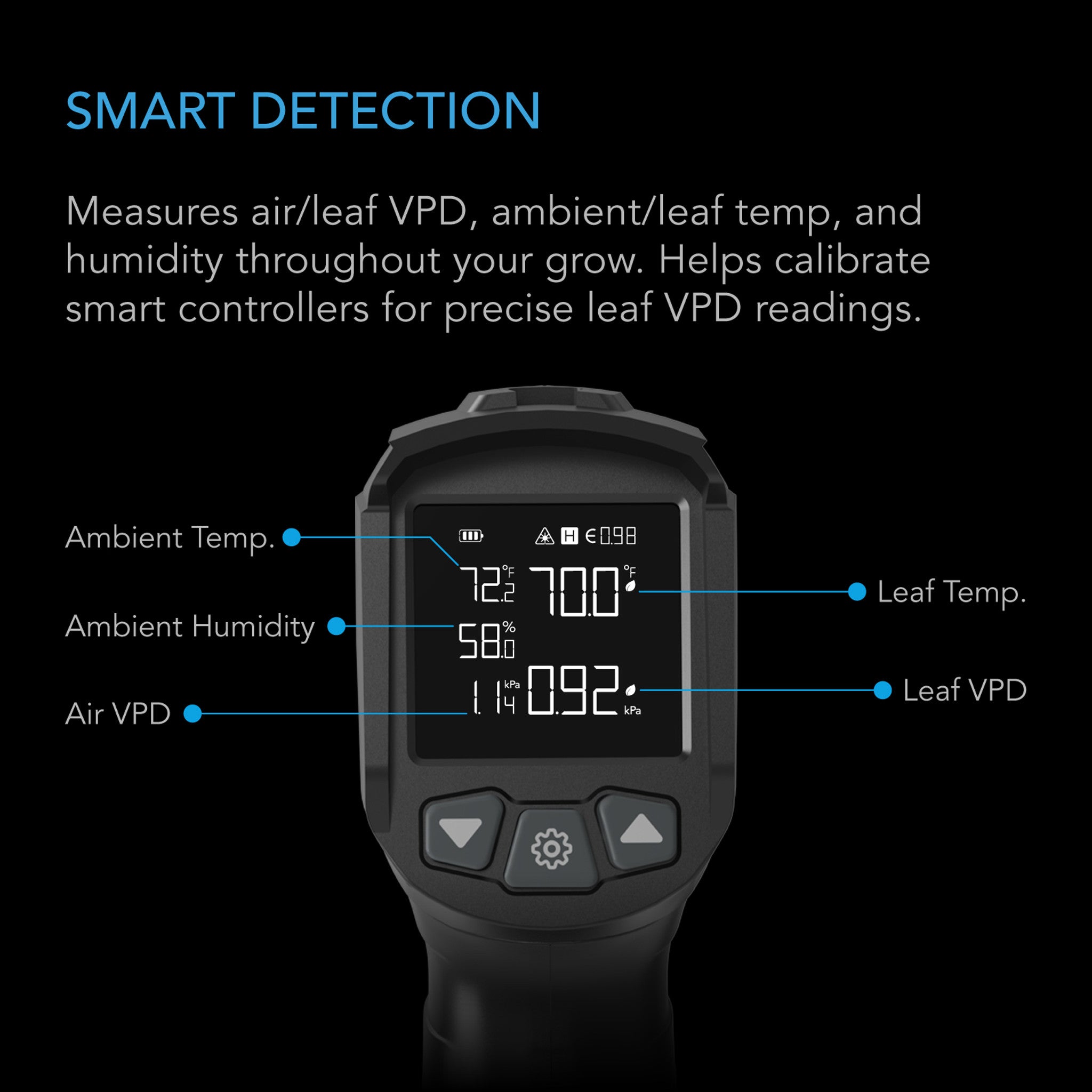
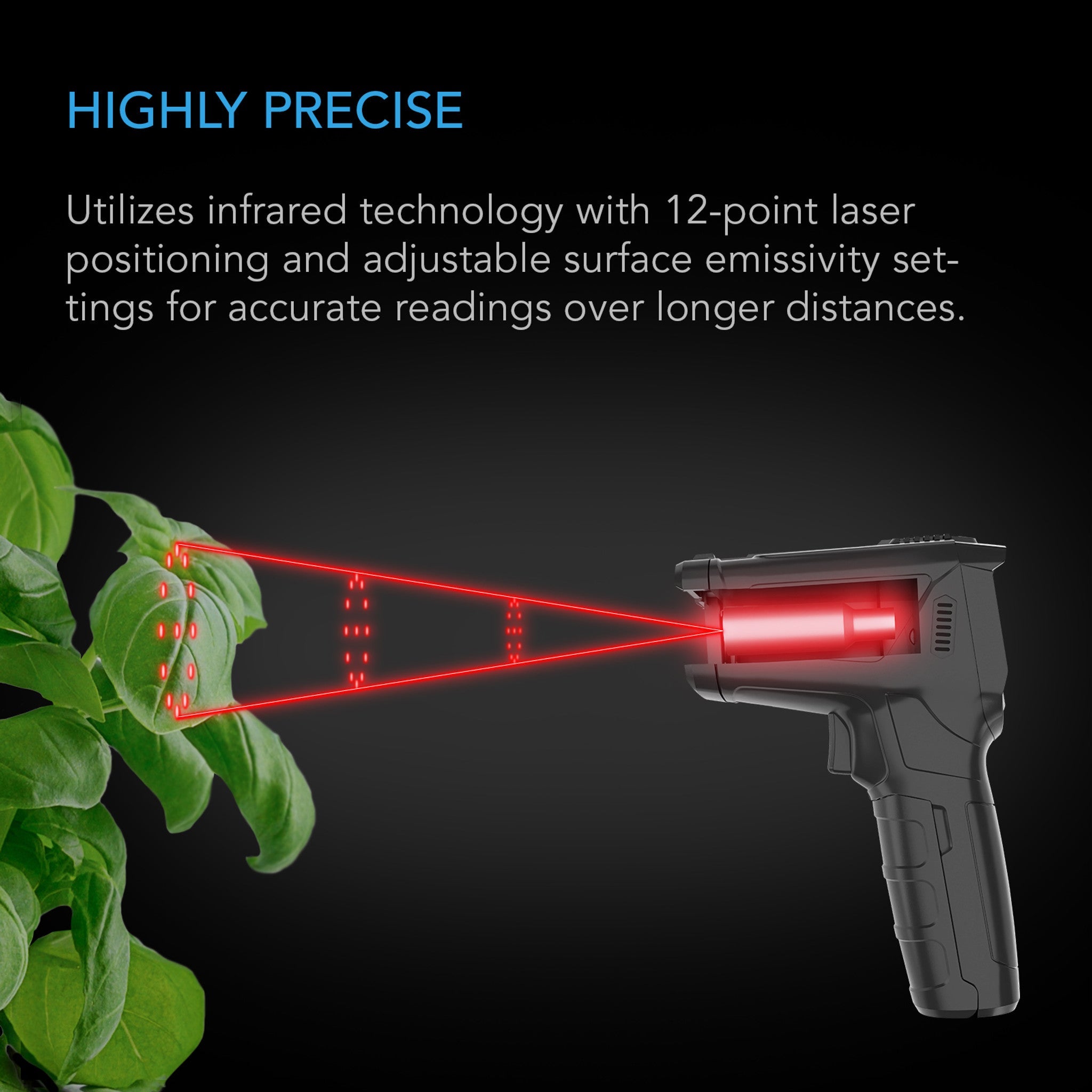
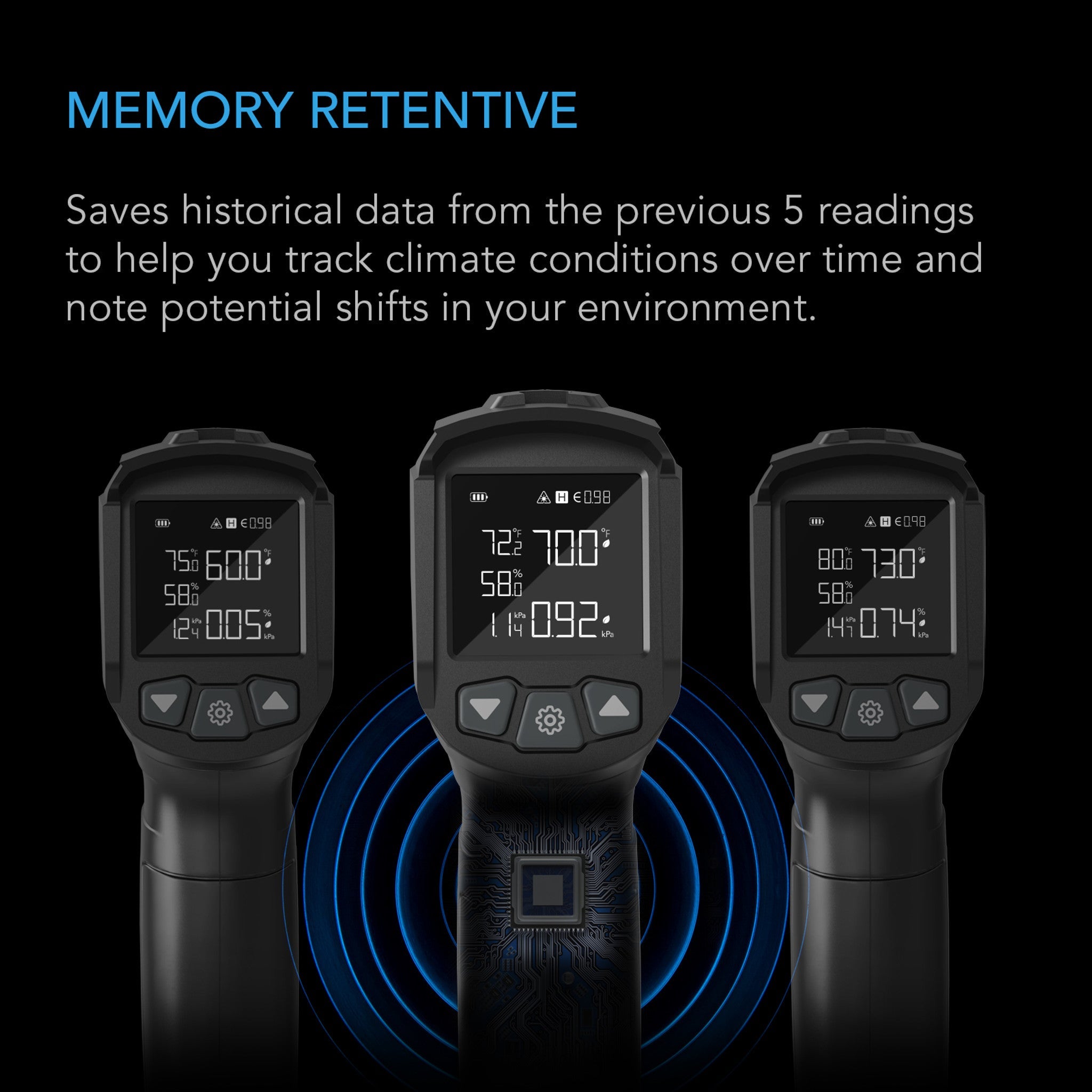
Everything AC Infinity make for reading and controlling a grow space, from a pocket thermo-hygrometer that only watches, up to a controller that holds two independent zones on target and works out the output on its own. The controllers share one port standard, UIS™, and everything here reports into one app, so a controller bought today still runs the fan, humidifier or heater you add in two years. Quick Bloom Lights is the official Australian importer: stocked in Sydney, shipped domestically, warranty handled here.
1 port = 4
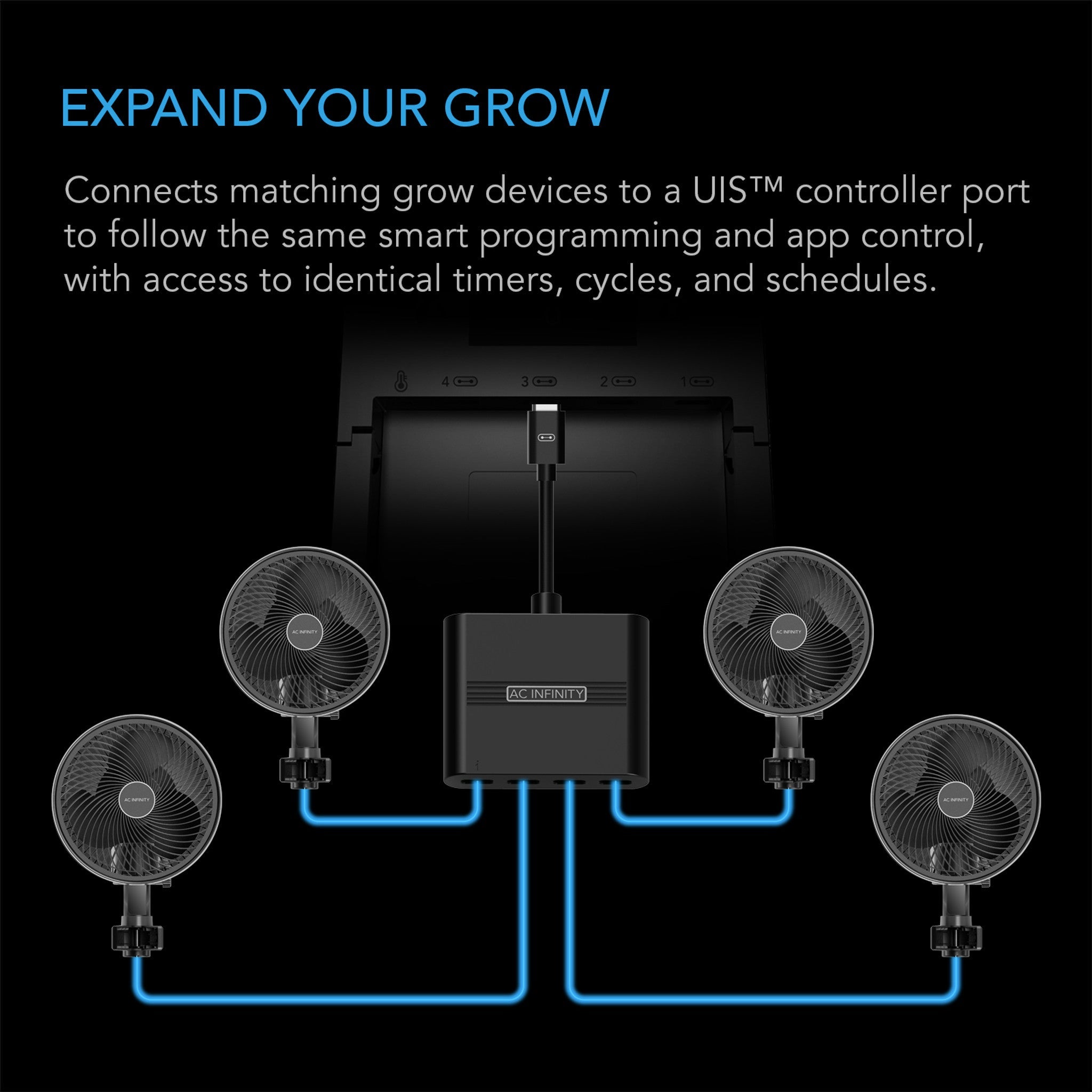
devices, via a splitter hub
VPD
not just temperature and humidity
One app
every device on one system
2-year warranty
genuine AC Infinity, QBL-backed
Choose your level of control
There are three real decisions here, and the price gap between them is smaller than it looks once you account for what each one saves you doing by hand.
Monitor only — Cloudcom
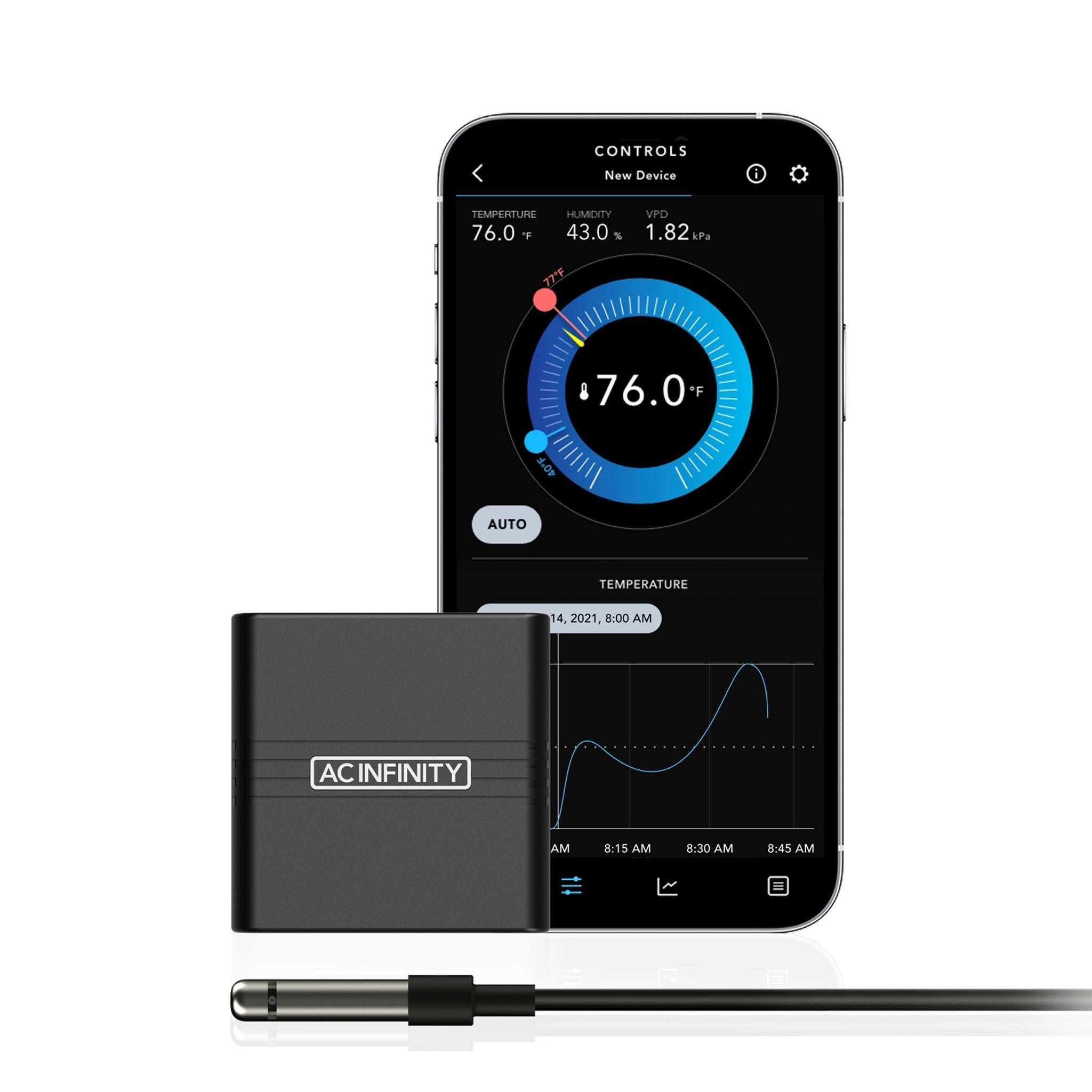
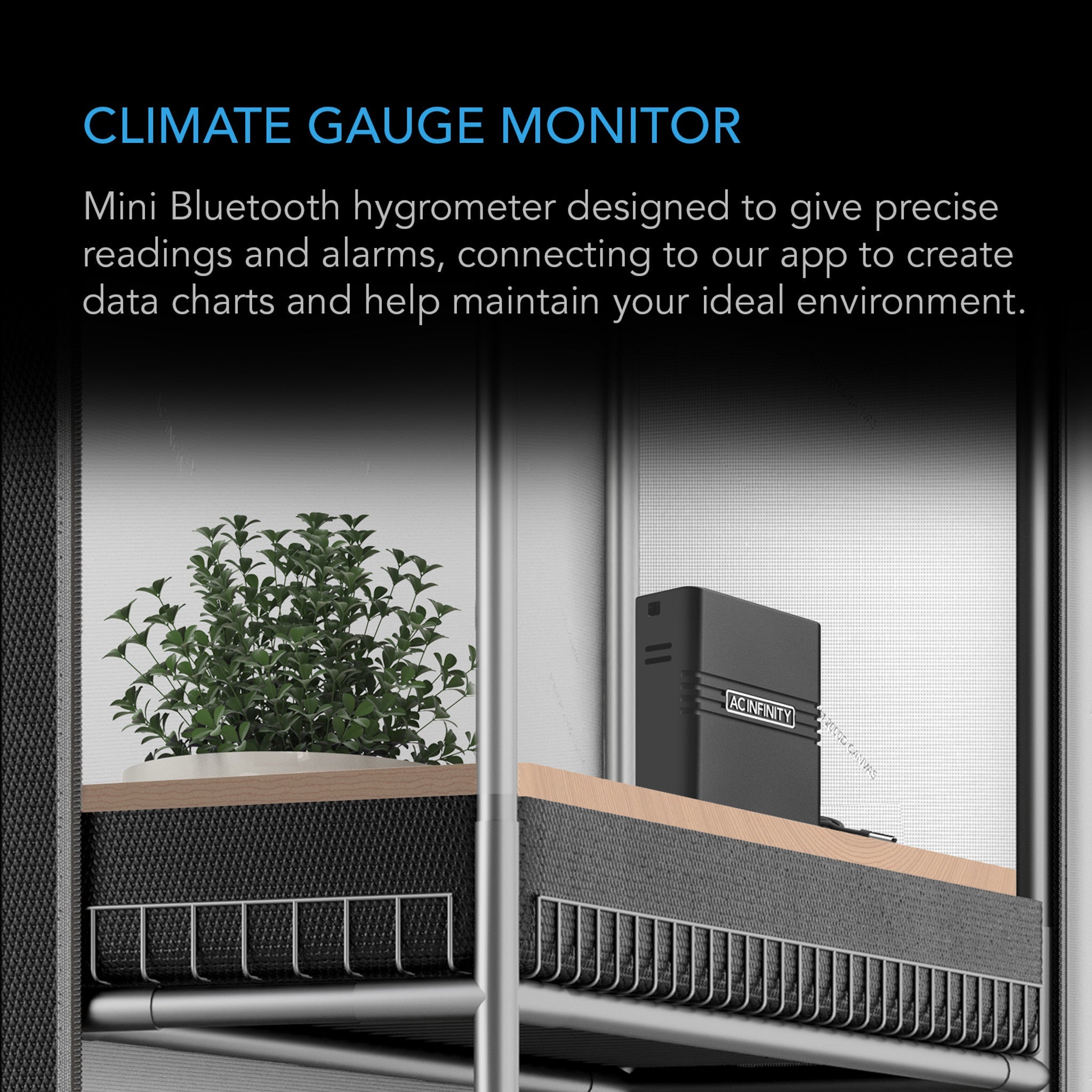
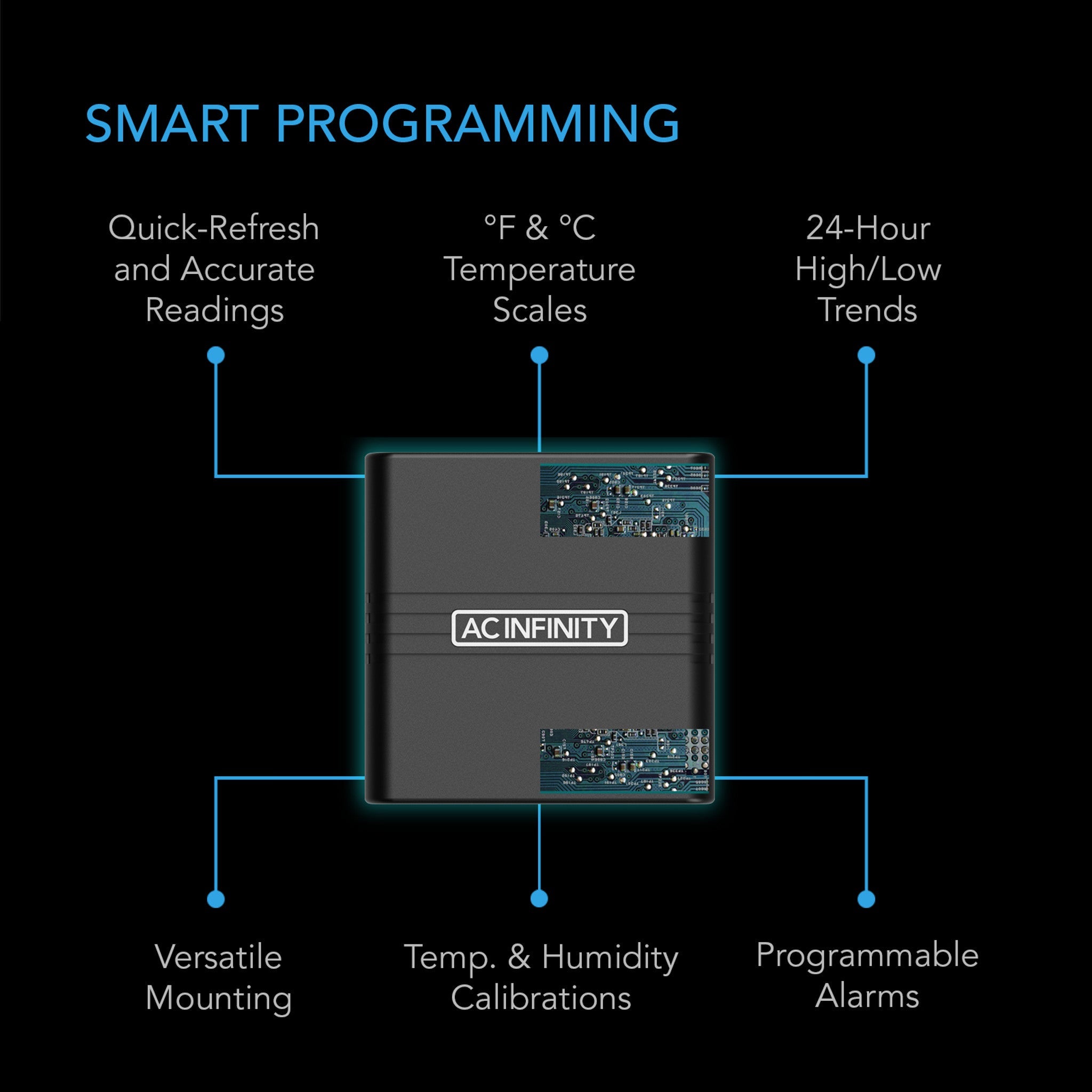
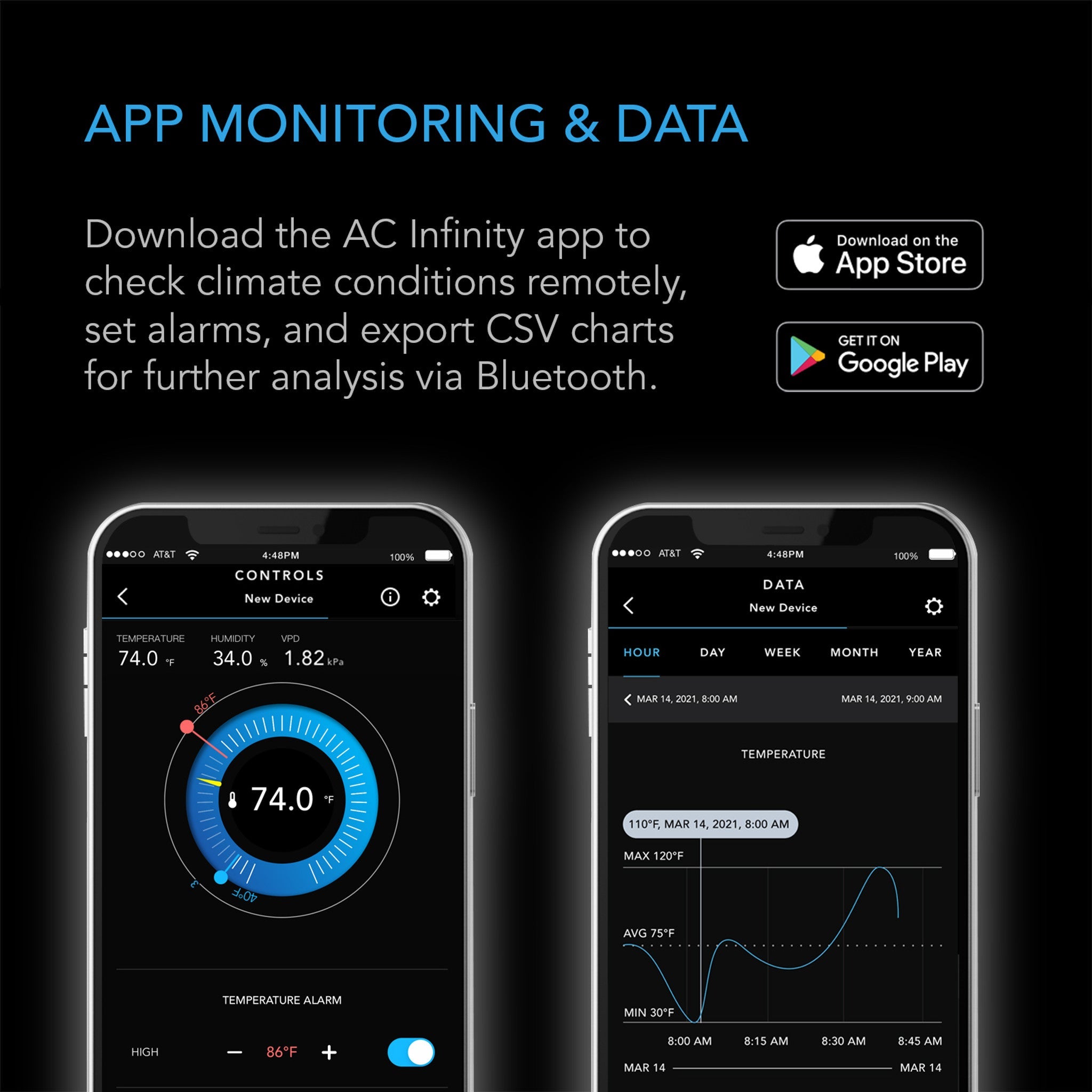
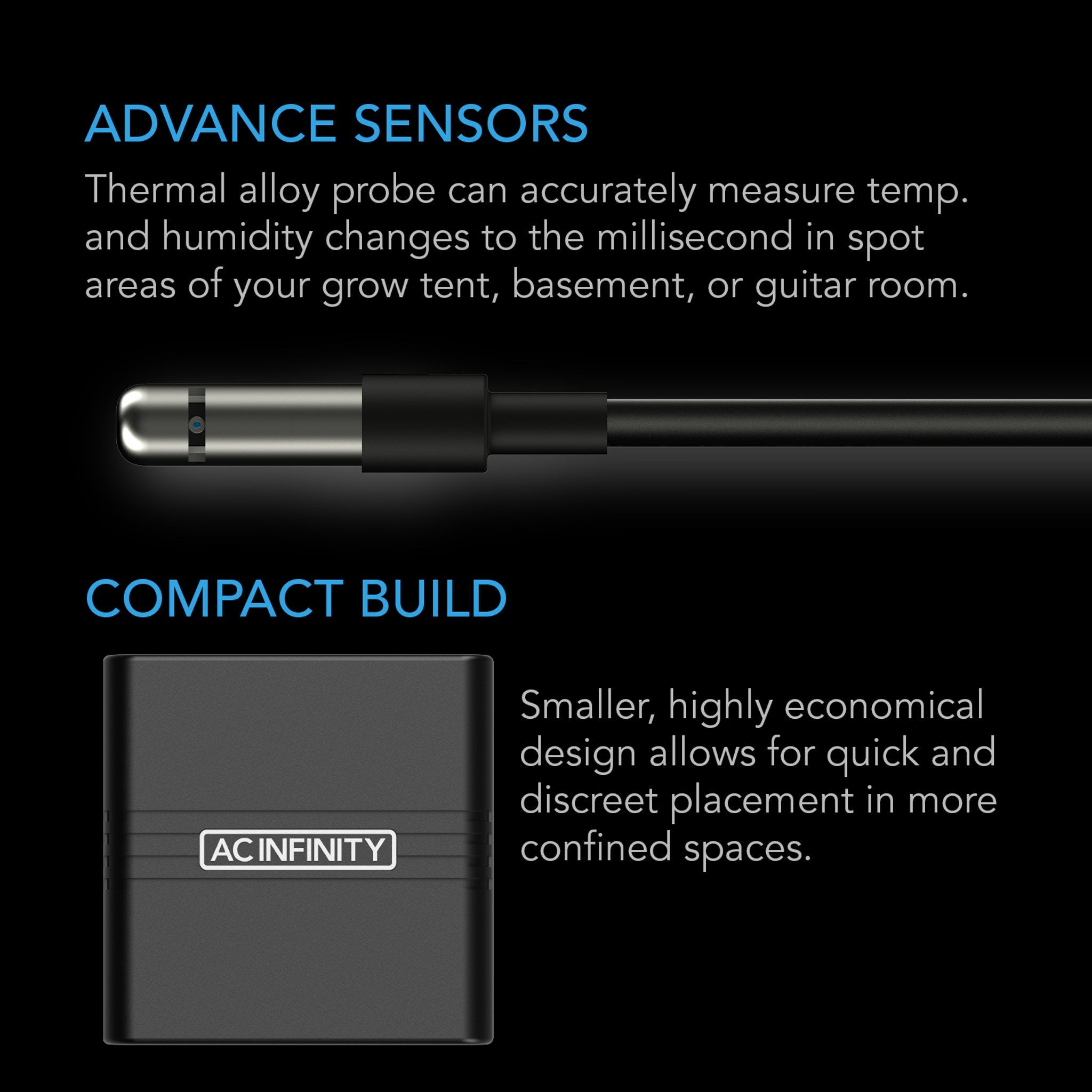
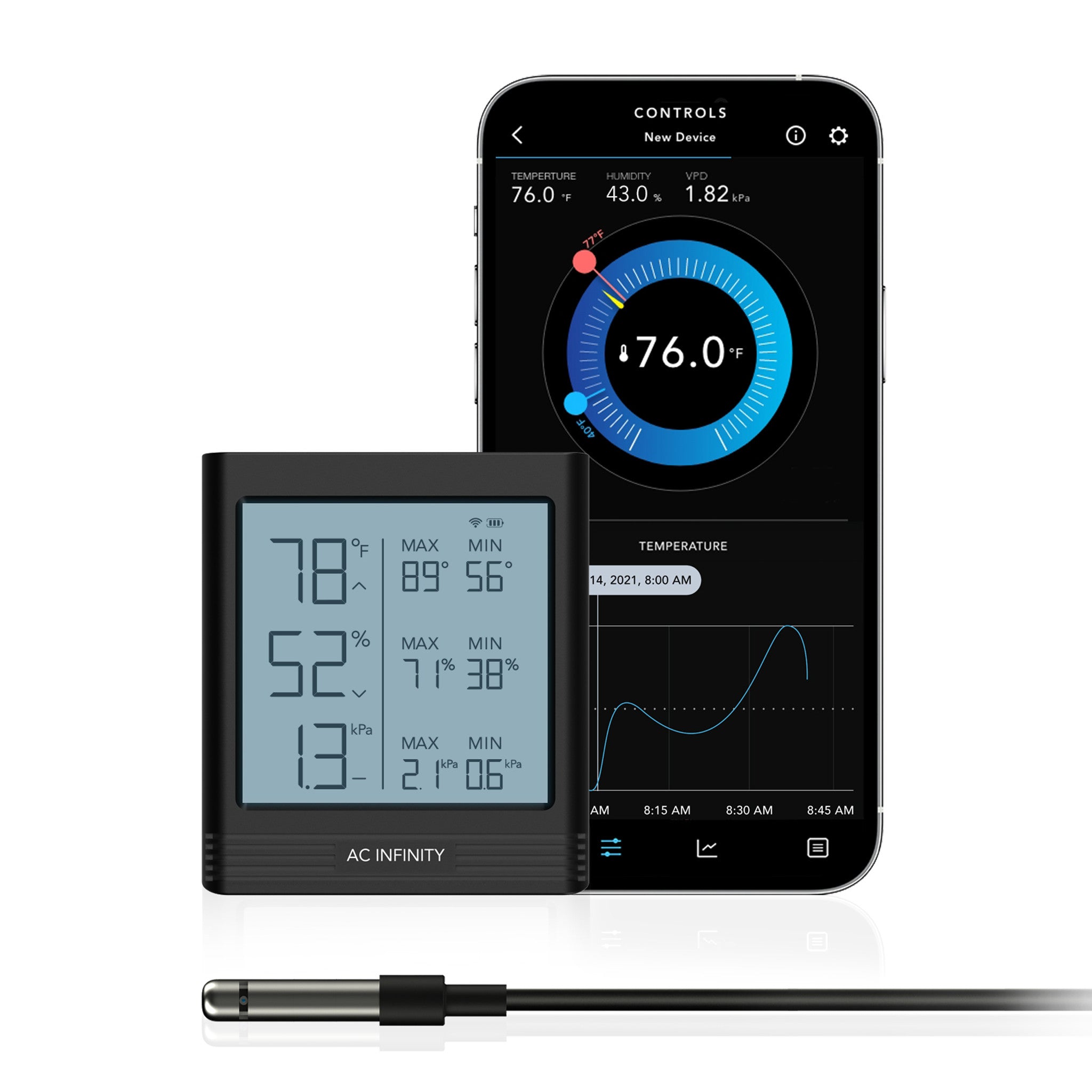
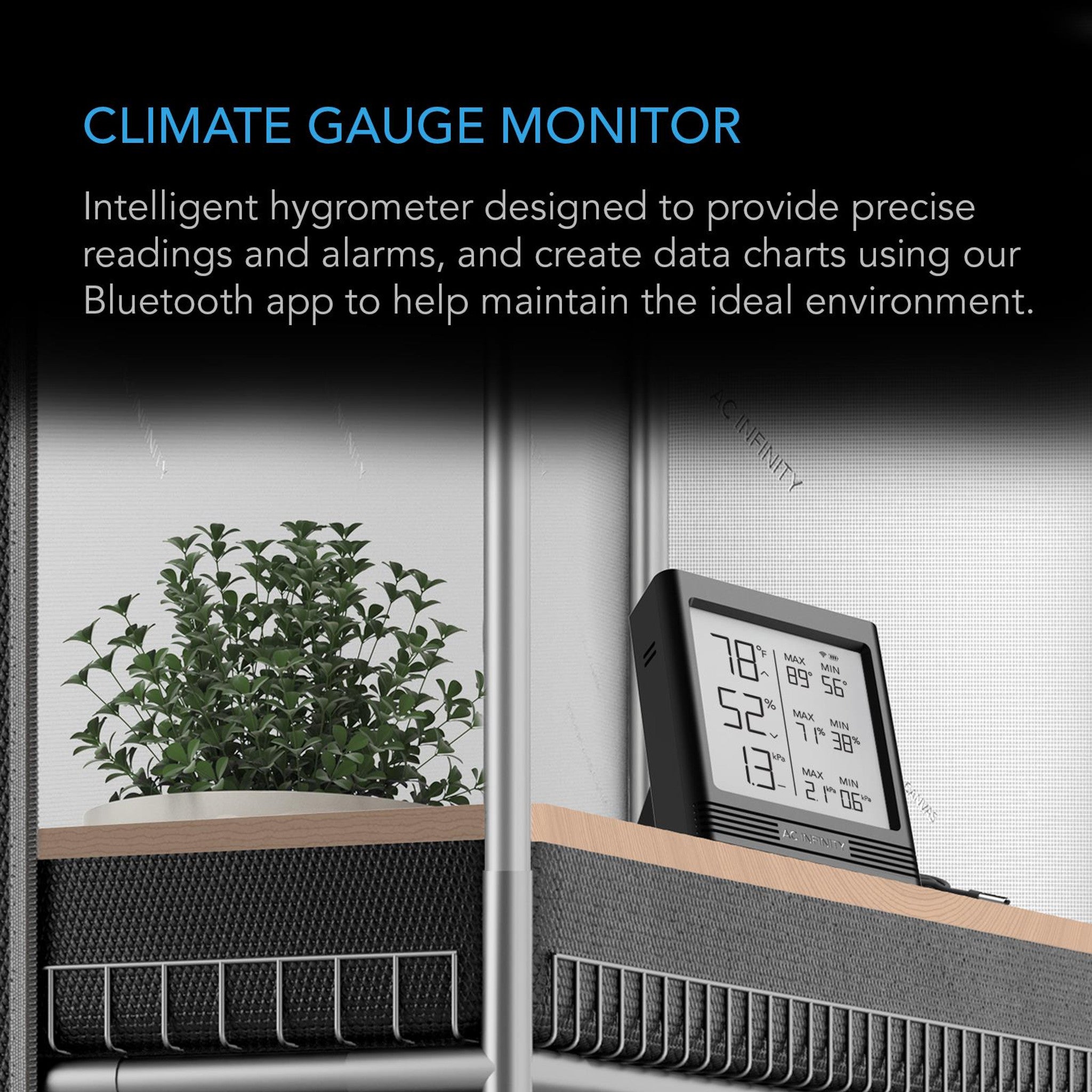
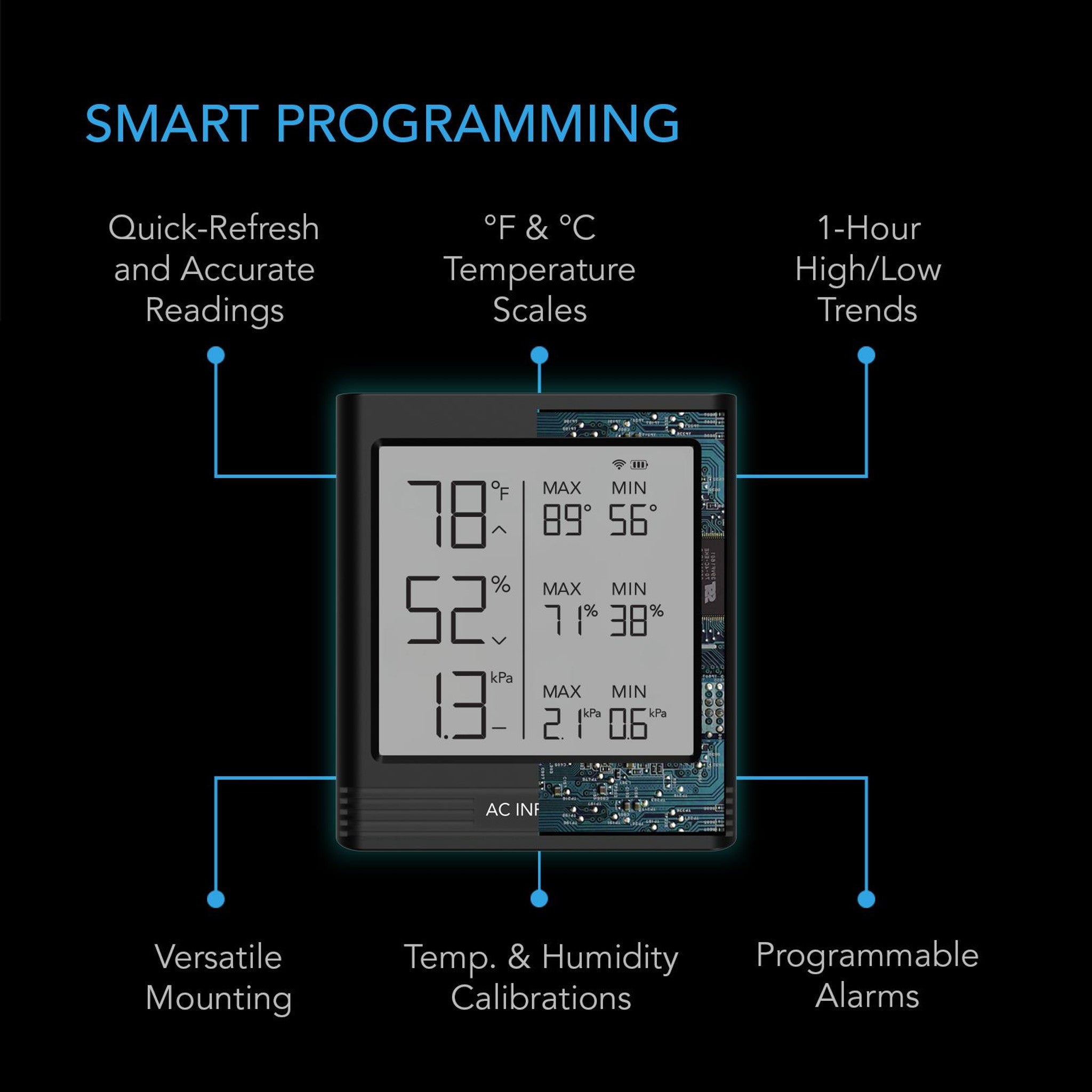
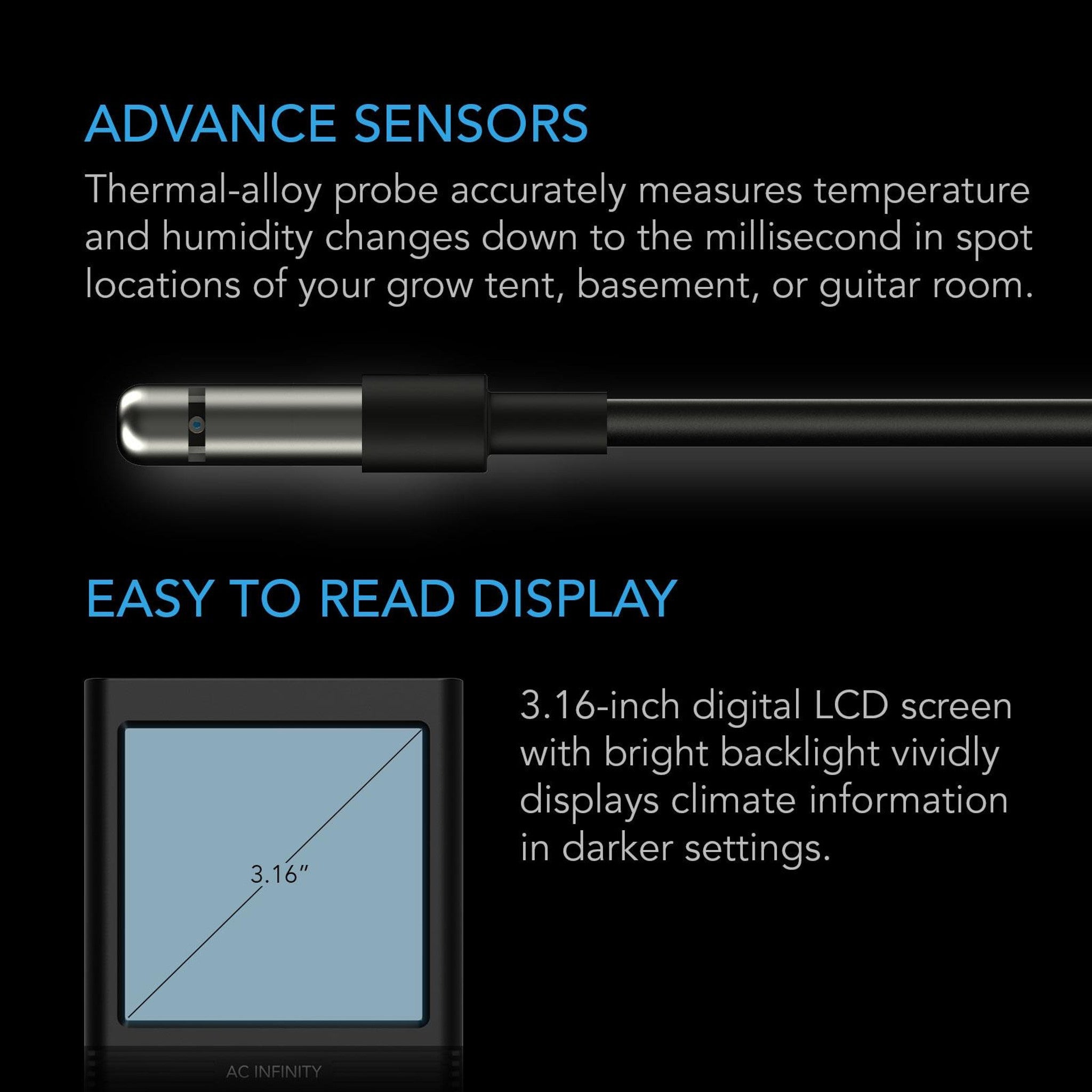
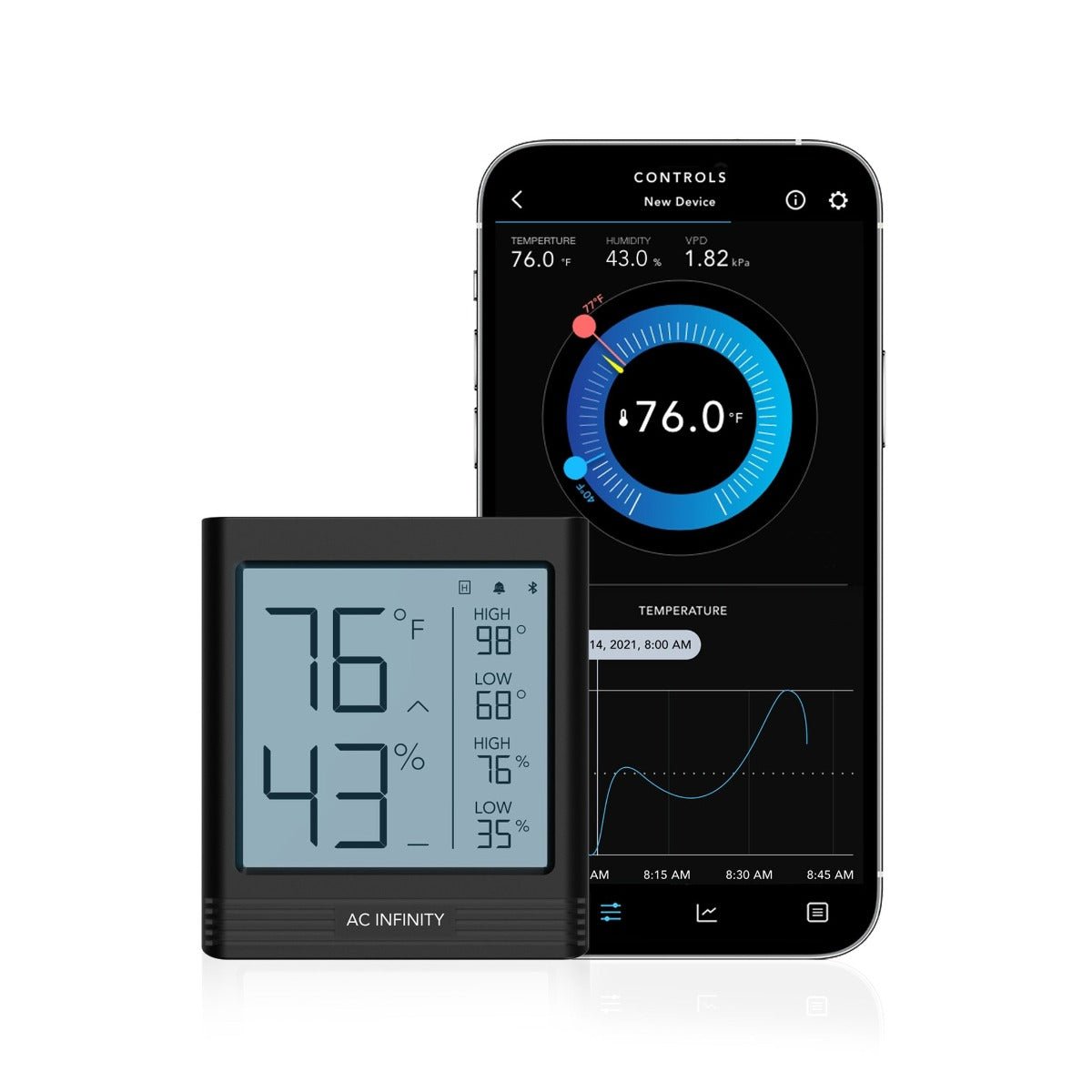
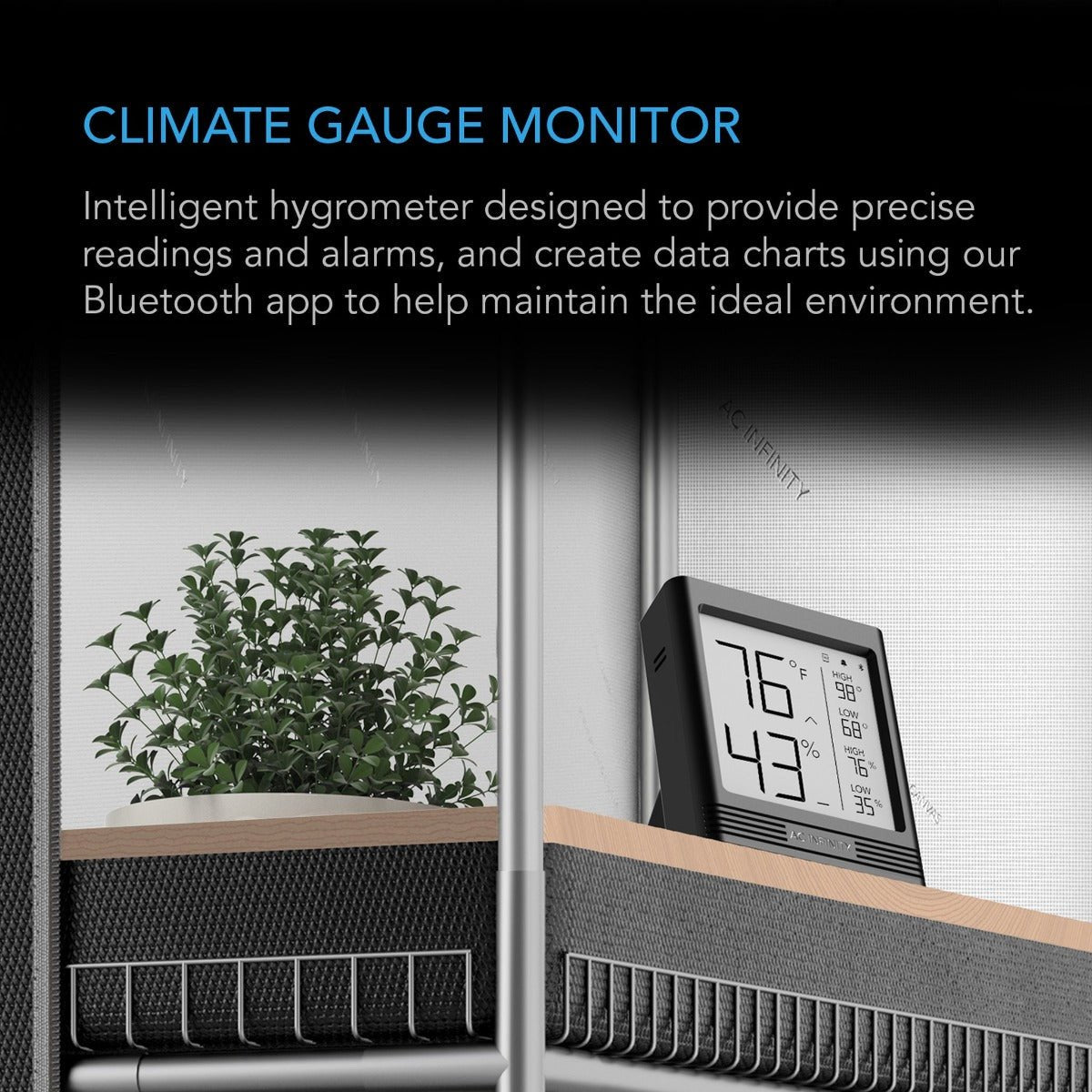
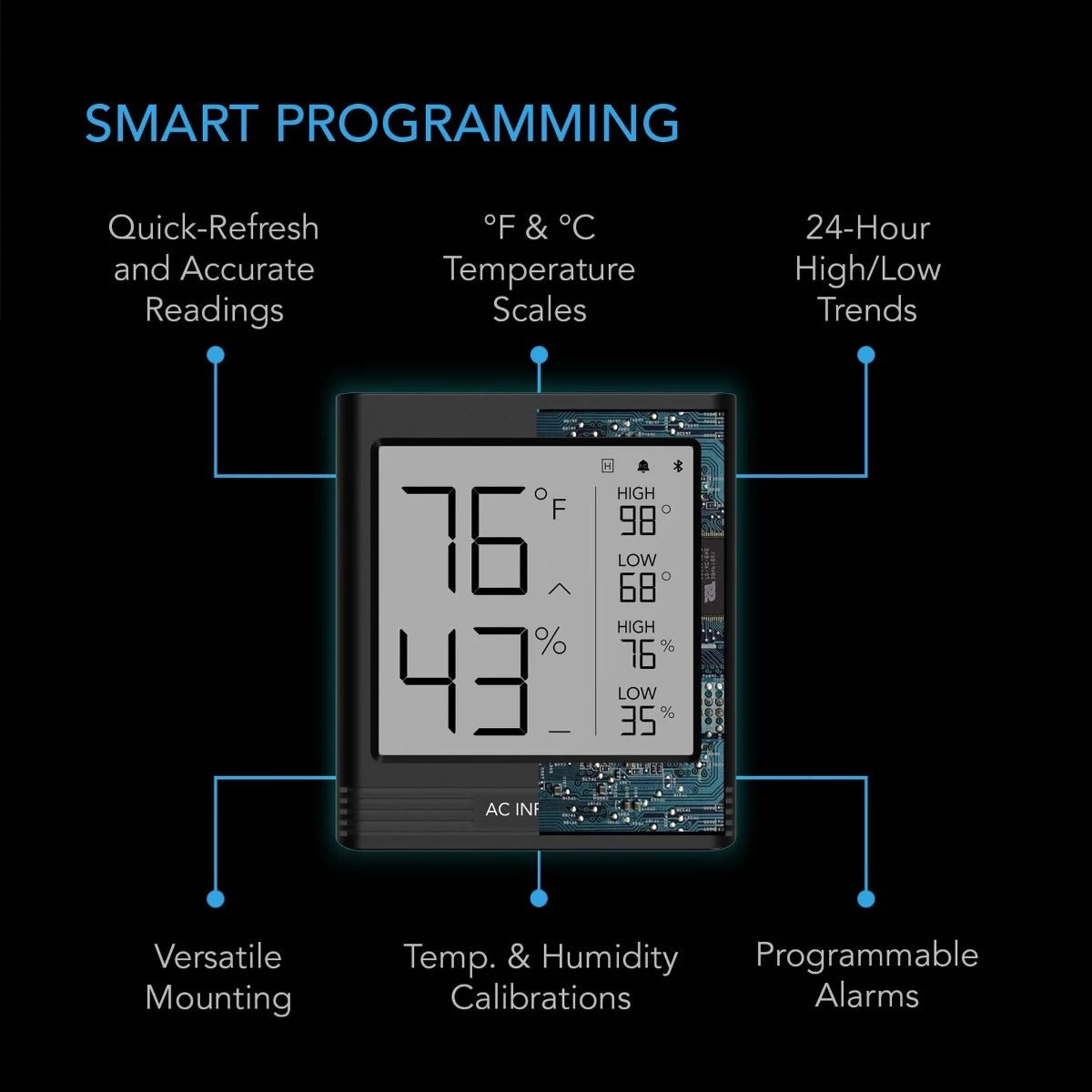
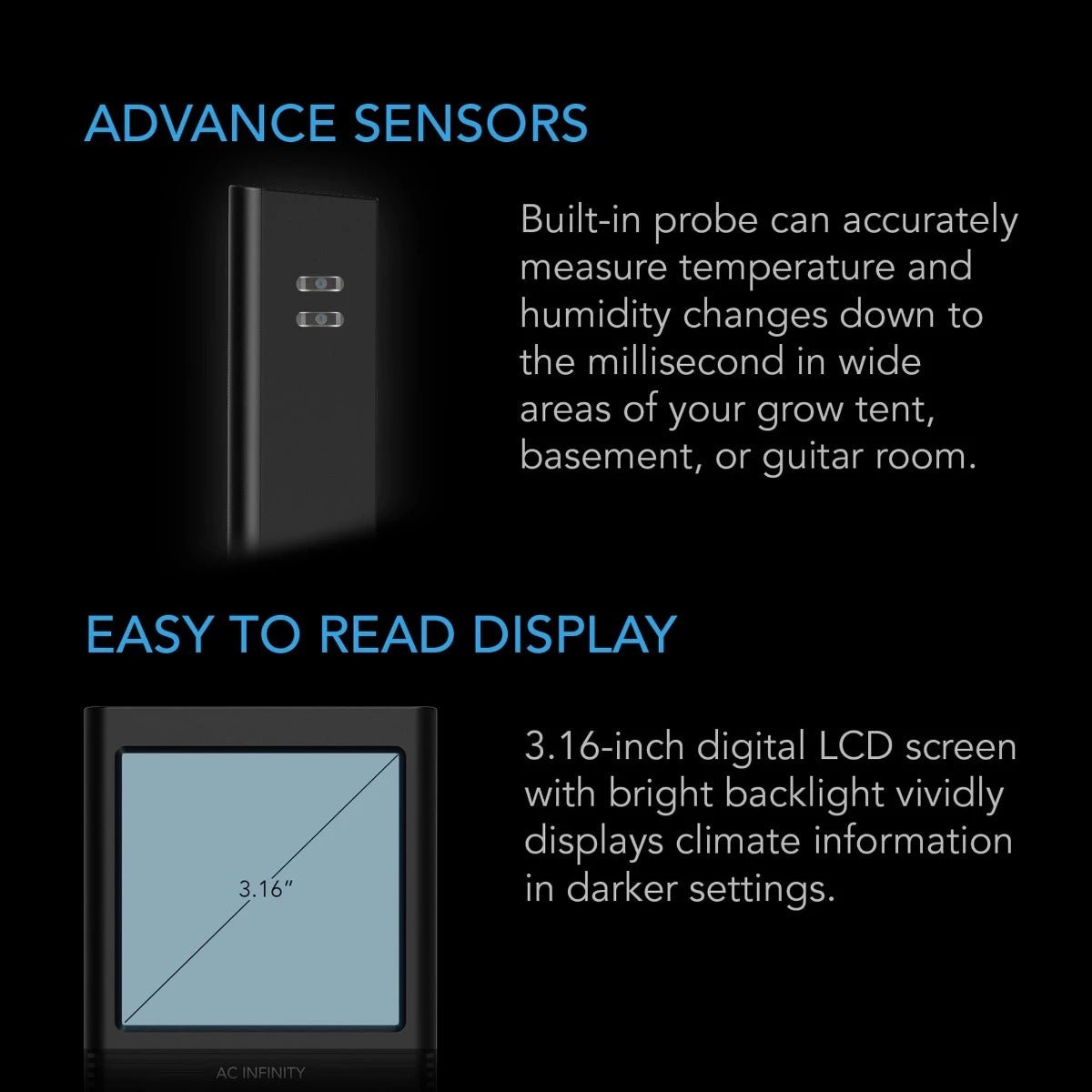
Reads temperature, humidity and VPD, and logs it all to the app over Bluetooth — readings, history and charts live in the app, not just on the display. It controls nothing, and being Bluetooth it is a walk-up-and-check device rather than something you look at from work. Buy one to find out what your space is actually doing before you spend money fixing it, or as a second reading point in a room you already automate.
A1 · B1 · B2
Program it — Controller 69 Pro / Pro+
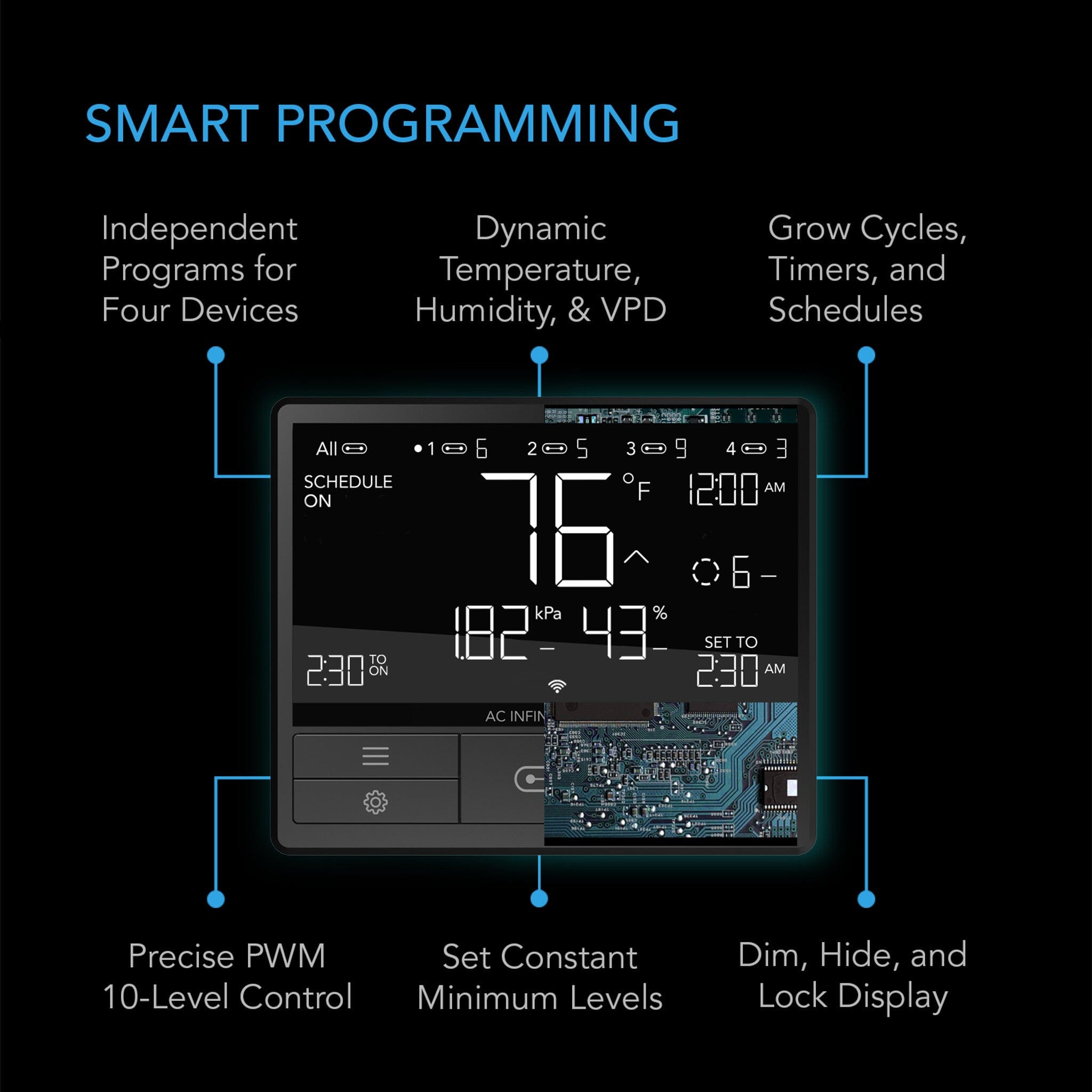
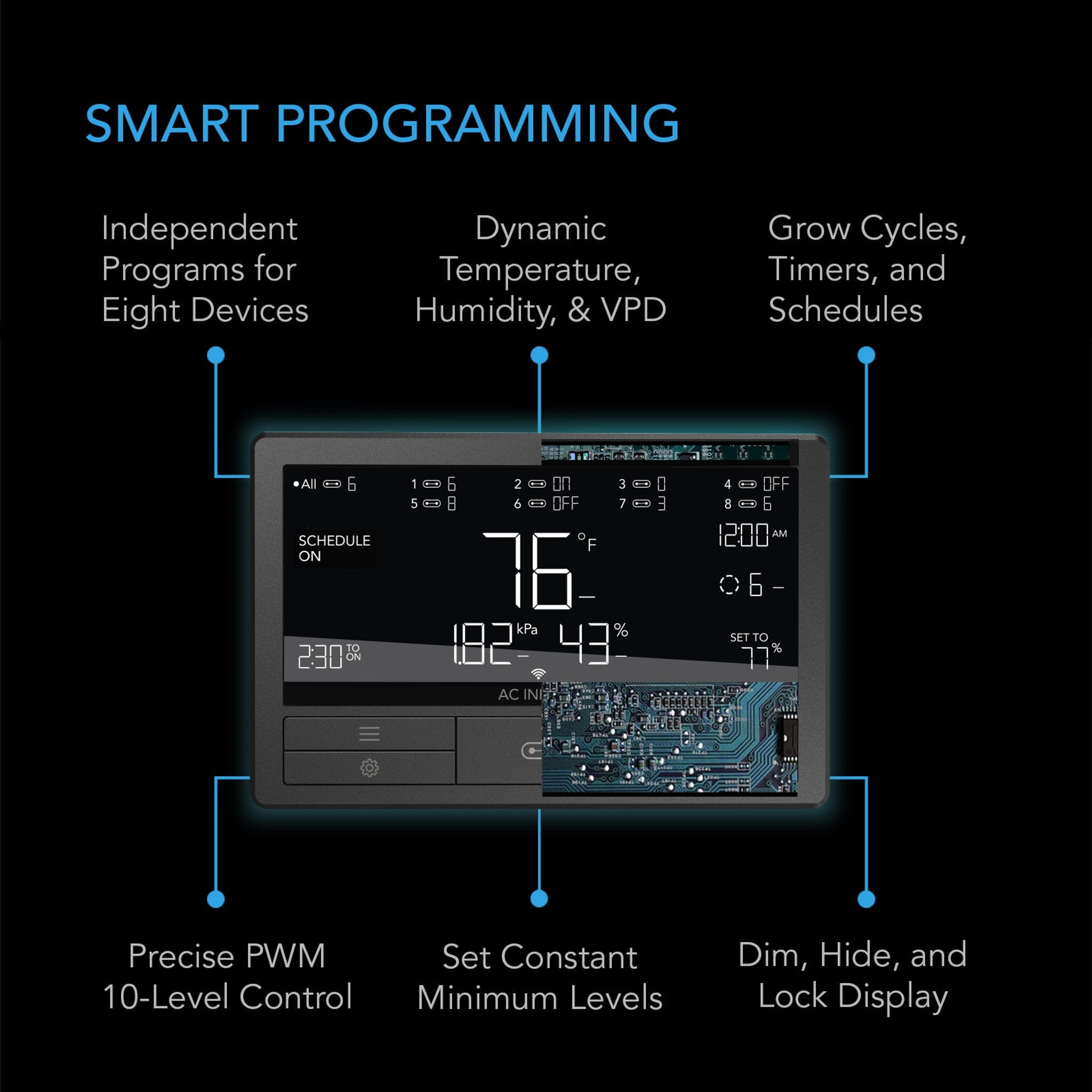
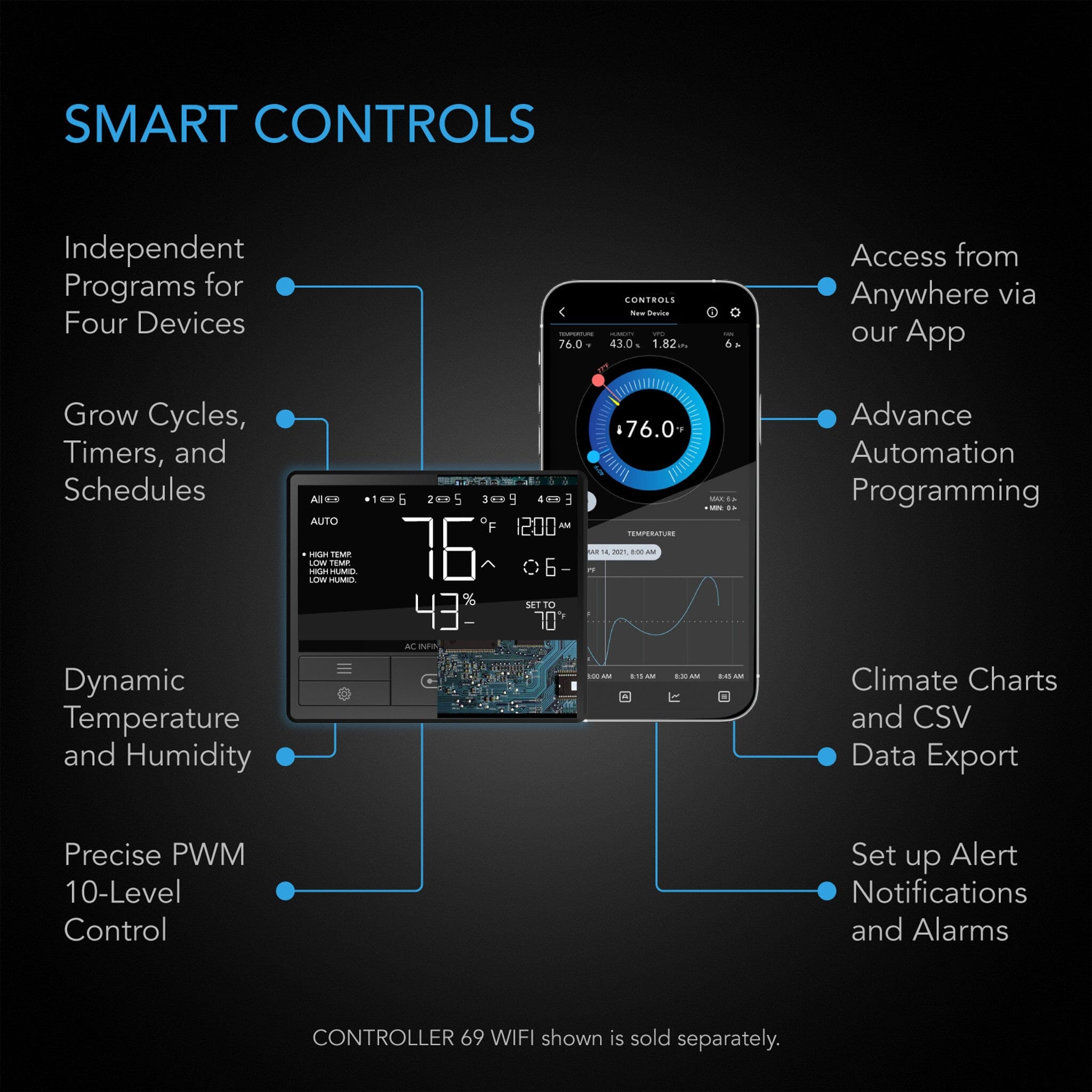
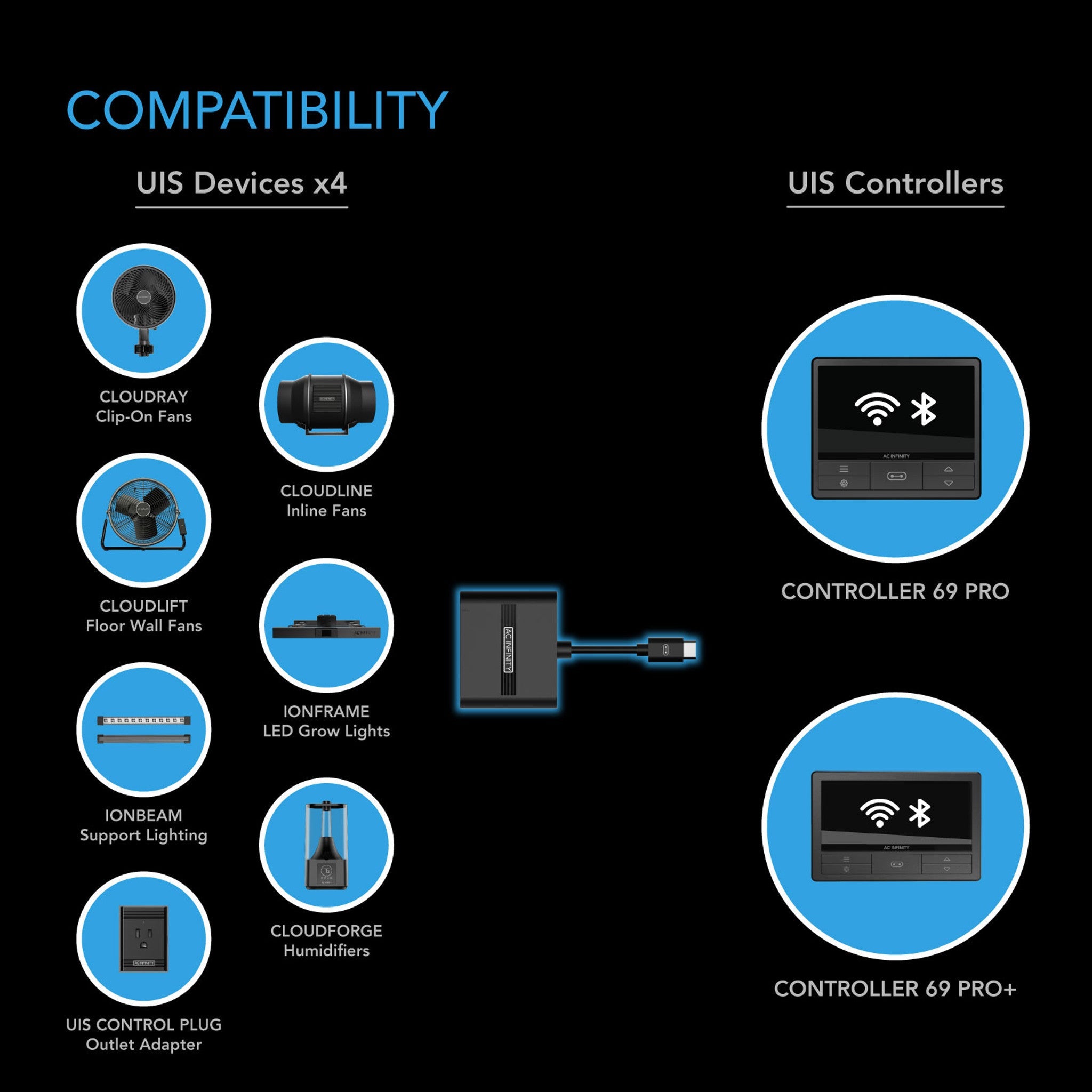
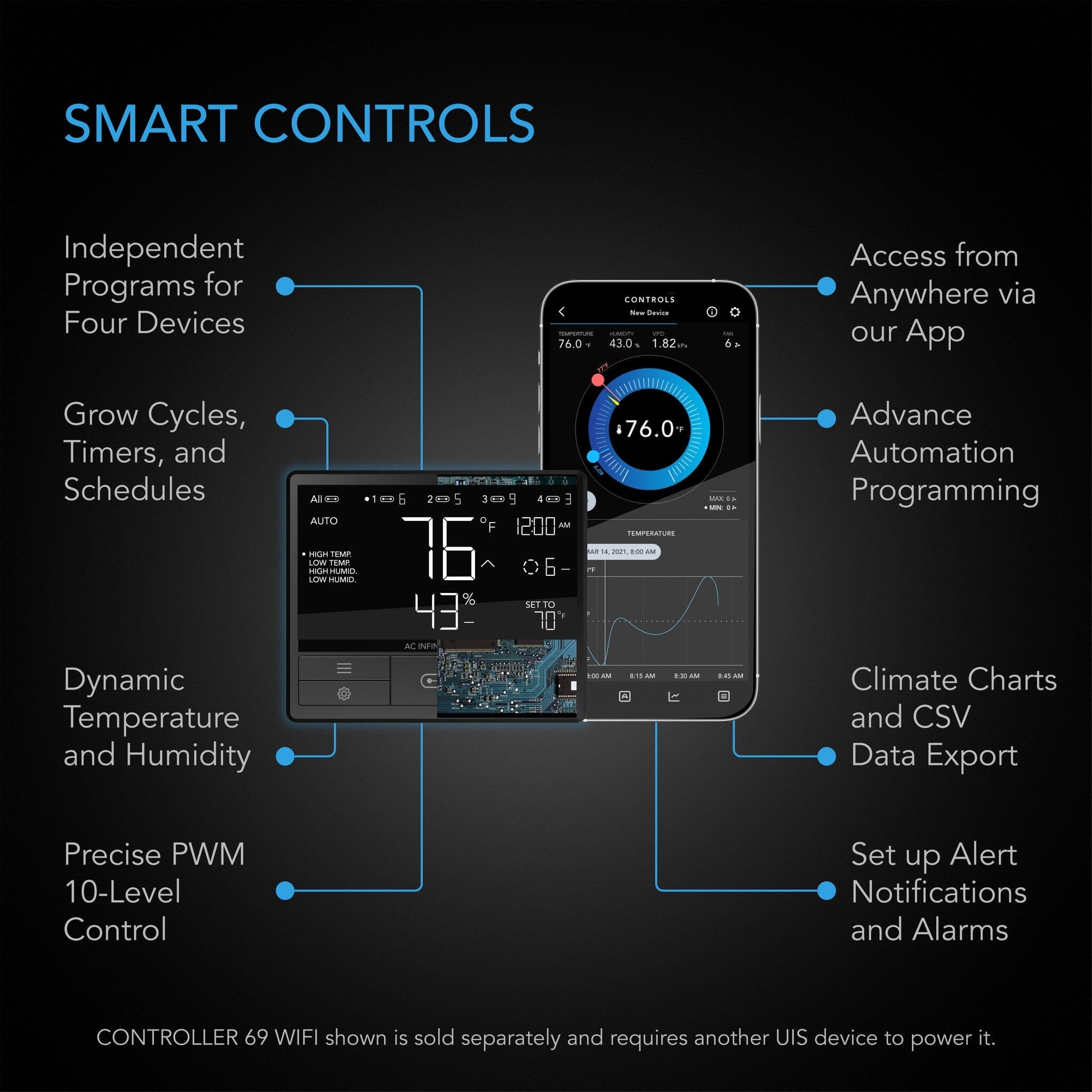
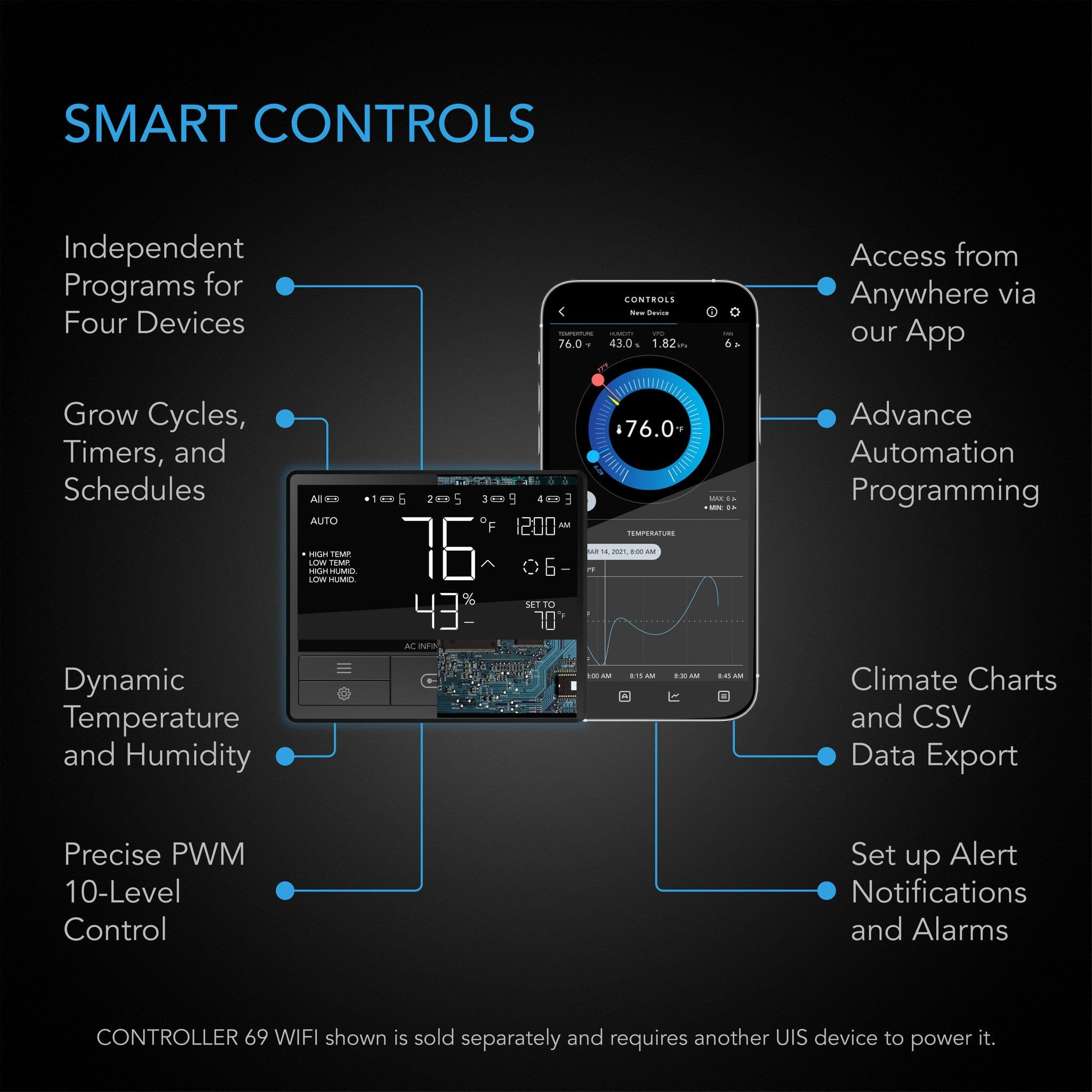
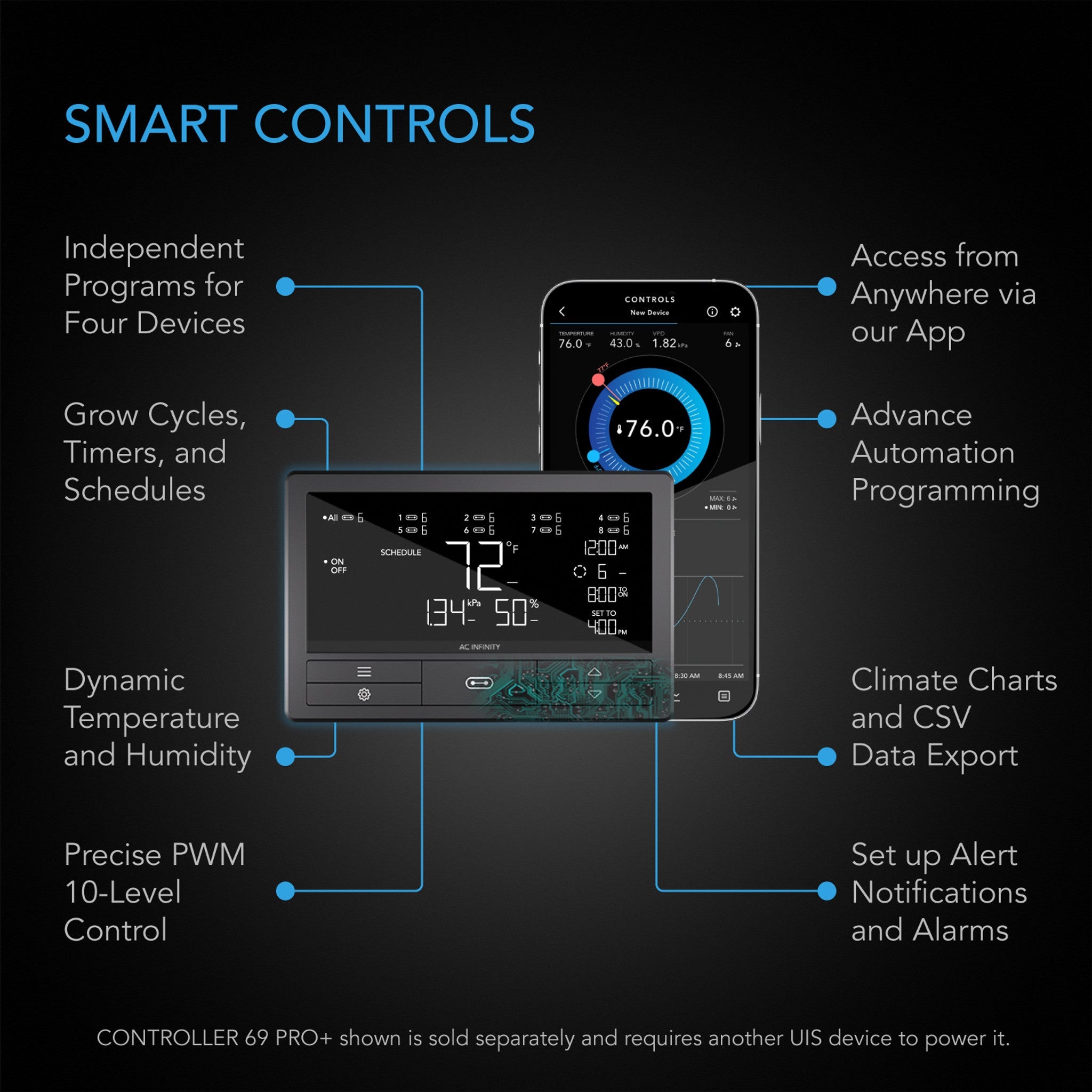
Four independently programmed ports (Pro) or eight (Pro+): temperature, humidity and VPD triggers, dynamic speed, timers, cycles and schedules over WiFi and Bluetooth. A splitter hub puts several devices on one port sharing that port's program, so the port count is not a device limit. Set the rules and it follows them.
69 Pro · 69 Pro+
Let it learn — Controller AI+
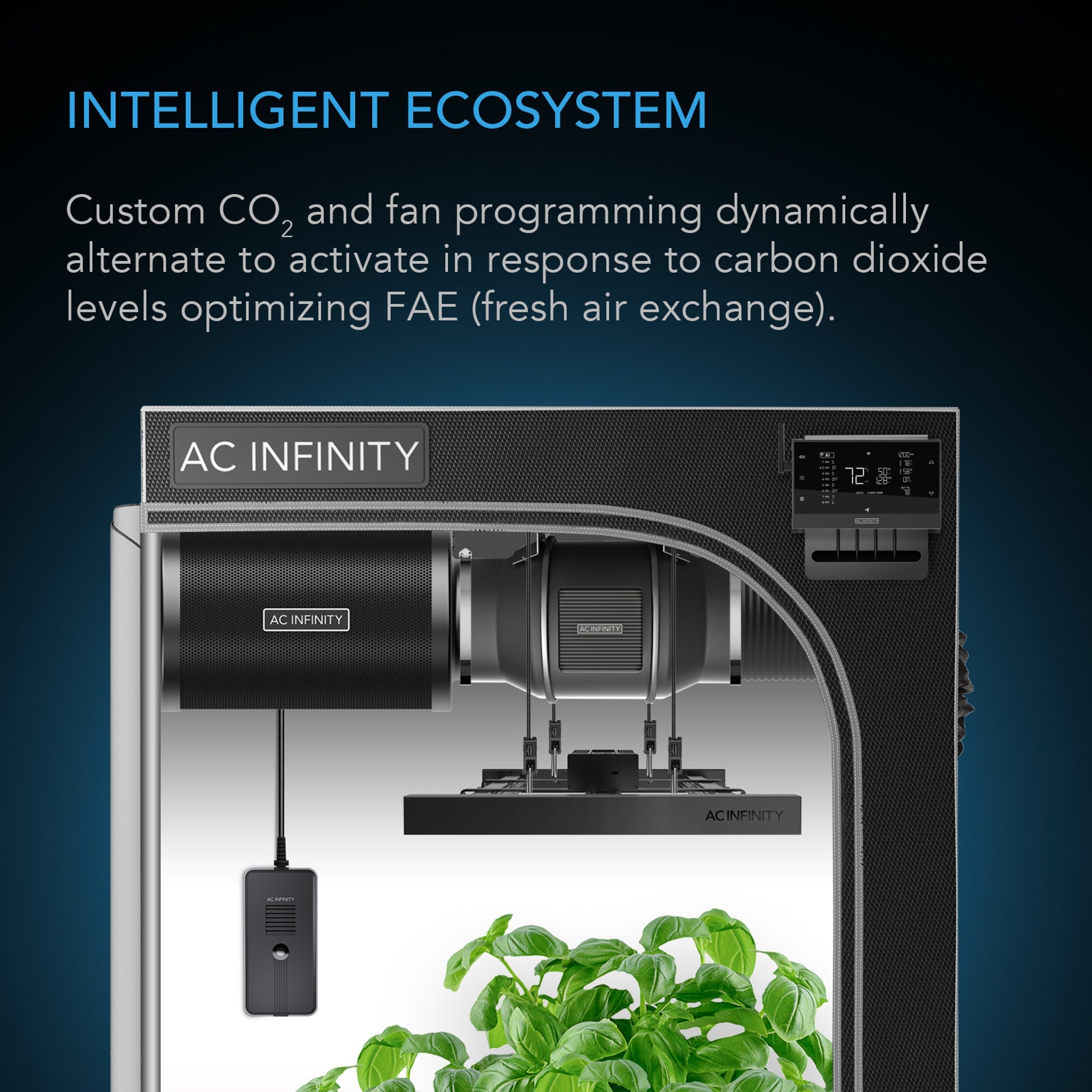
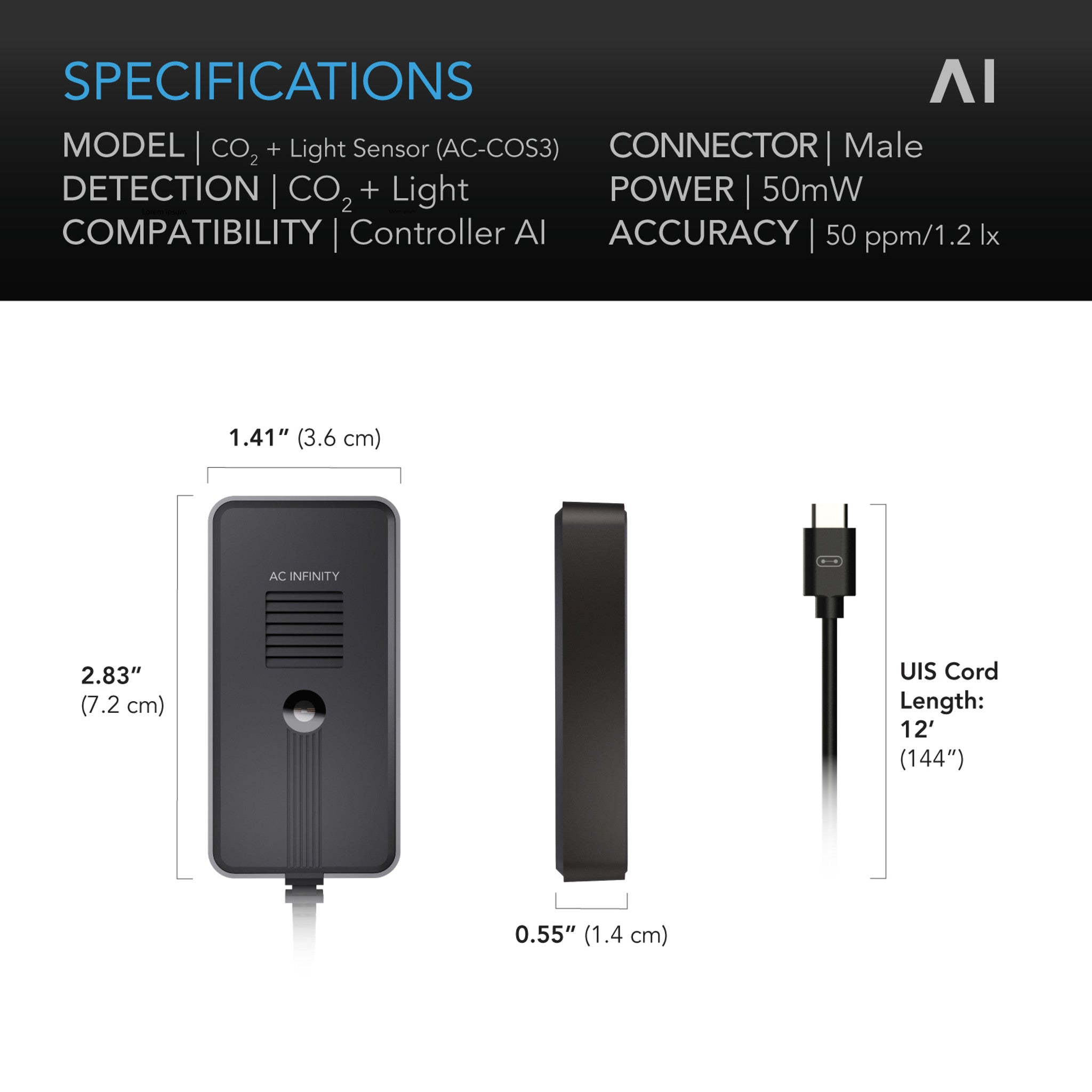
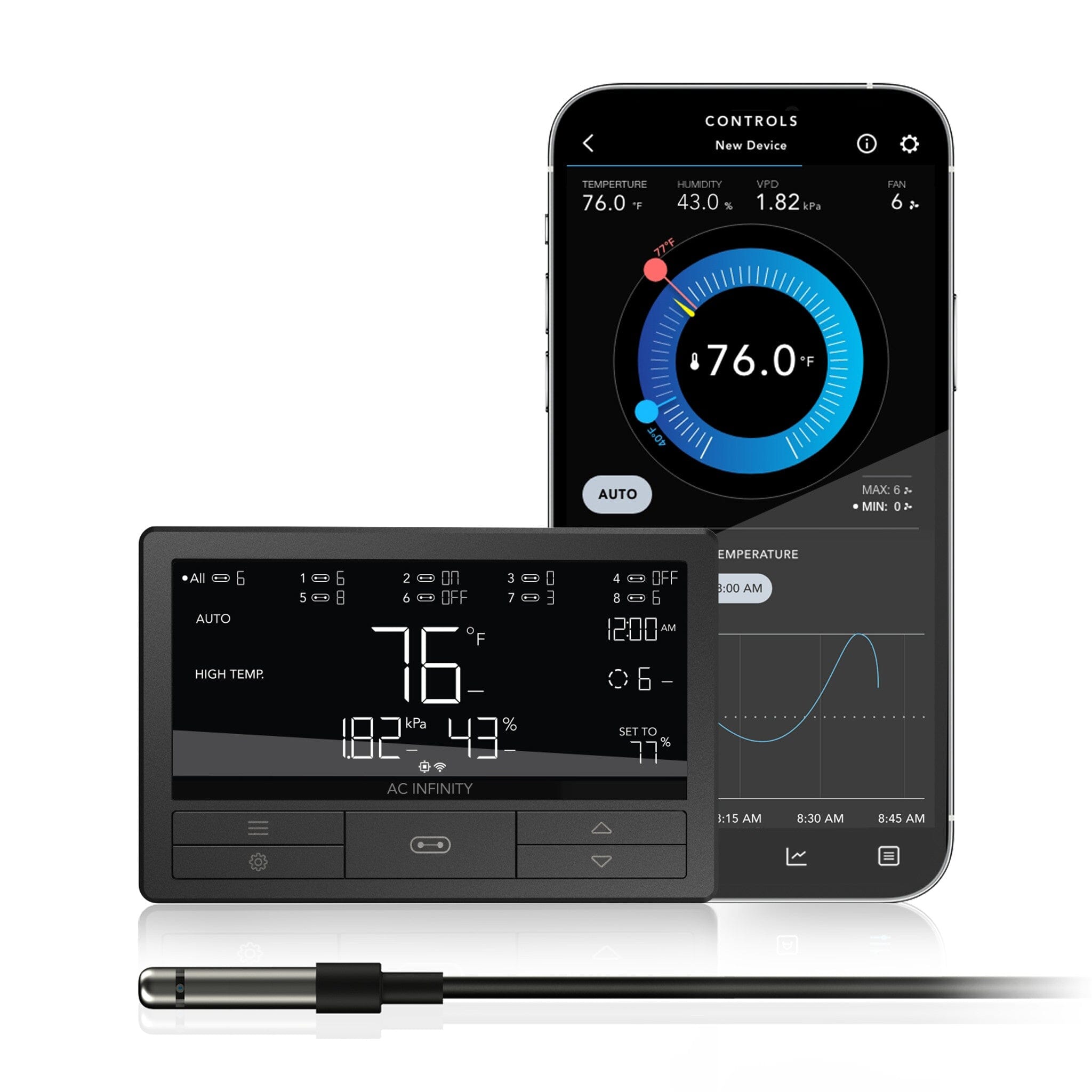
Eight independently programmed ports across two independent zones, plus the expandable AI sensor range. Instead of you tuning how hard each device runs, it works that out from how your space has actually responded.
Controller AI+ · the full AI range
Straight answer: if this is your first controller and you are automating a space you intend to keep, buy the Controller AI+. Of the controllers we currently stock it is the one with room to grow — more ports, two zones, and sensors you can add later. The 69 Pro is the right call when the budget is tight and four independent programs is genuinely all your space will ever need.
How they compare
The number that actually differs is independently programmed ports, not how many devices you can plug in. Every controller below takes a splitter hub, and every hub puts up to four devices on one port — so device count is rarely the thing that decides this.
|
Independent programs |
Zones |
Expandable sensors |
Control |
| Cloudcom B1 / B2 / A1 |
— |
1 reading point |
No |
Monitoring and logging only |
| Controller 69 Pro |
4 ports |
1 |
No |
Triggers, timers, cycles, schedules |
| Controller 69 Pro+ |
8 ports |
1 |
No |
Same as the 69 Pro, twice the programs |
| Controller AI+ |
8 ports |
2 |
Yes |
Triggers plus dynamic output the controller works out itself |
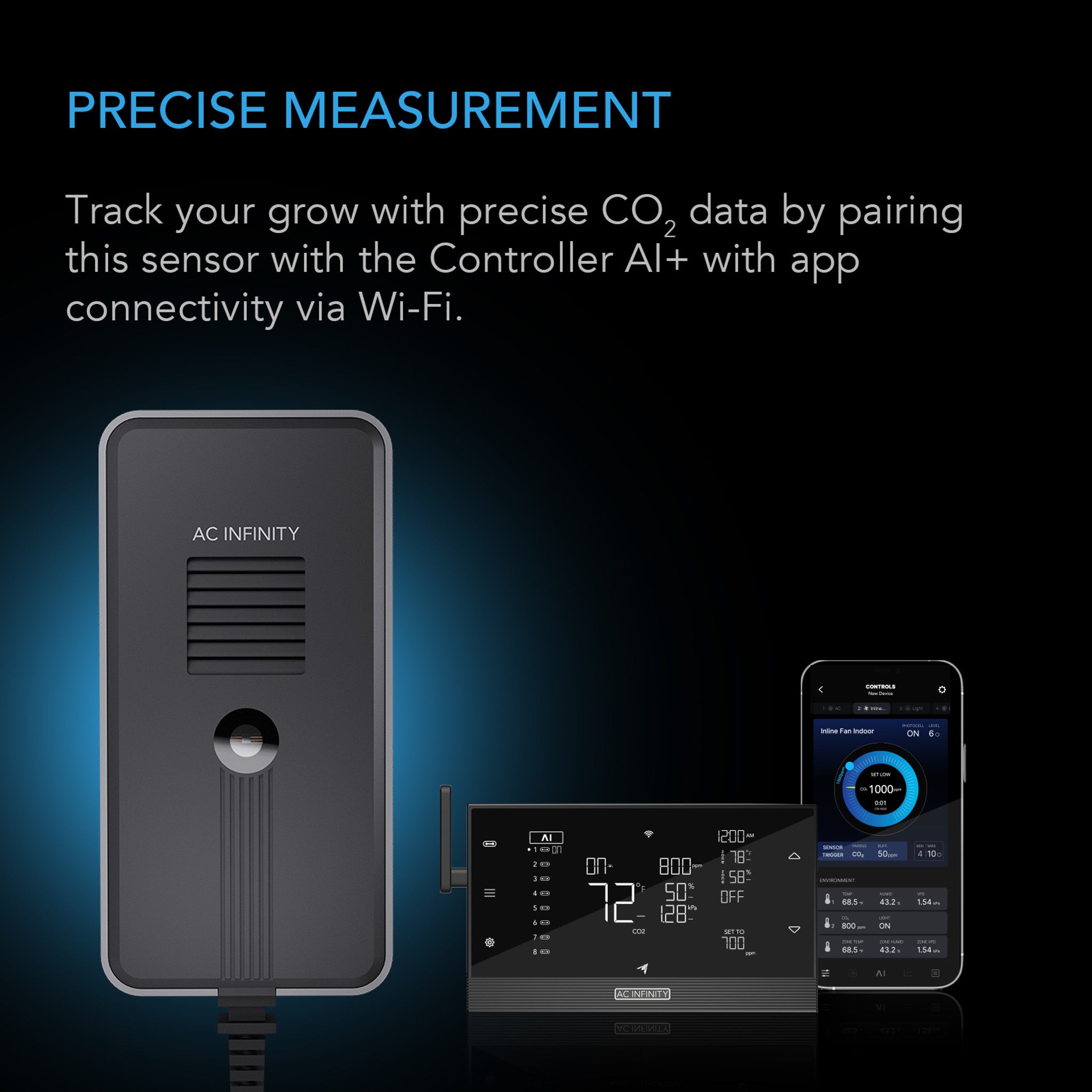
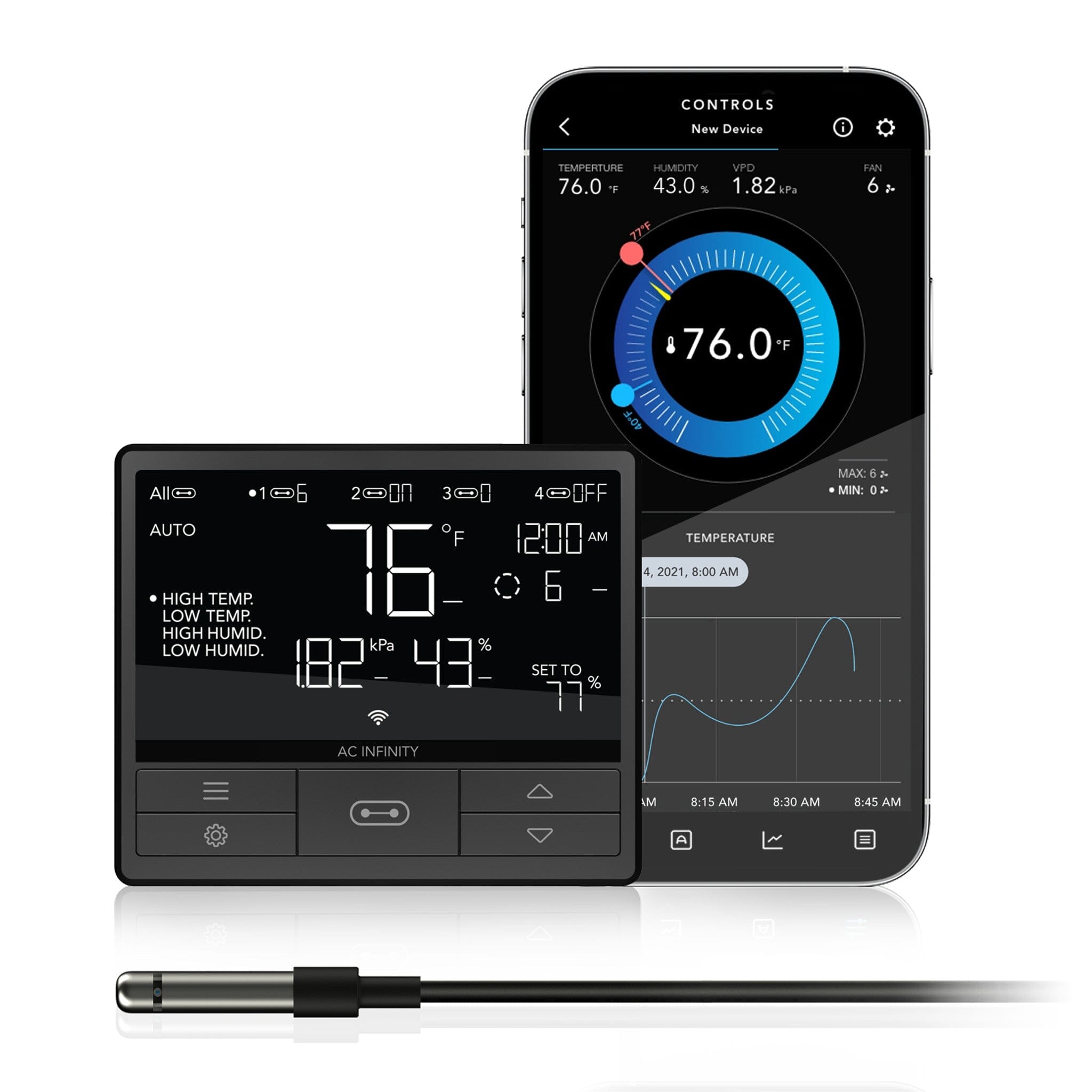
Everything above reads temperature, humidity and VPD and logs to the AC Infinity app. The Cloudcom units connect over Bluetooth, so you read them in range; the controllers add WiFi, which is what gives you remote access and alerts from anywhere. A 4-port splitter hub expands any of them — on the 69 range it is a straight win, on the AI+ it costs you device-specific functions such as clip-fan oscillation, so keep those on their own port.
What UIS actually means for you
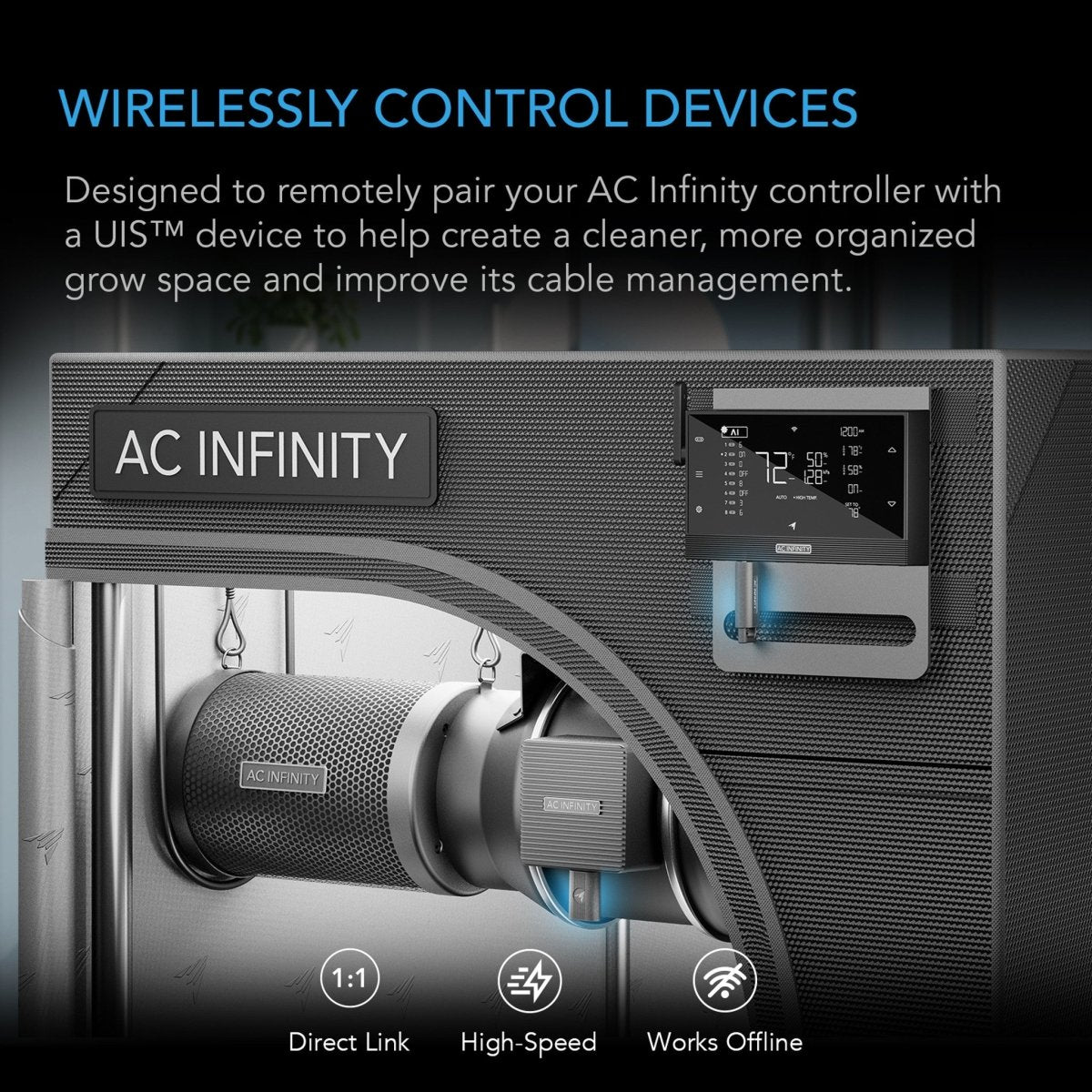
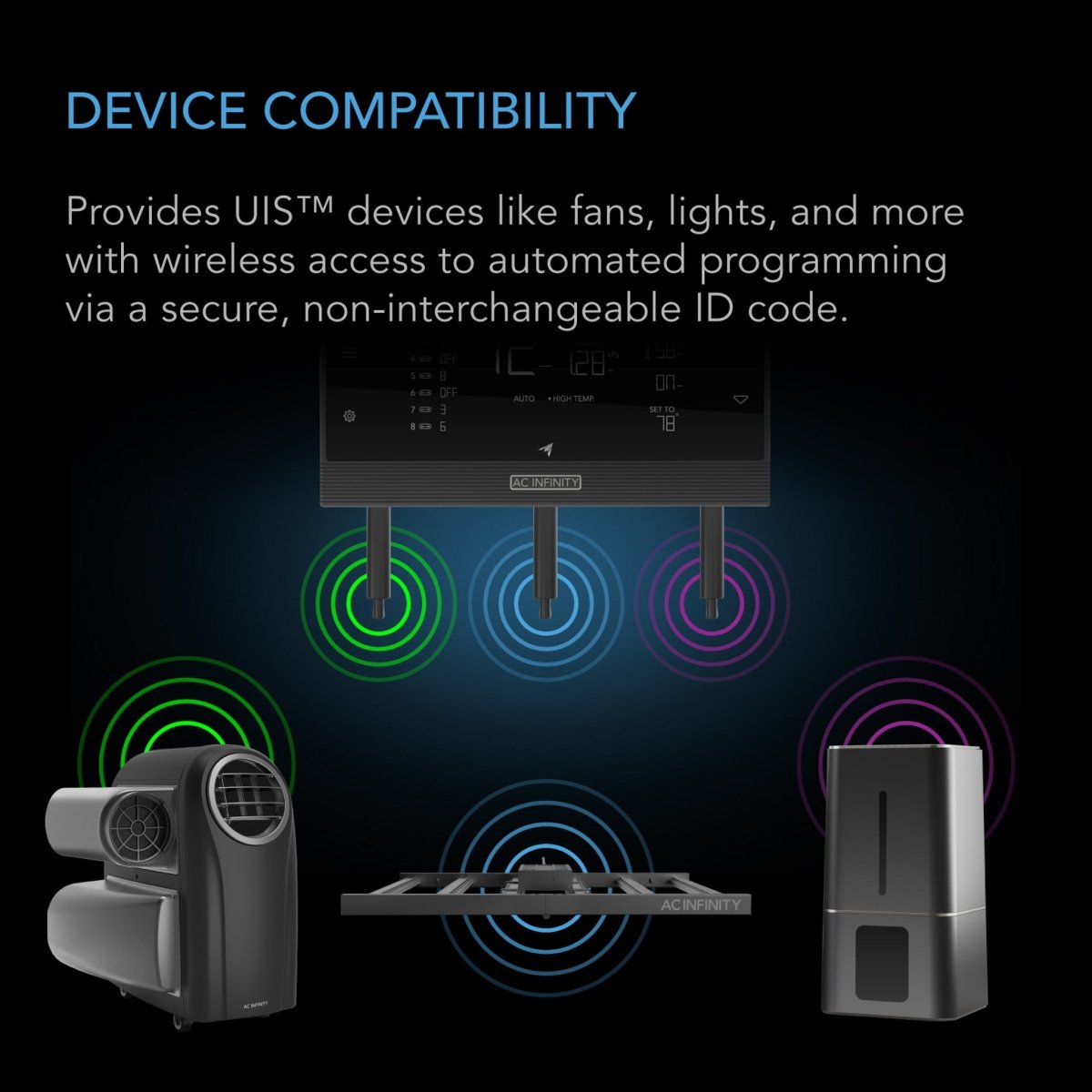
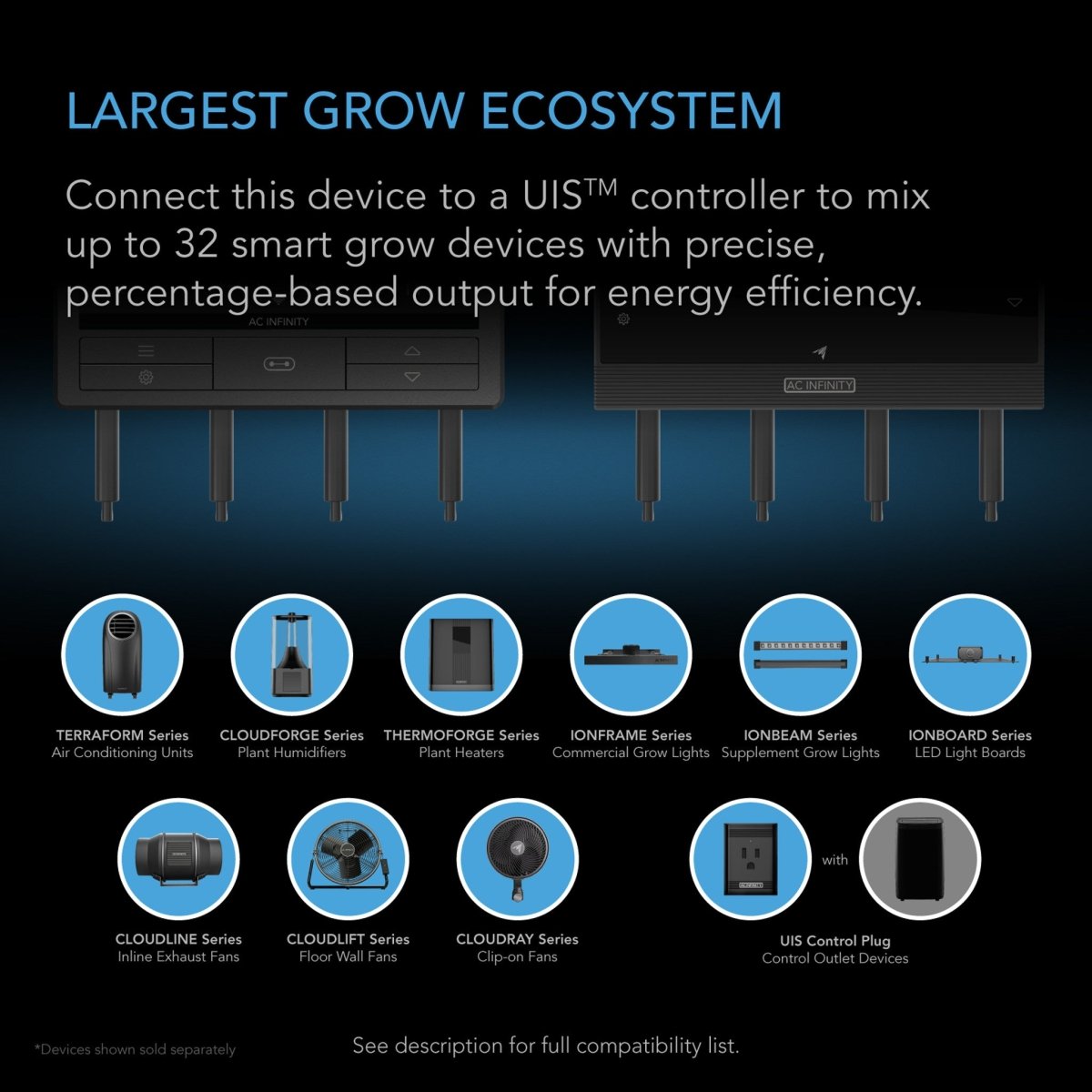
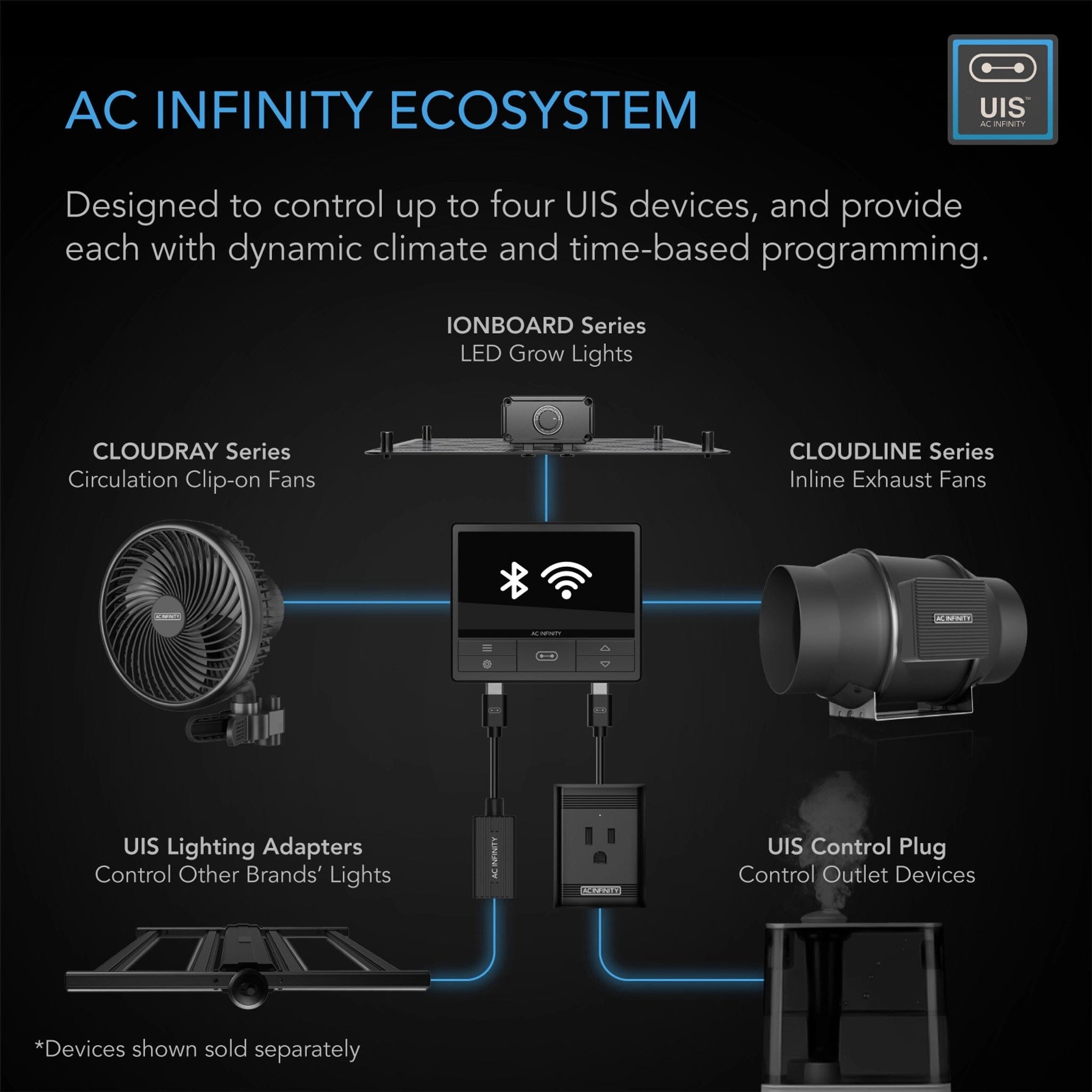
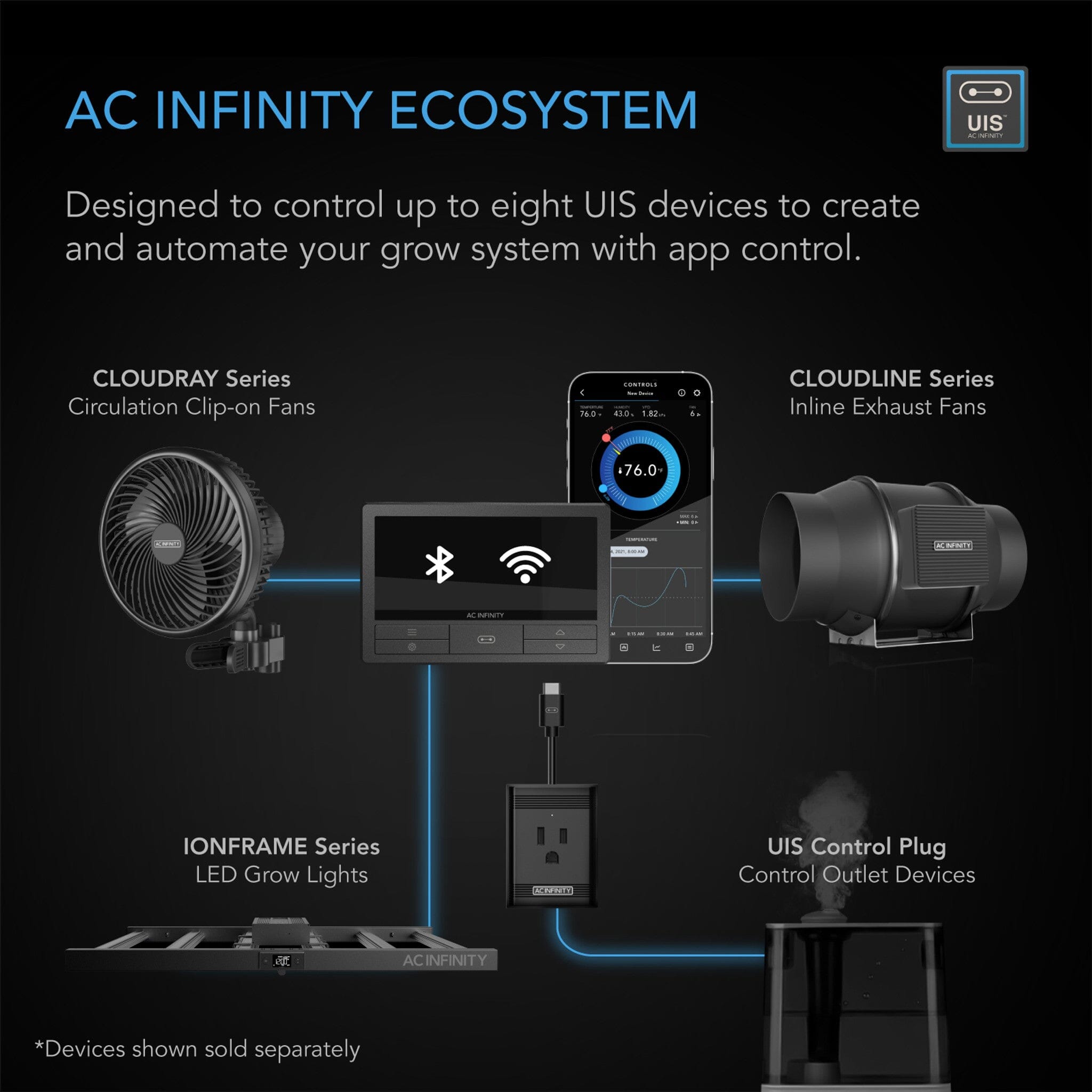
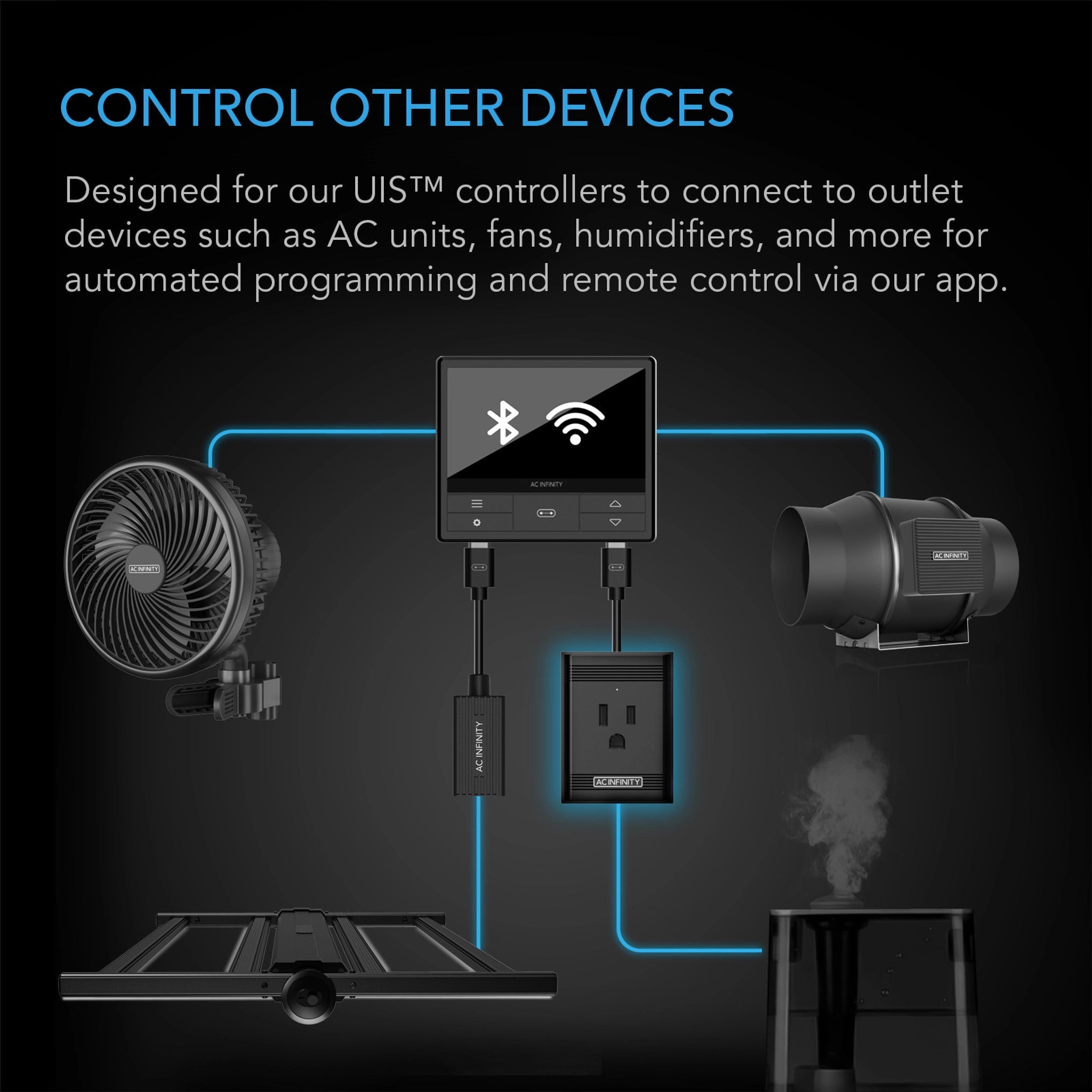
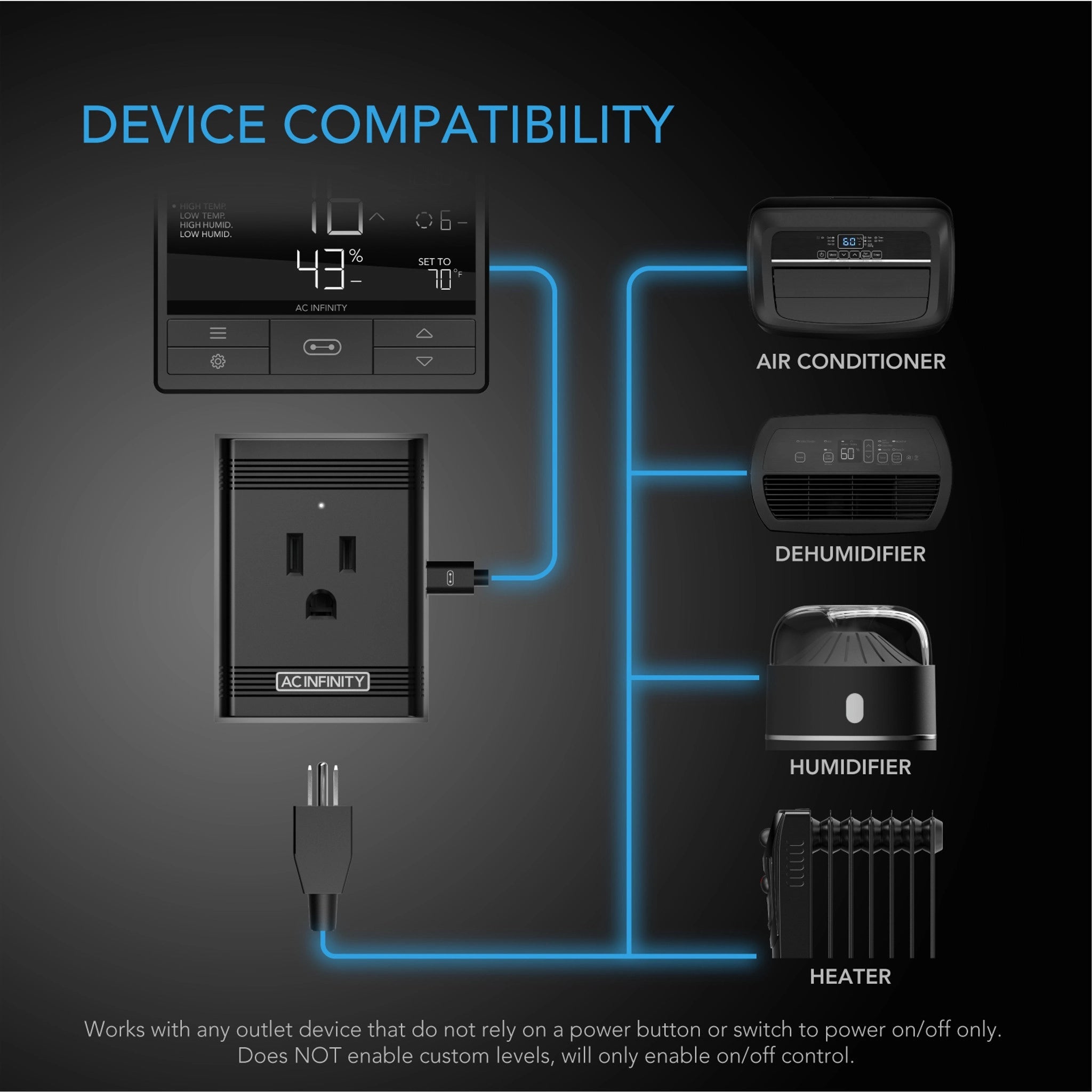
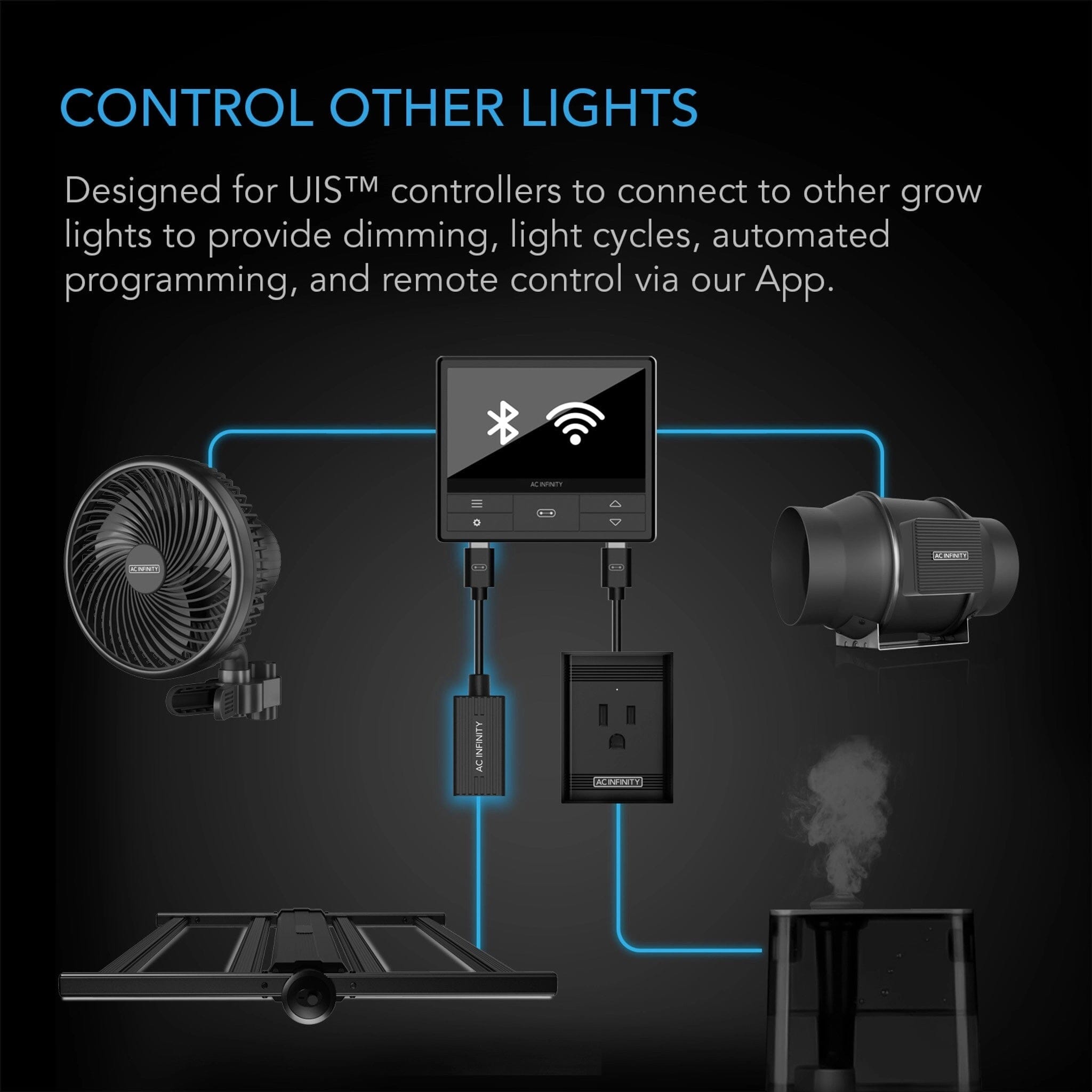
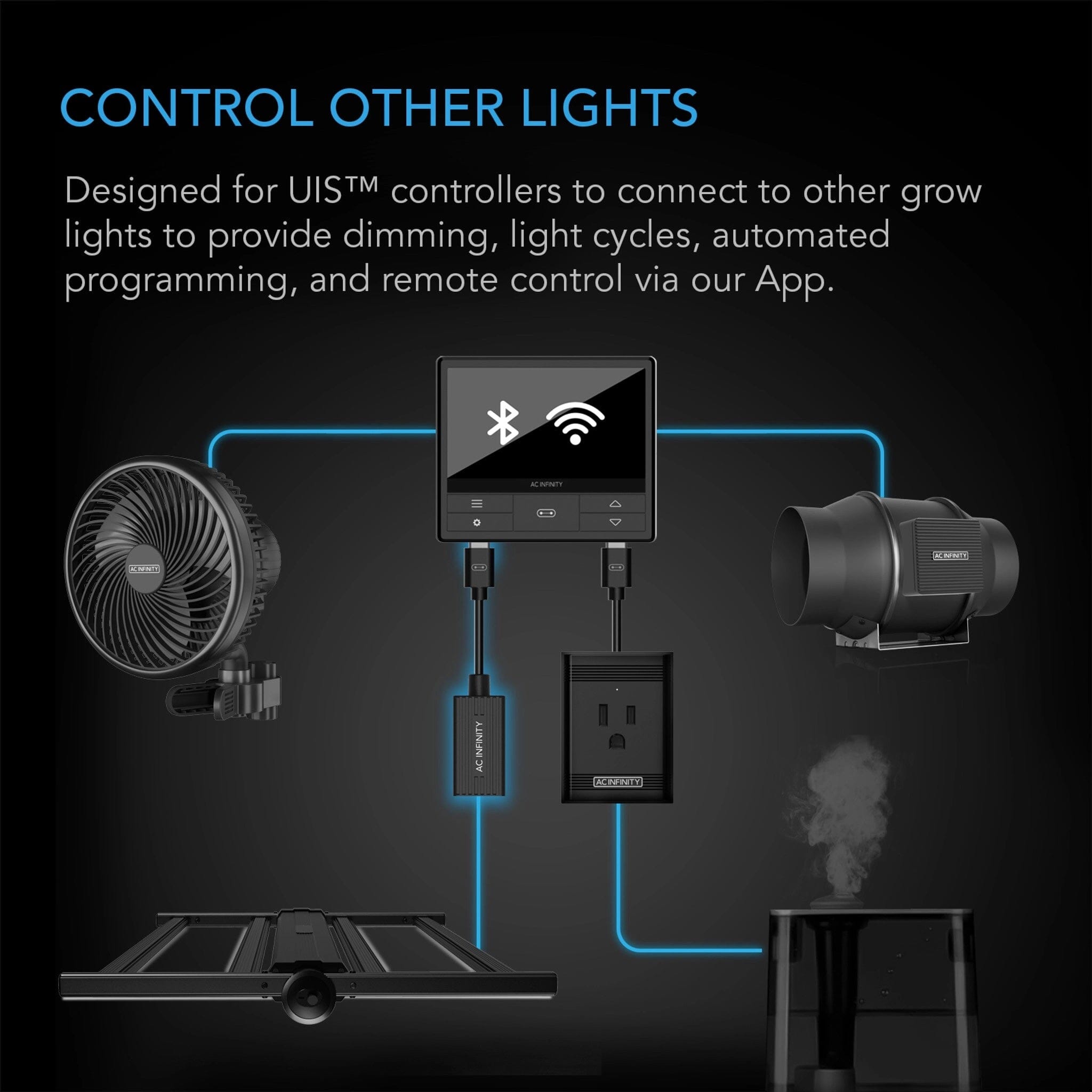
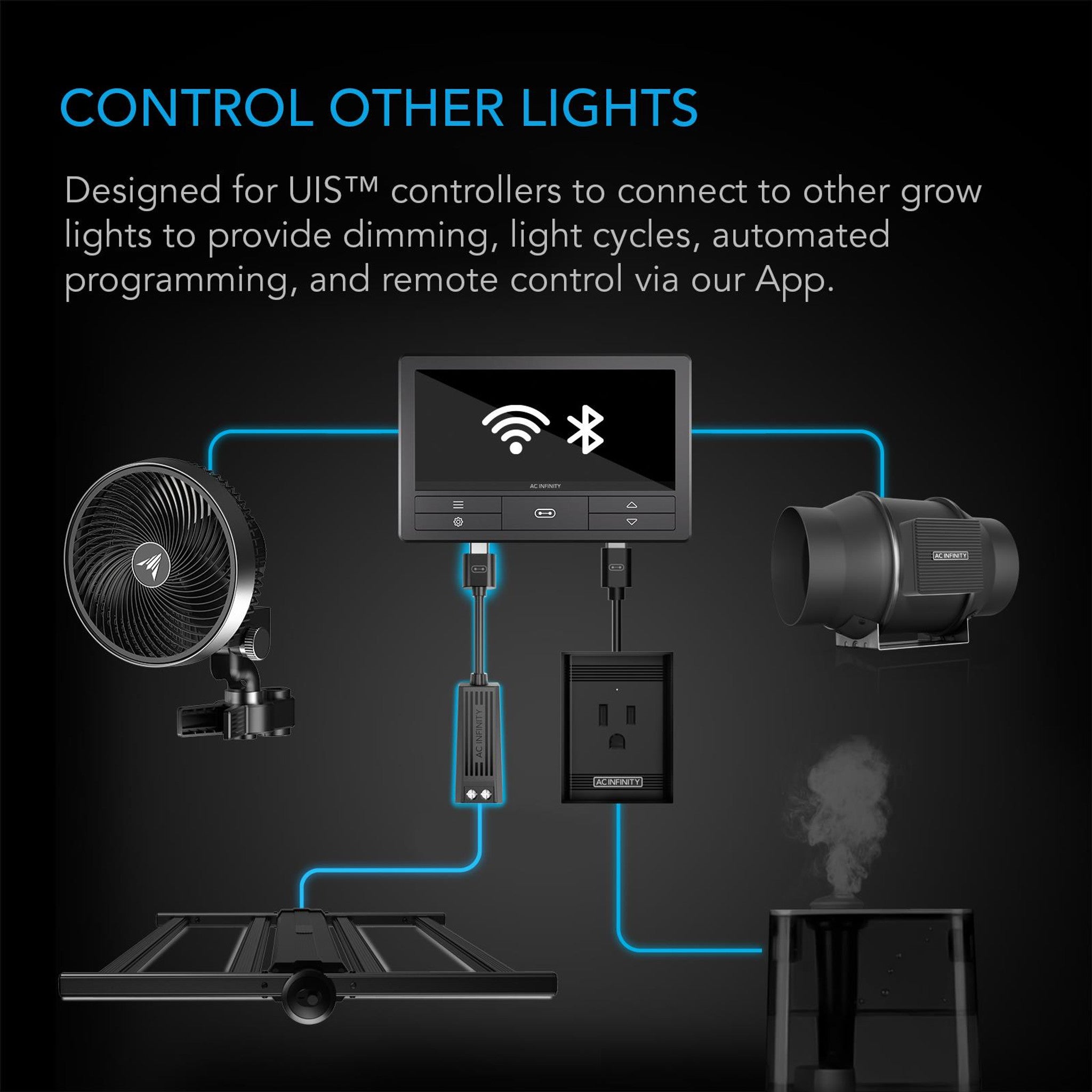
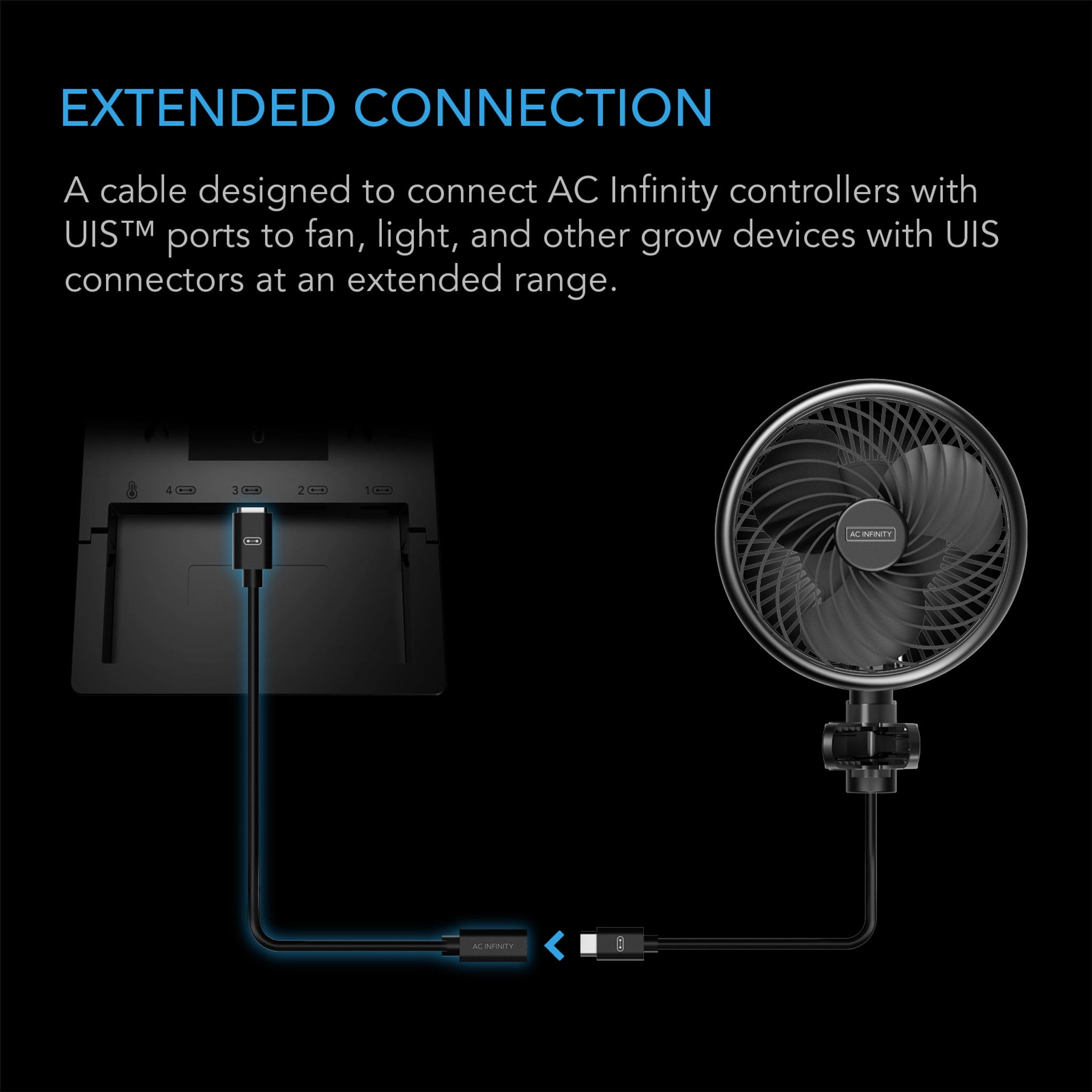
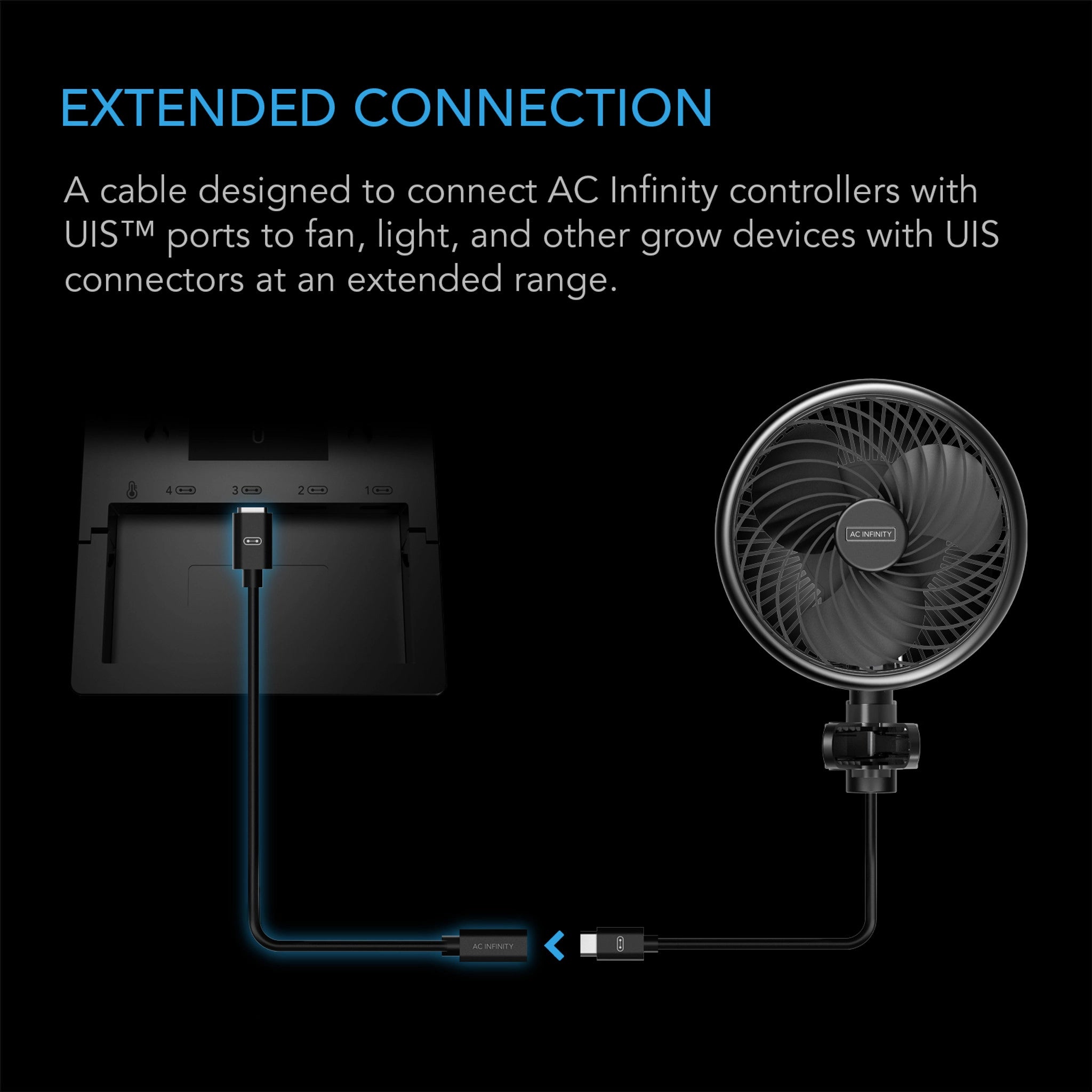
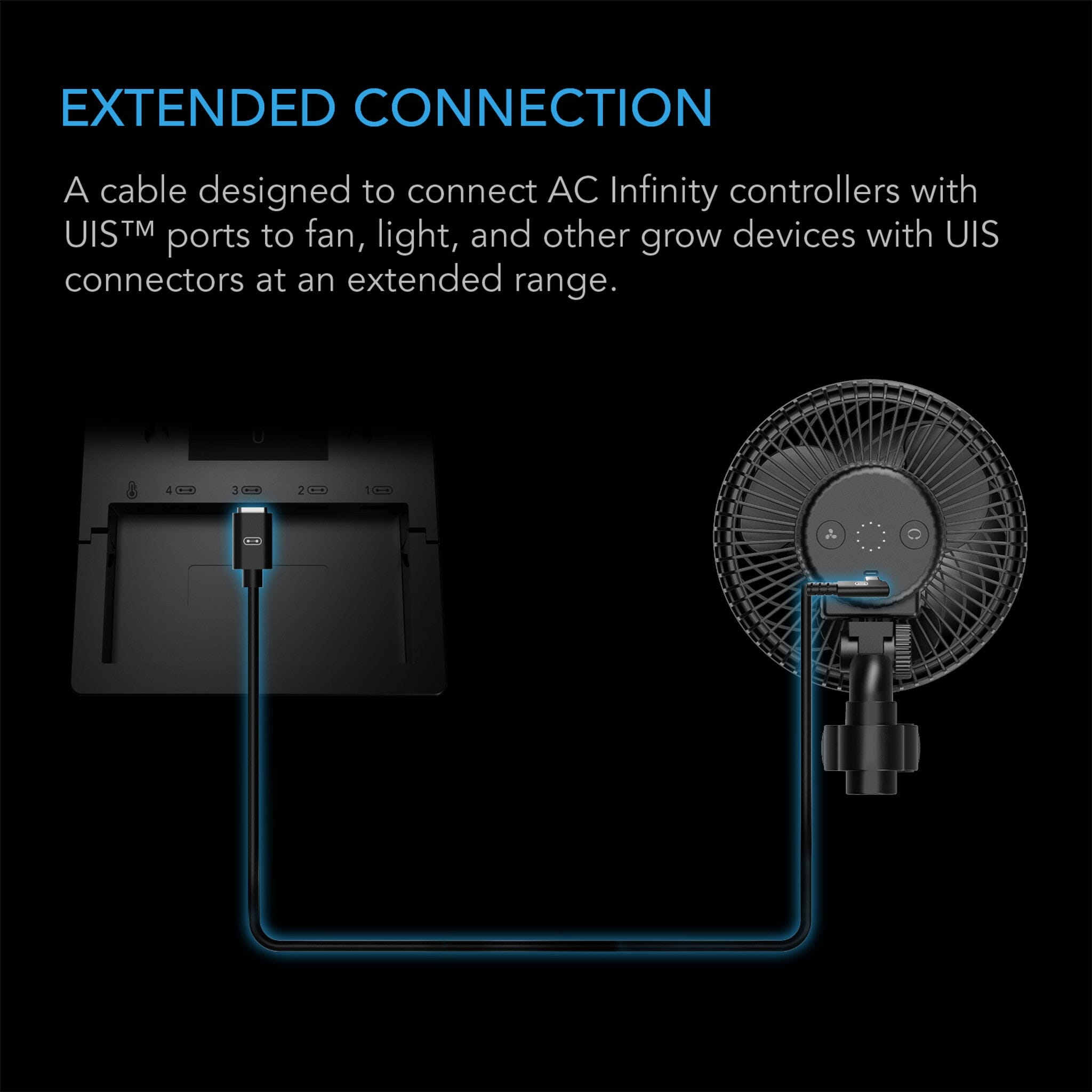
UIS is the control port on the side of AC Infinity equipment. Its practical value is that you are not buying a controller for each device: one controller programs the extraction fan, the clip fans, the humidifier, the dehumidifier and the heater together, with the fan responding to the same humidity reading that triggers the dehumidifier.
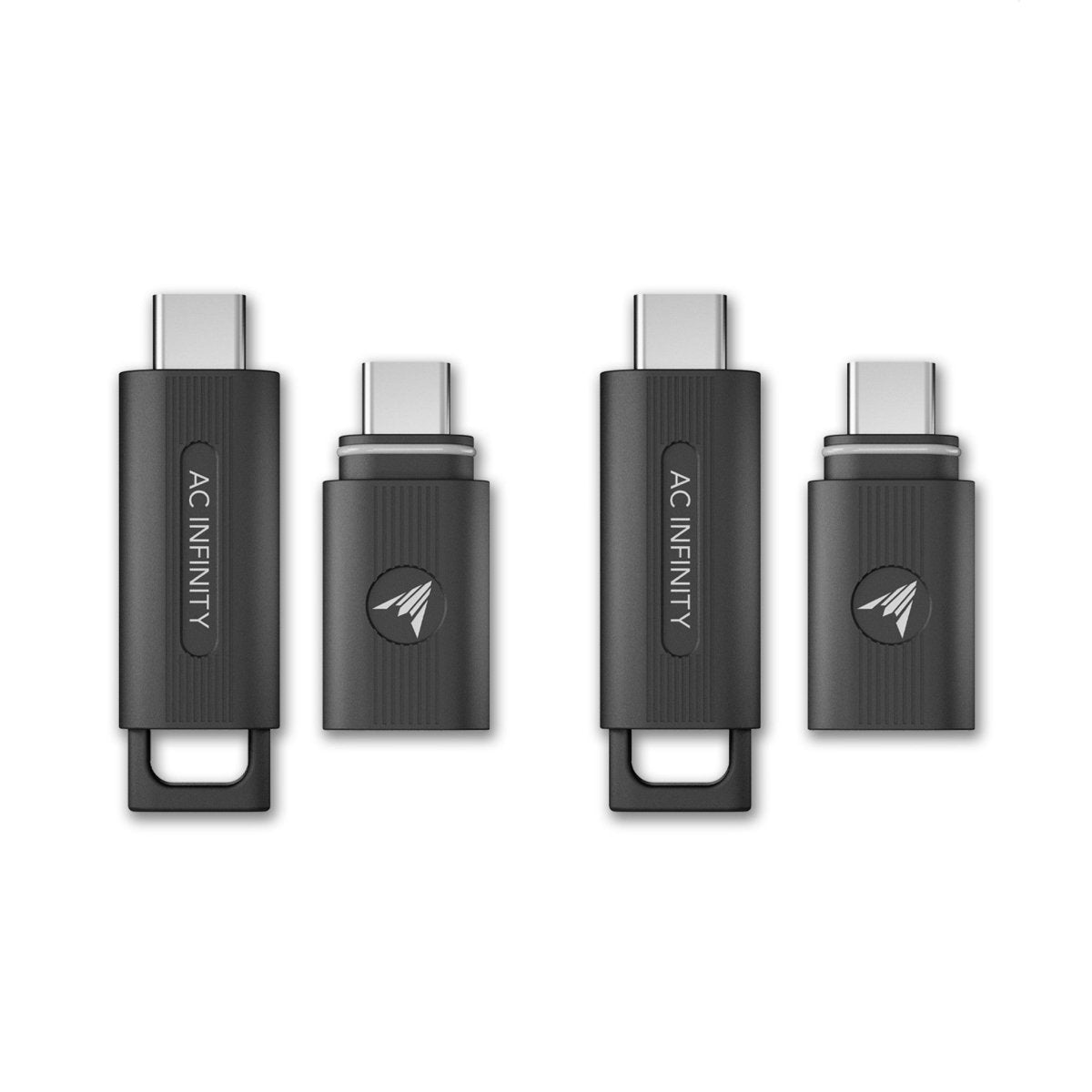
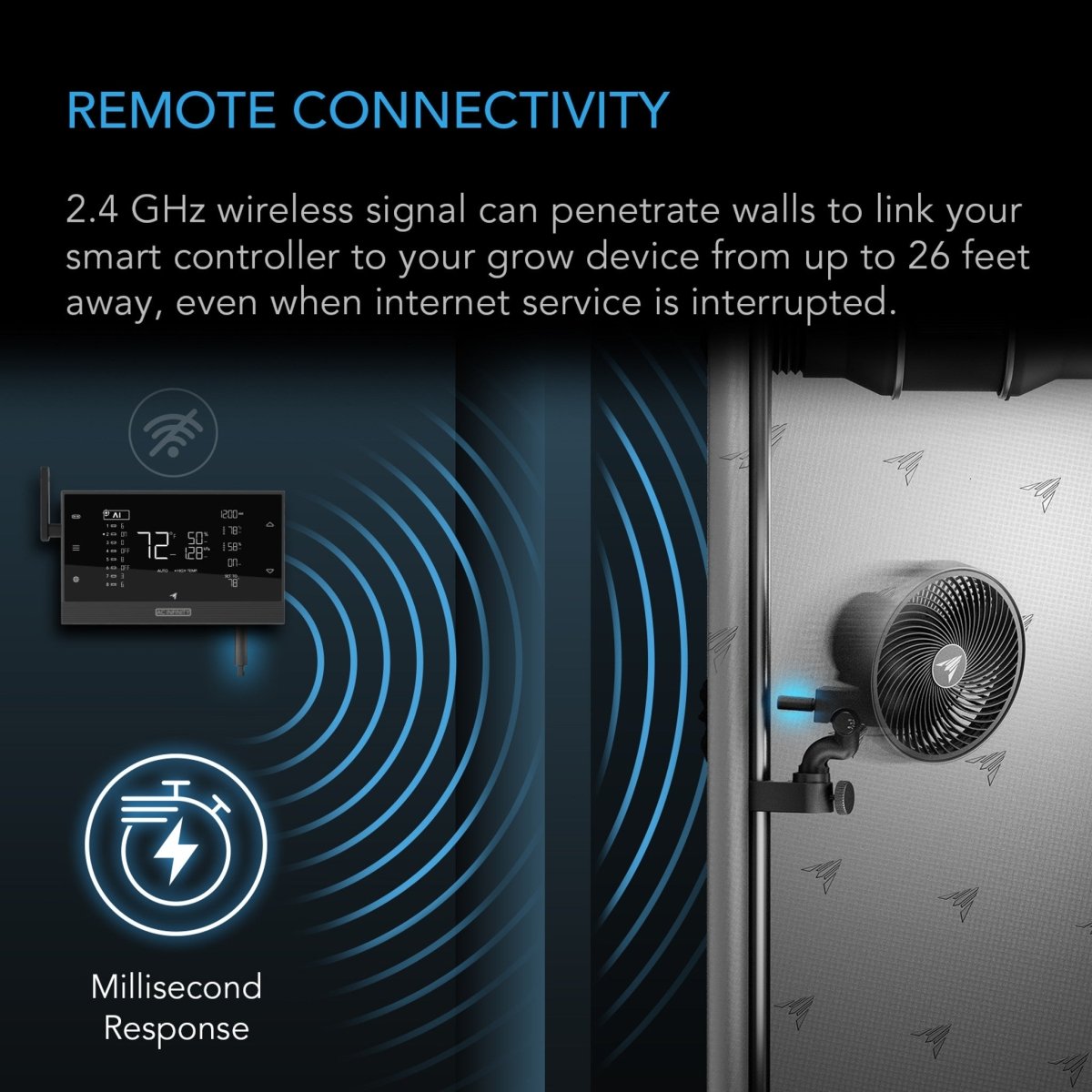
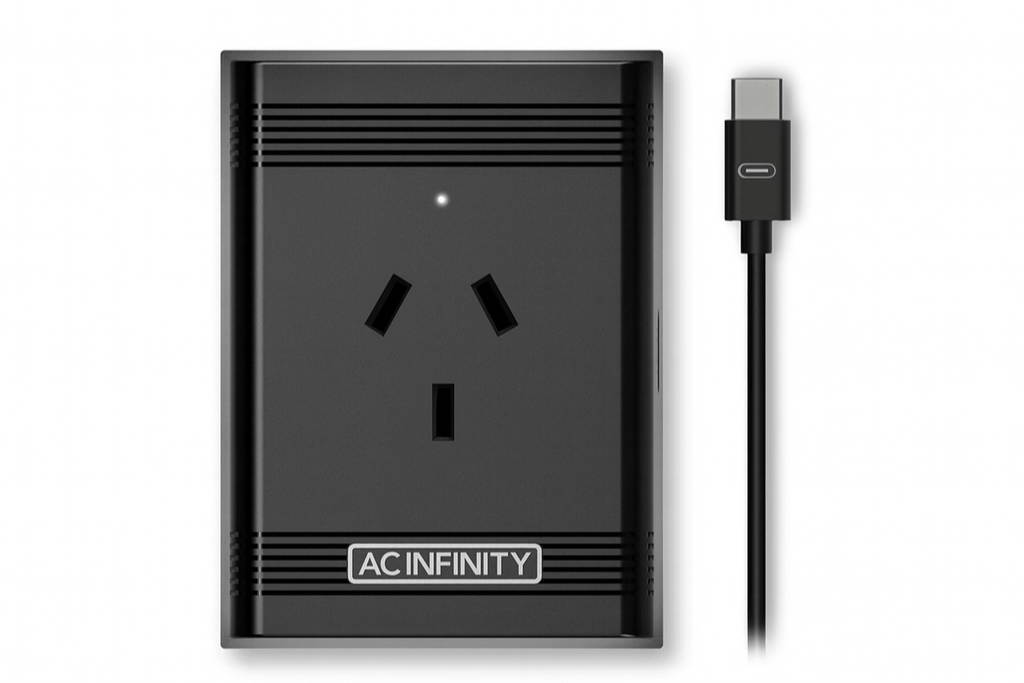
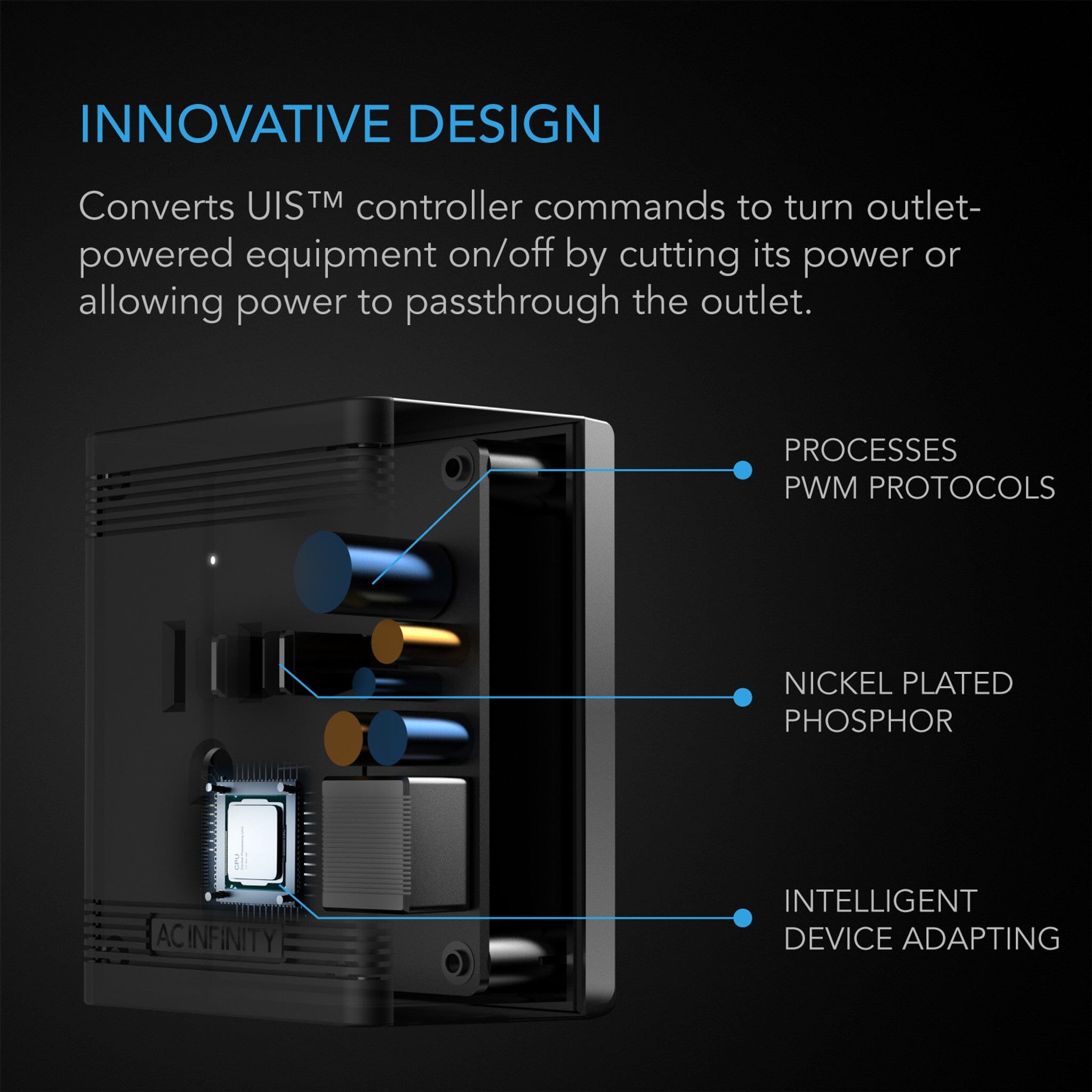
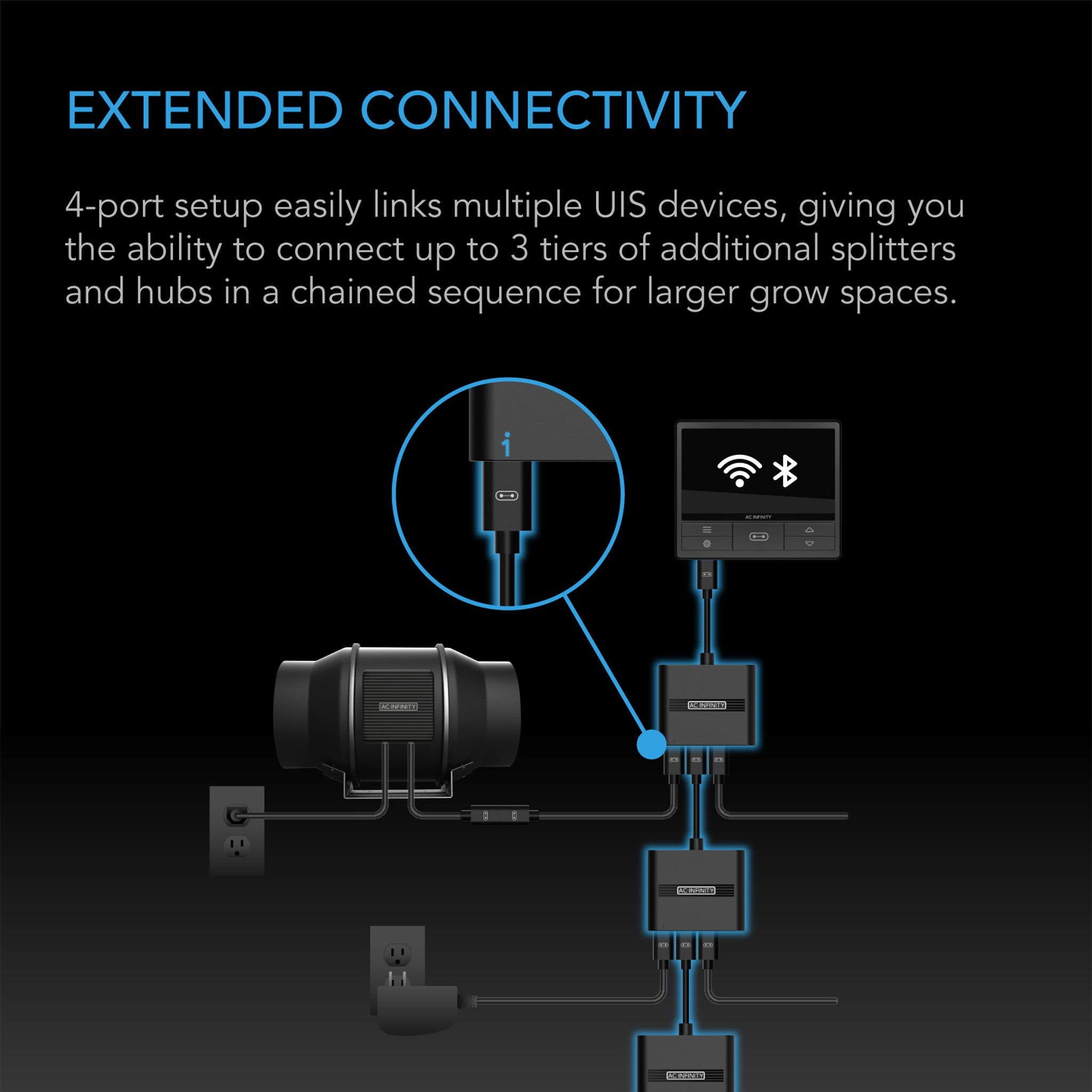
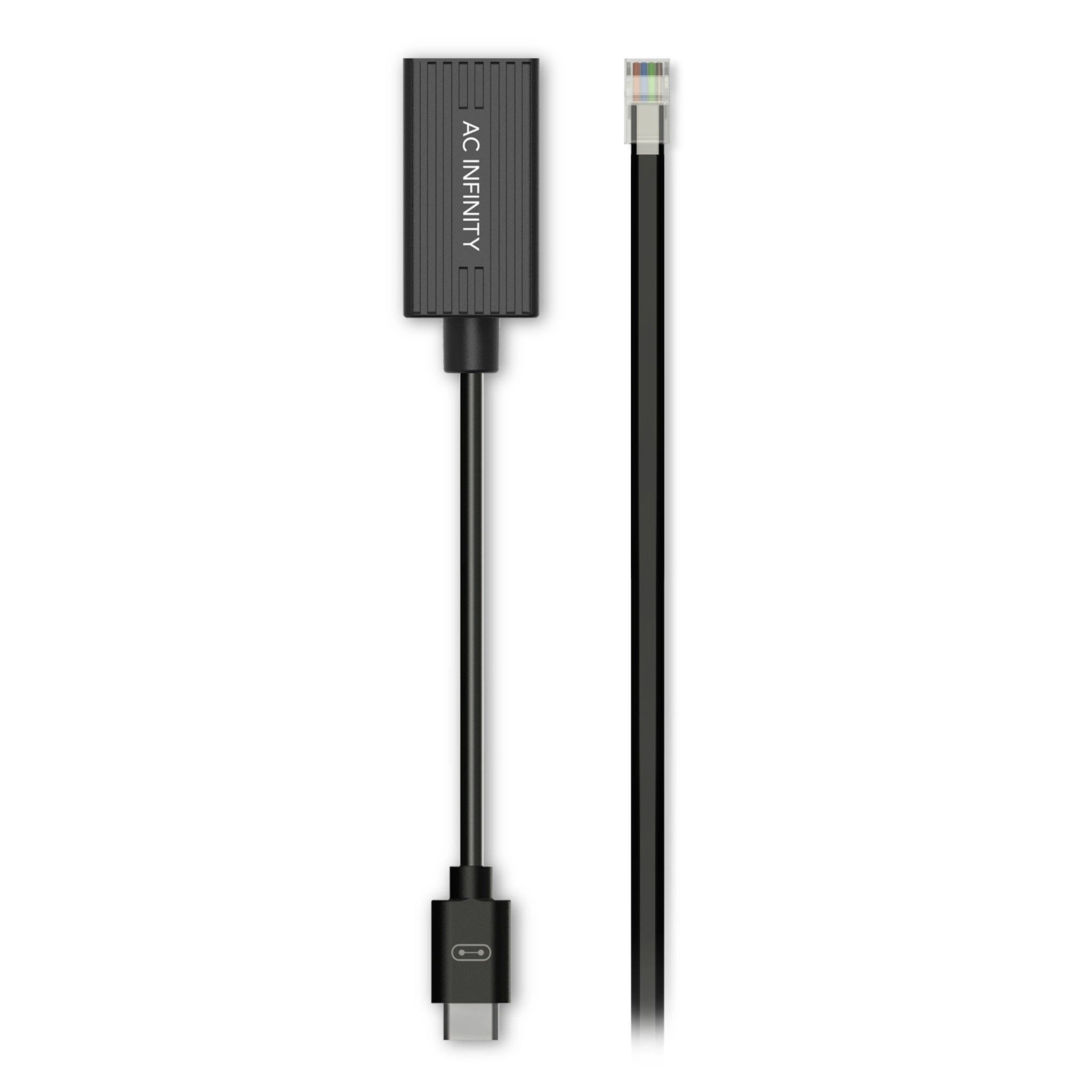
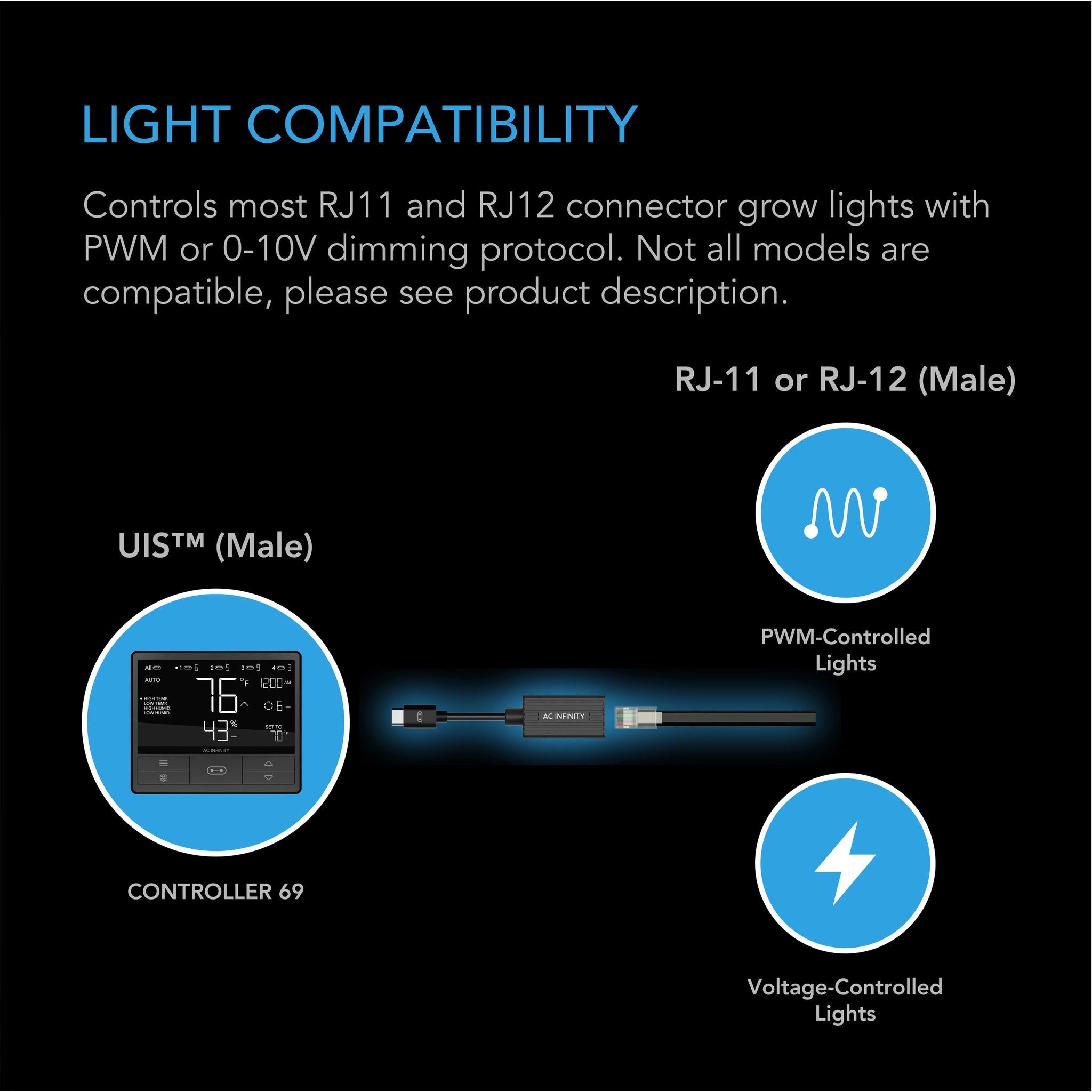
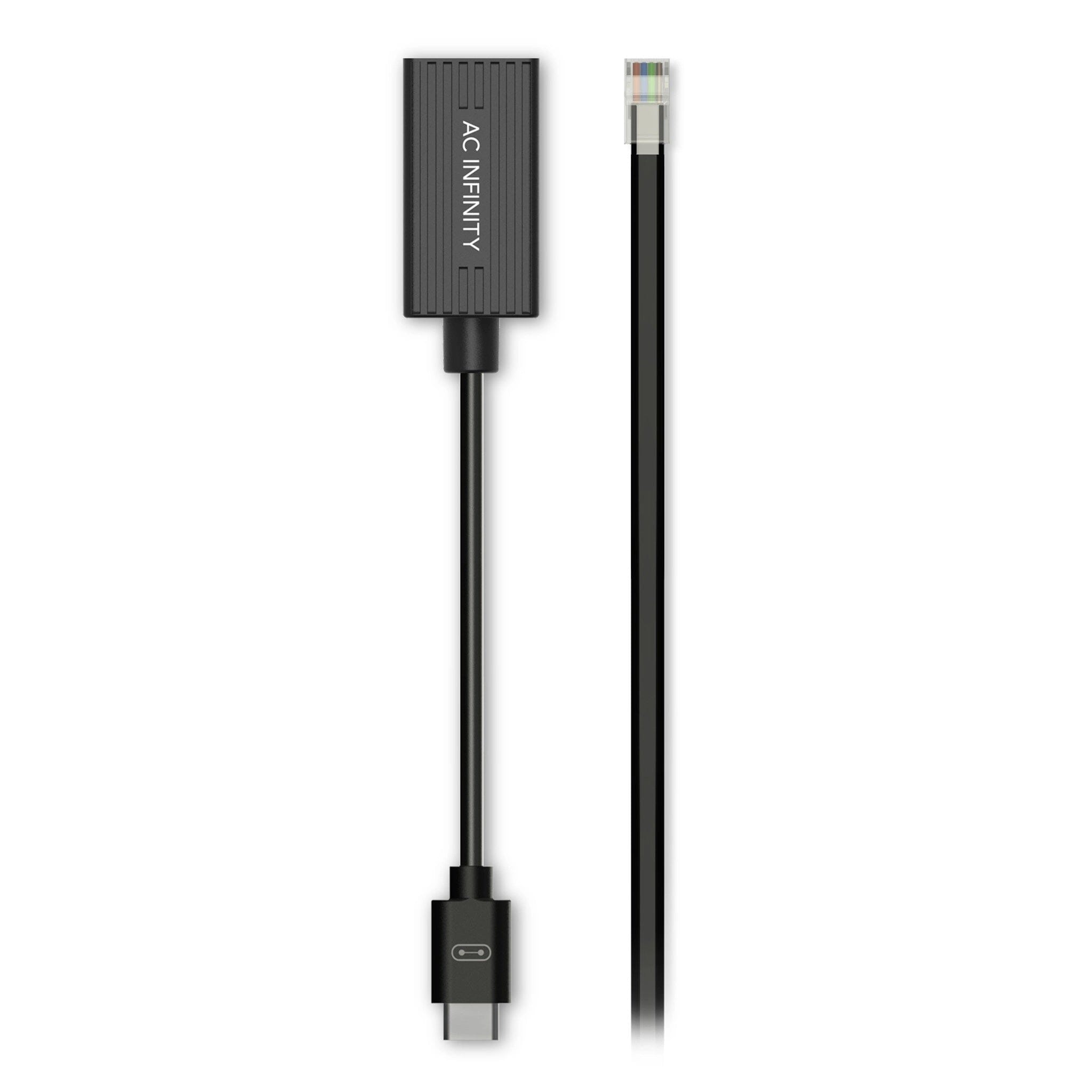
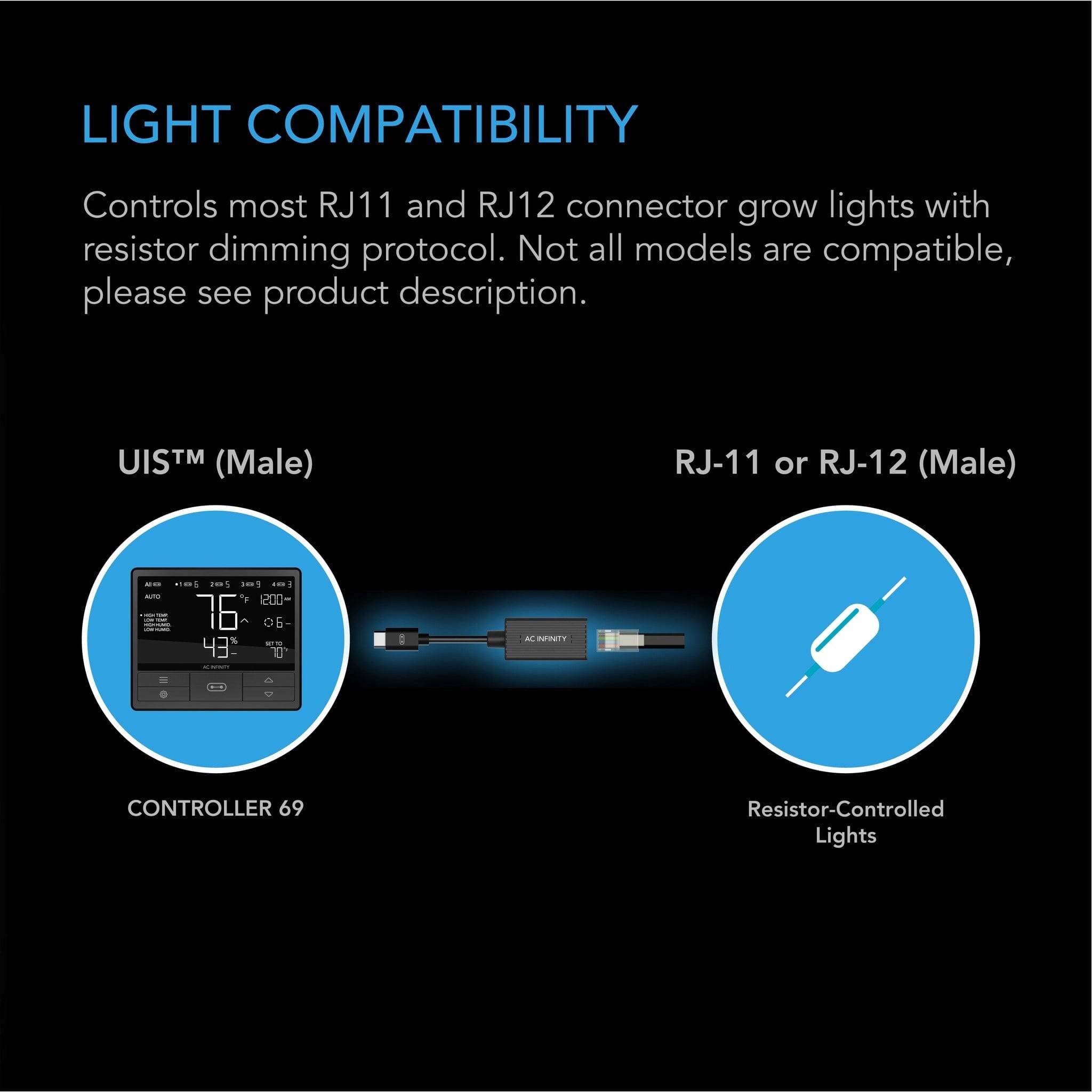
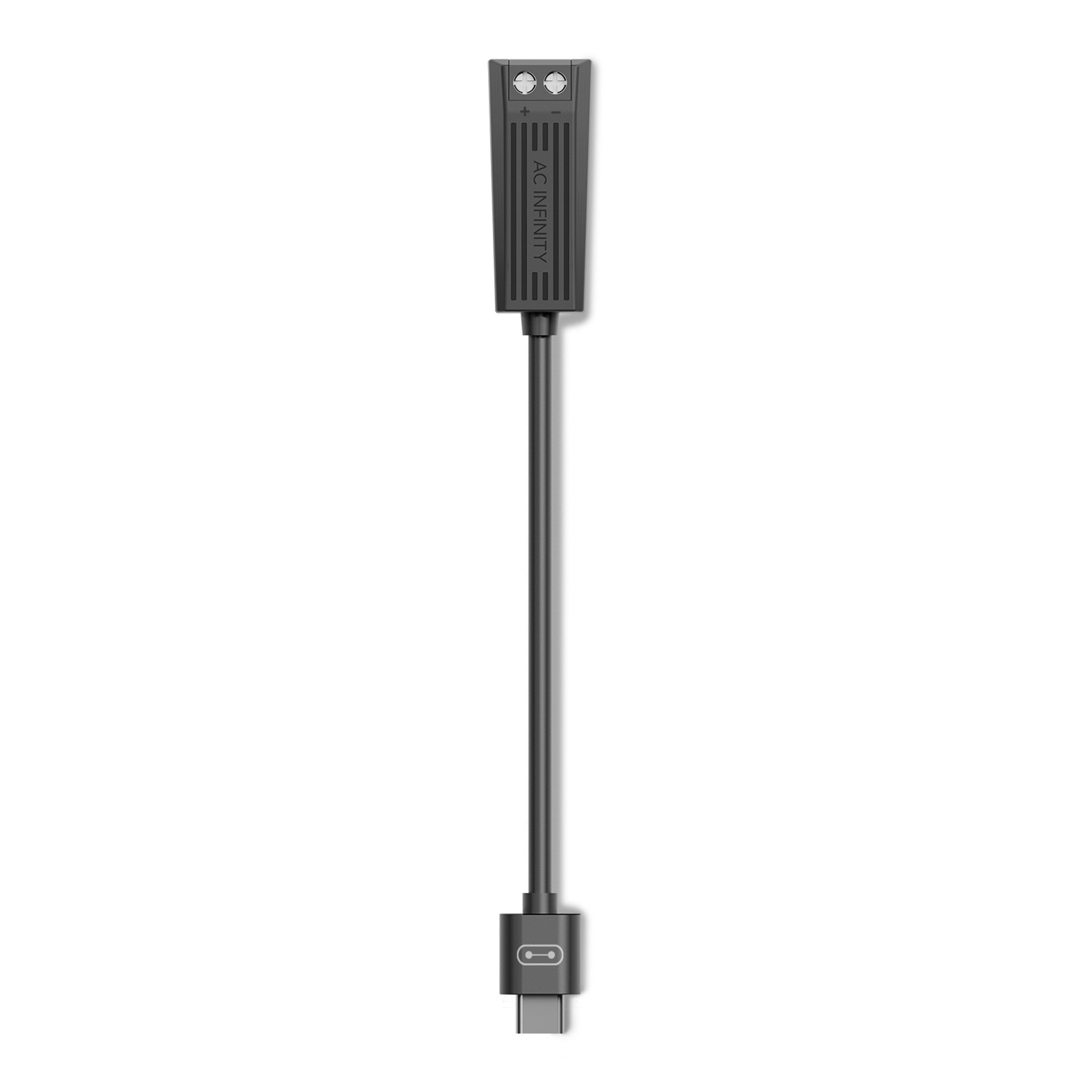
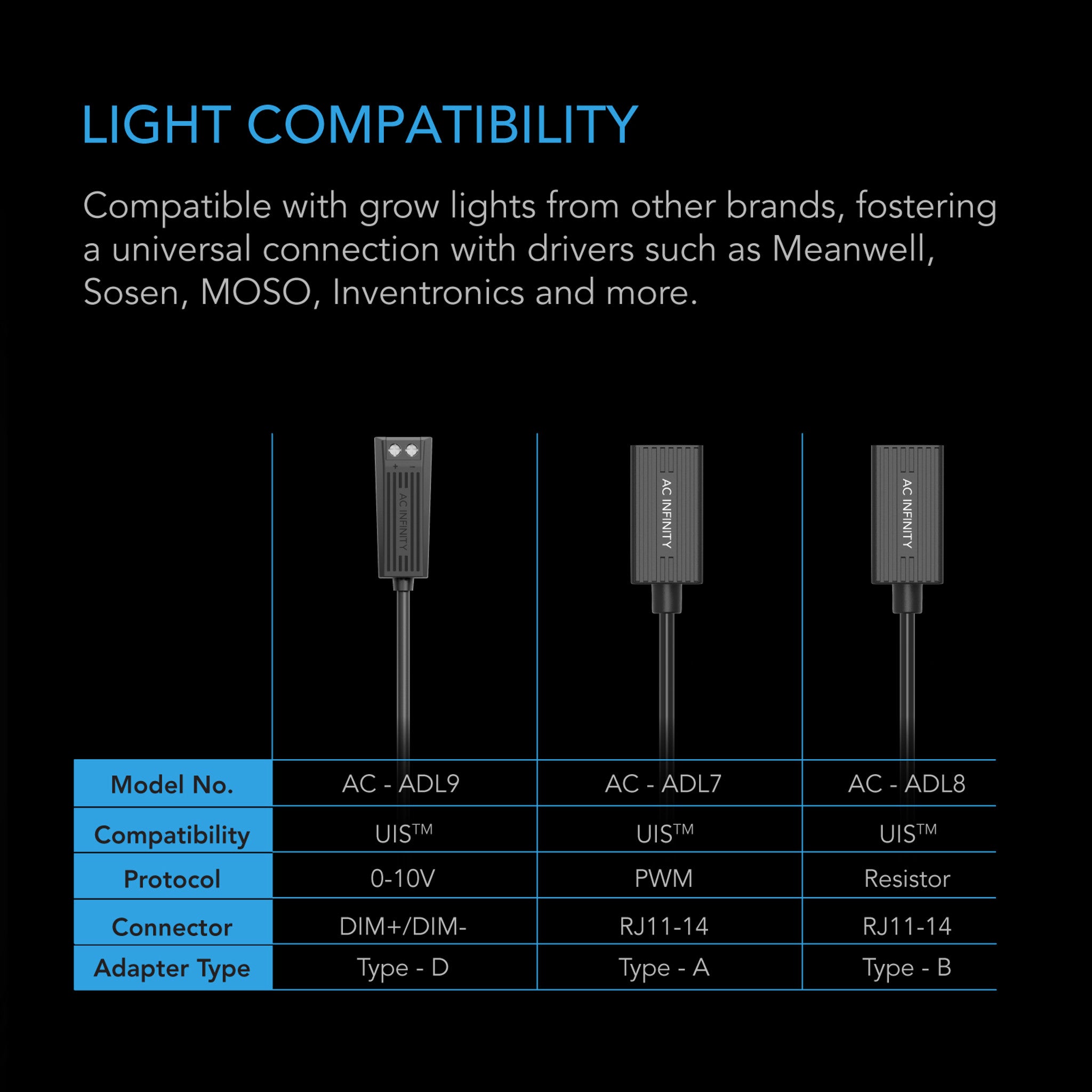
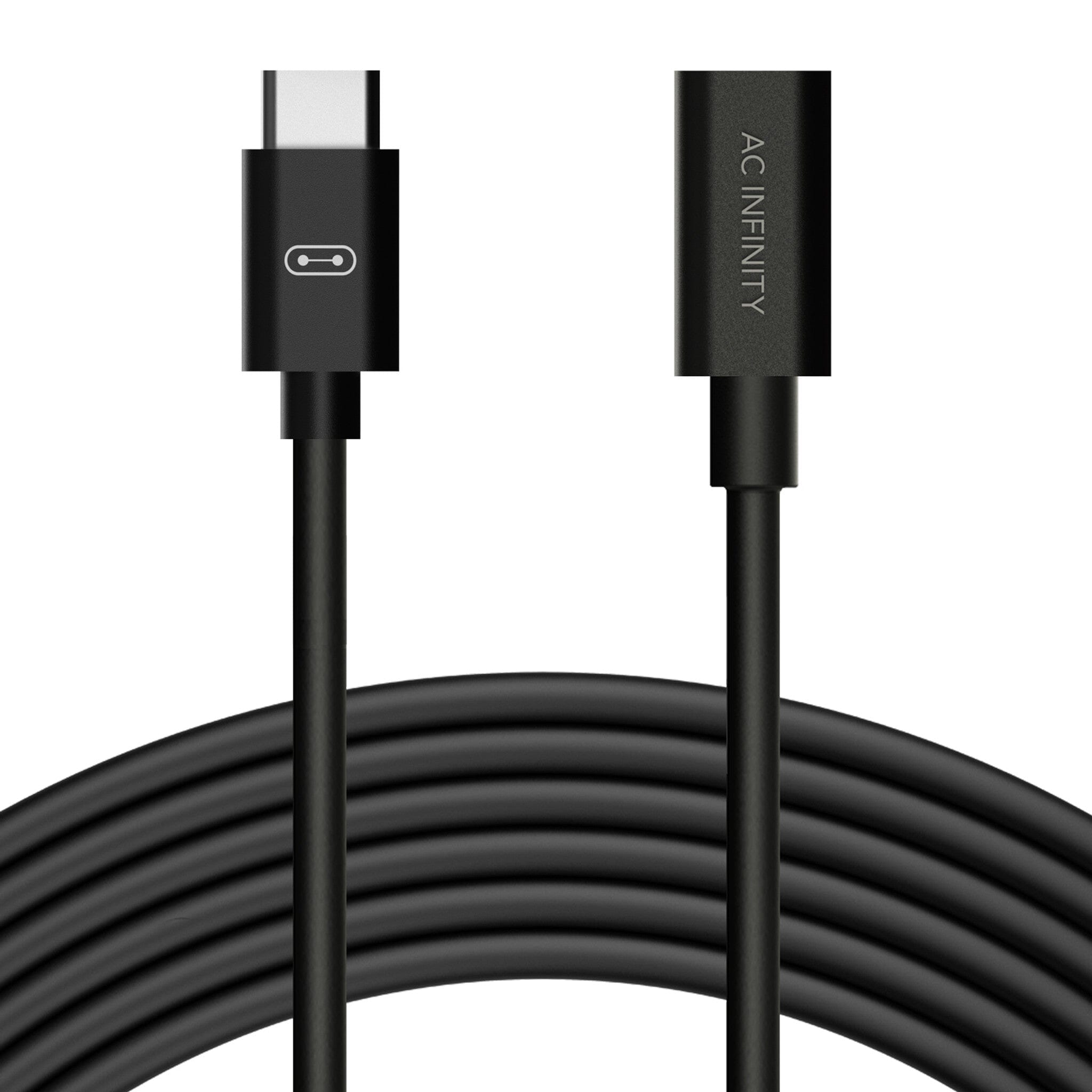
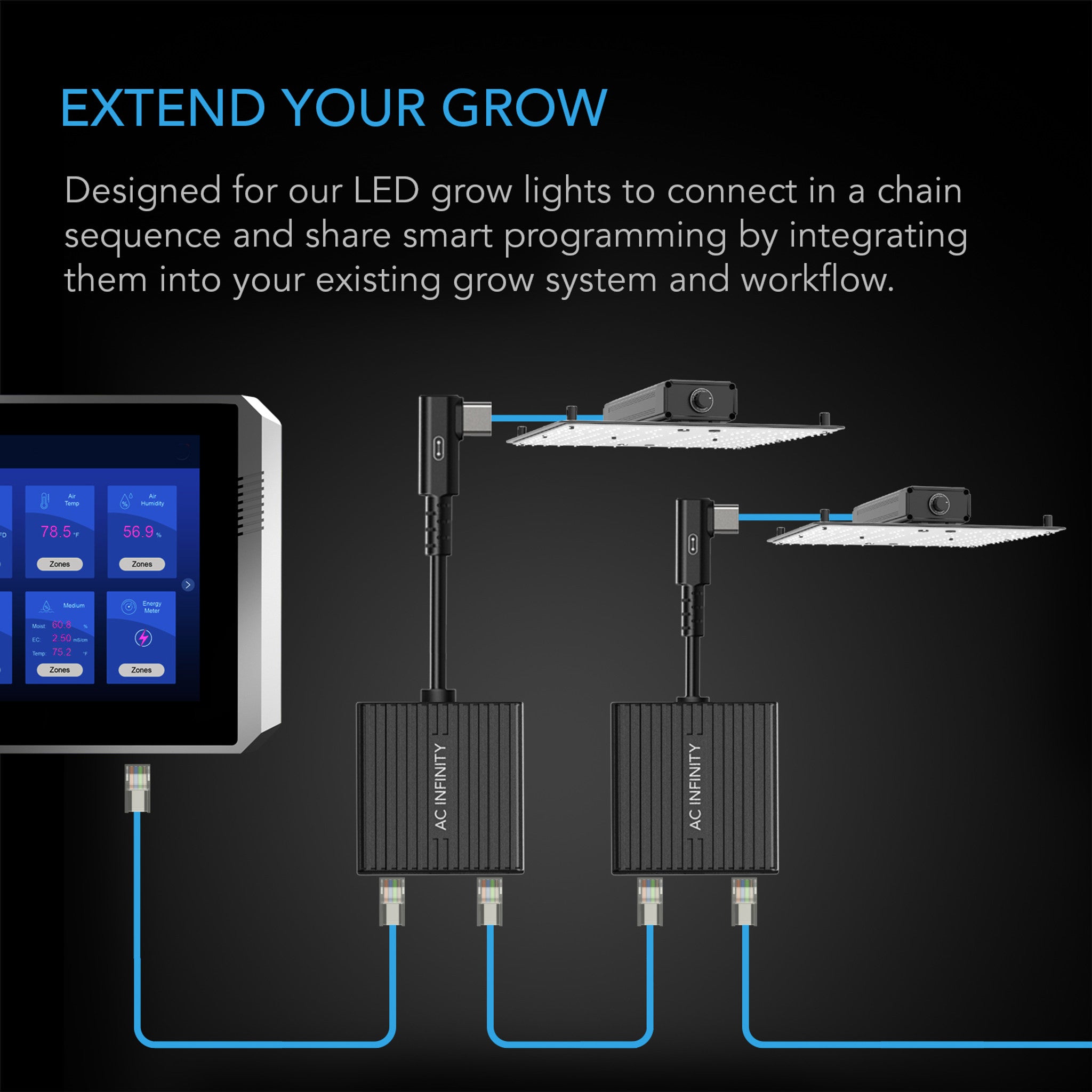
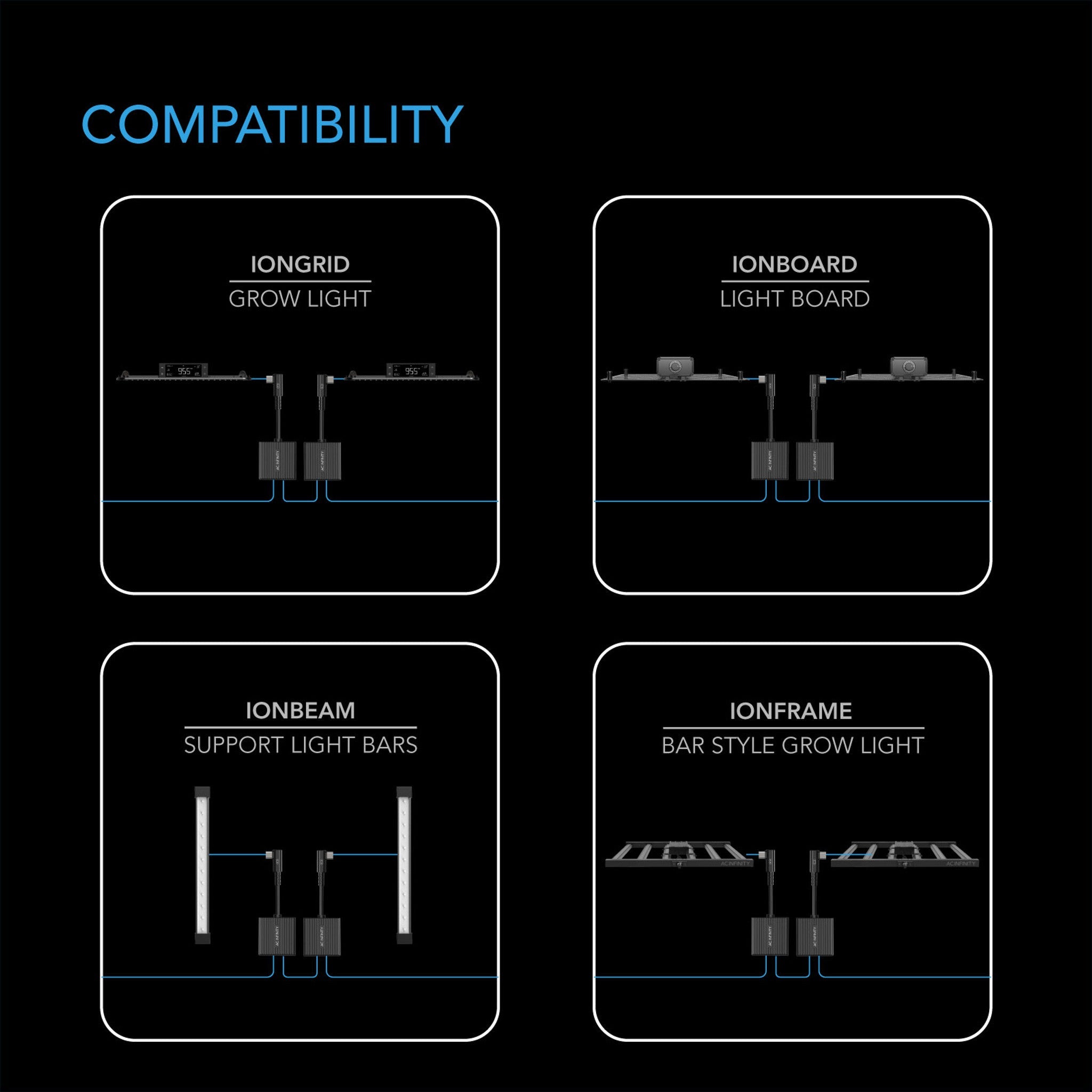
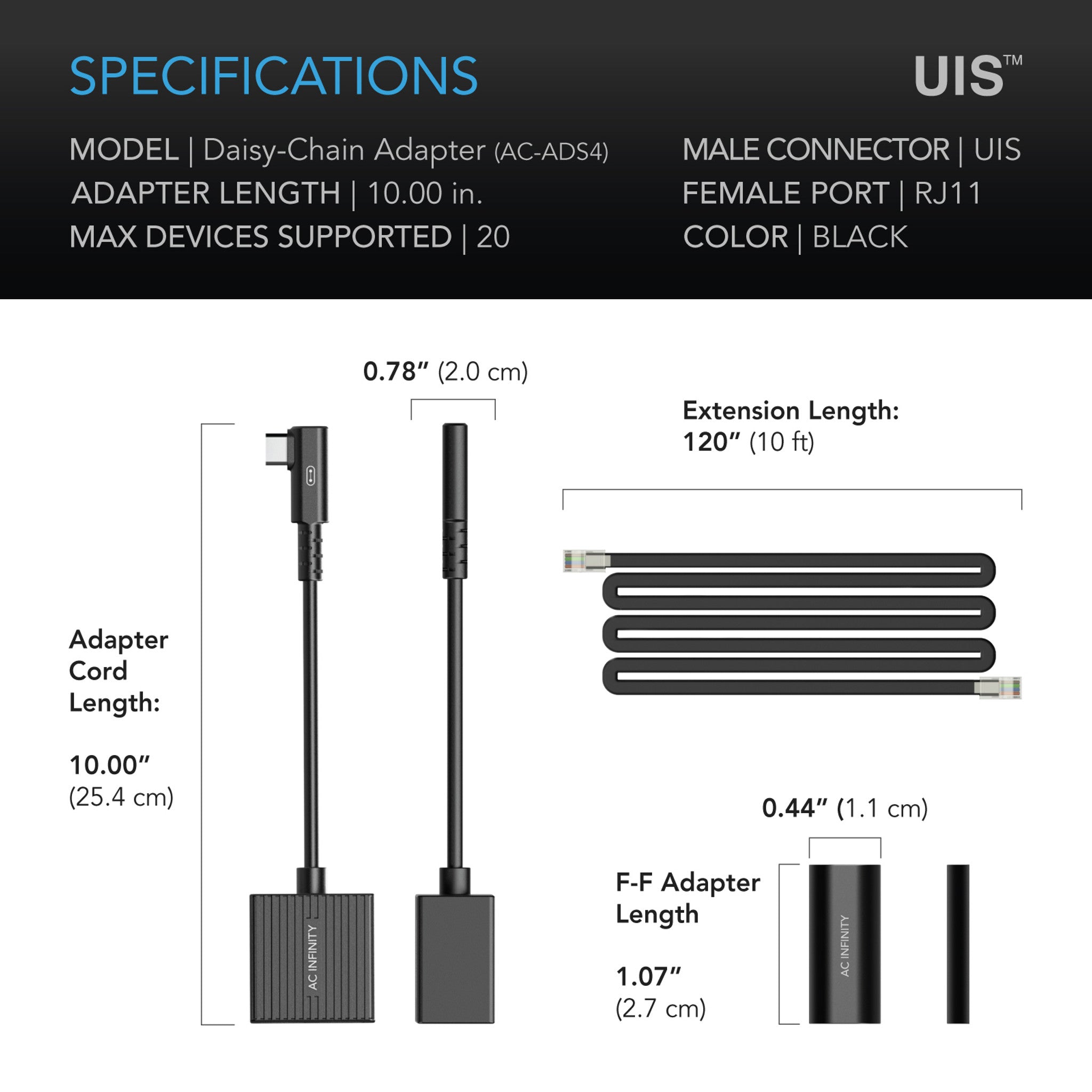
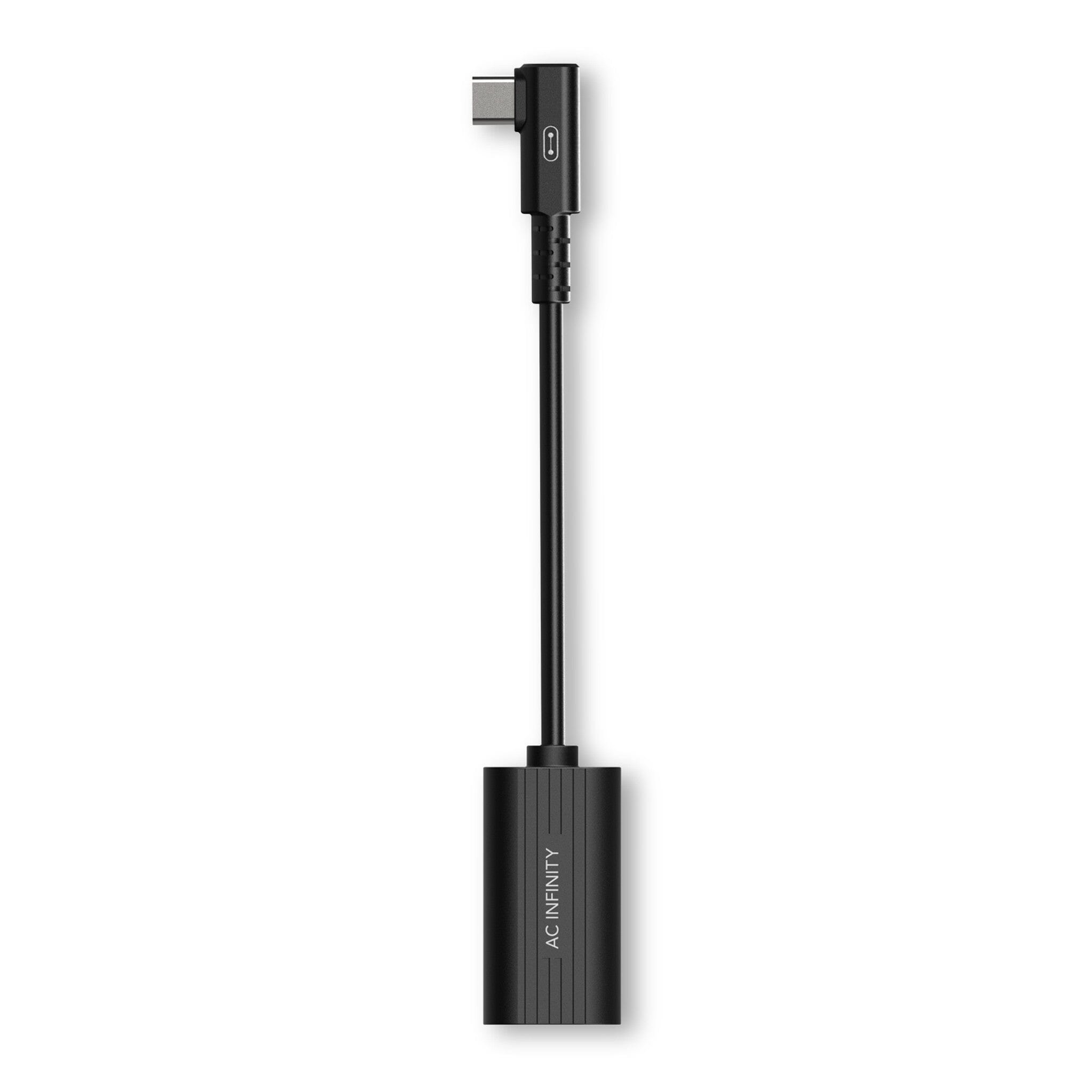
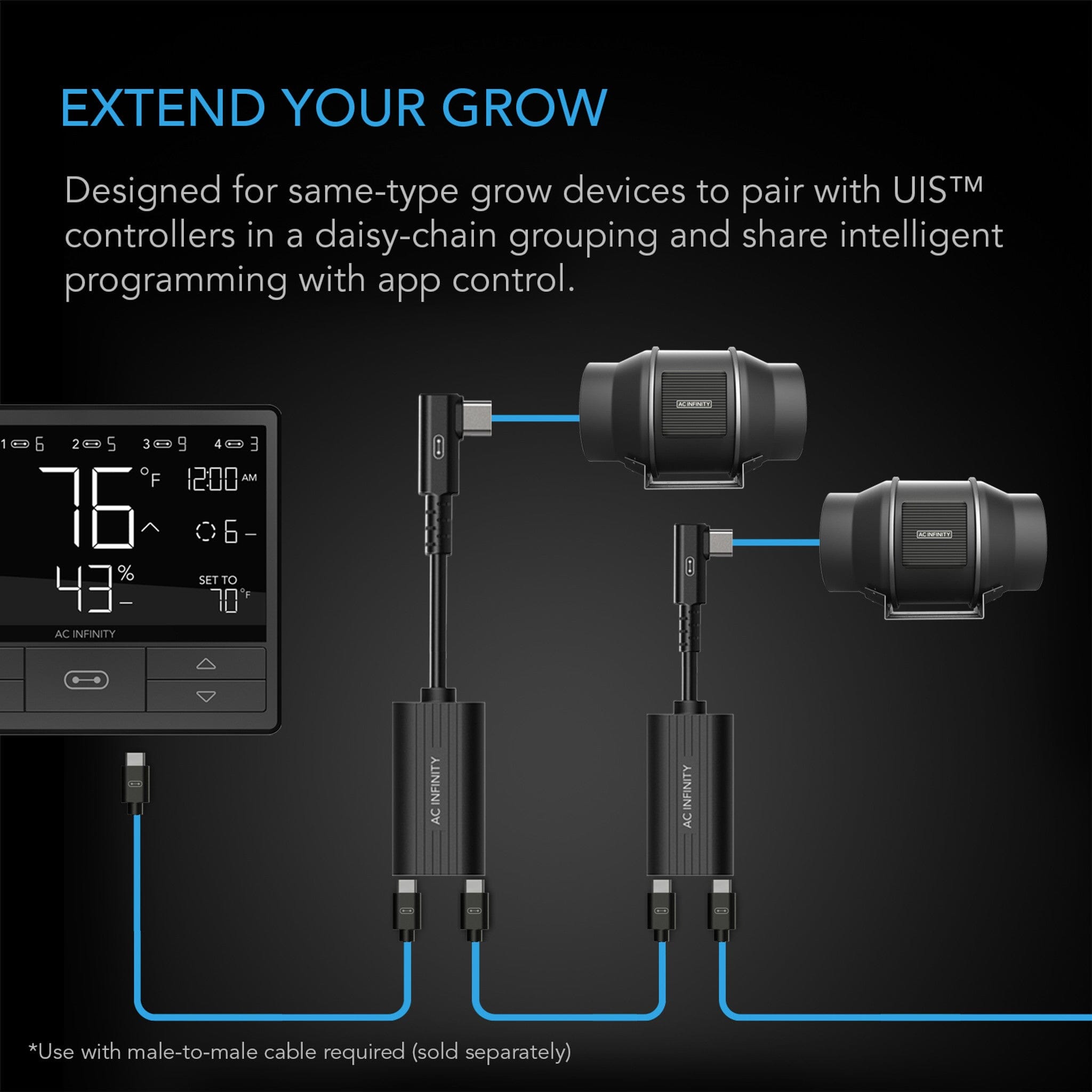
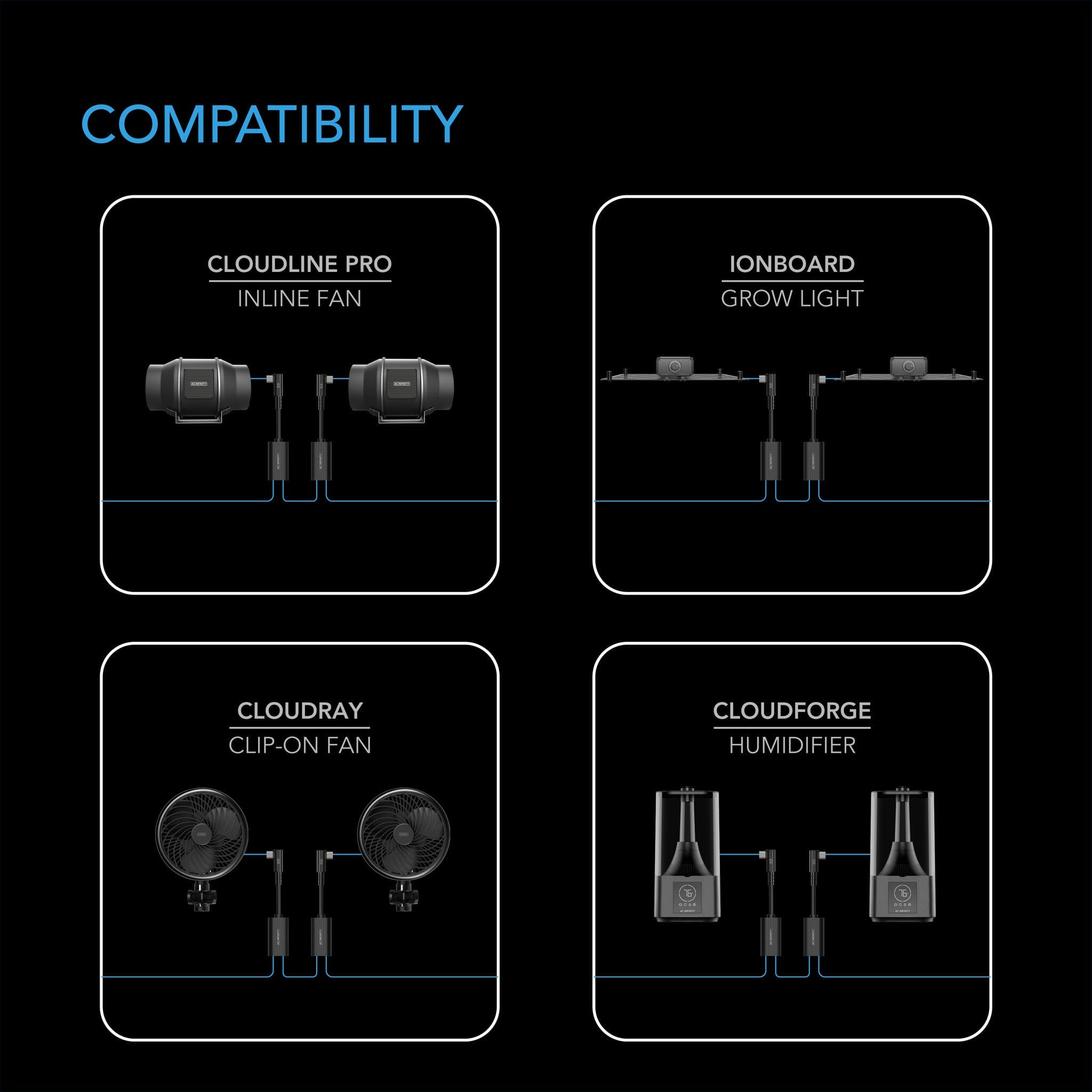
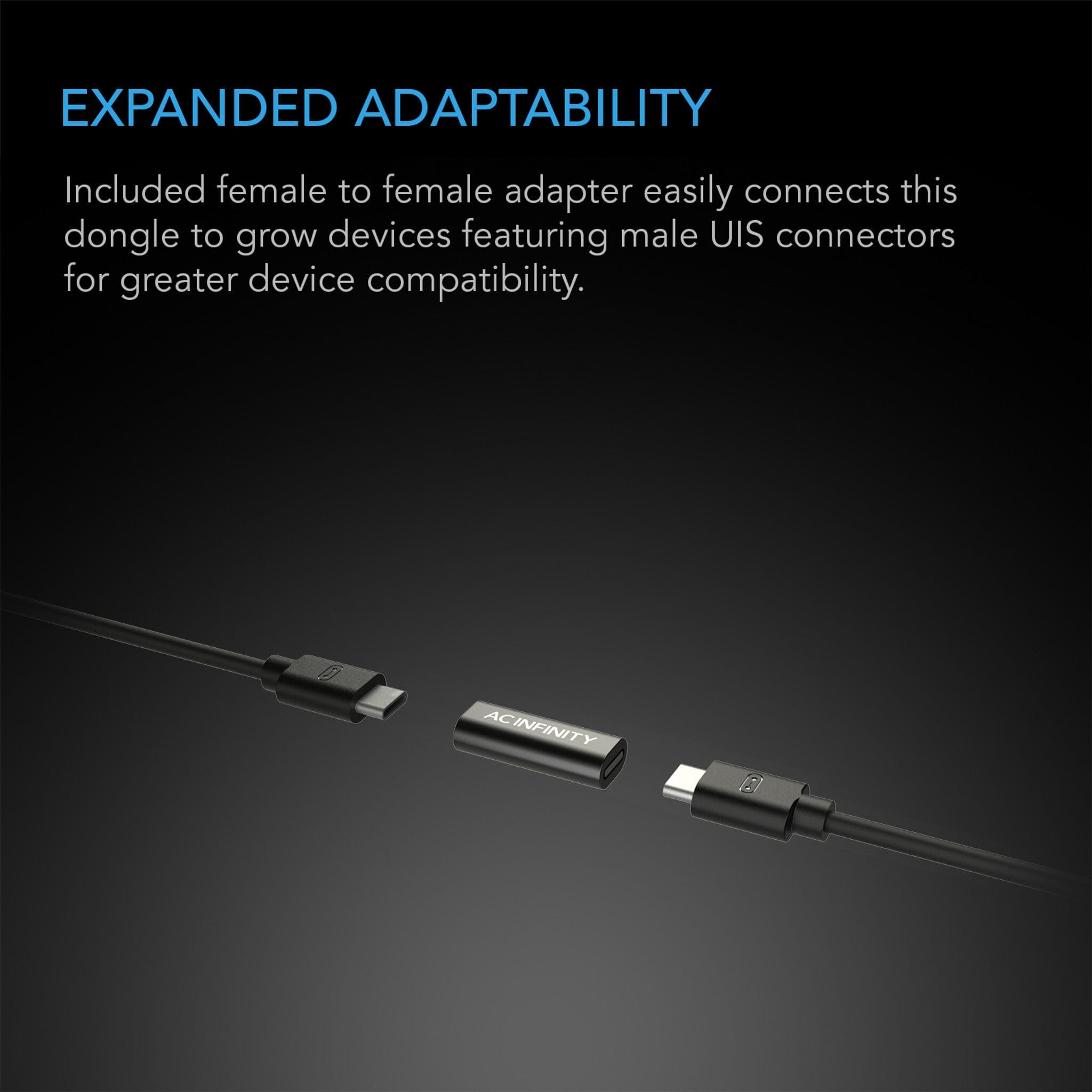
It also reaches gear that is not AC Infinity. A UIS Control Plug puts any ordinary powered device under the same programs, on/off. Dimmable LED drivers connect through the Type-A / Type-B / Type-D lighting adapters. A 4-port splitter hub runs several identical devices from one port on a shared program, and the 1-to-1 transmitter and receiver covers a device too far away to cable.
FAQ
Which controller do I need for one tent?
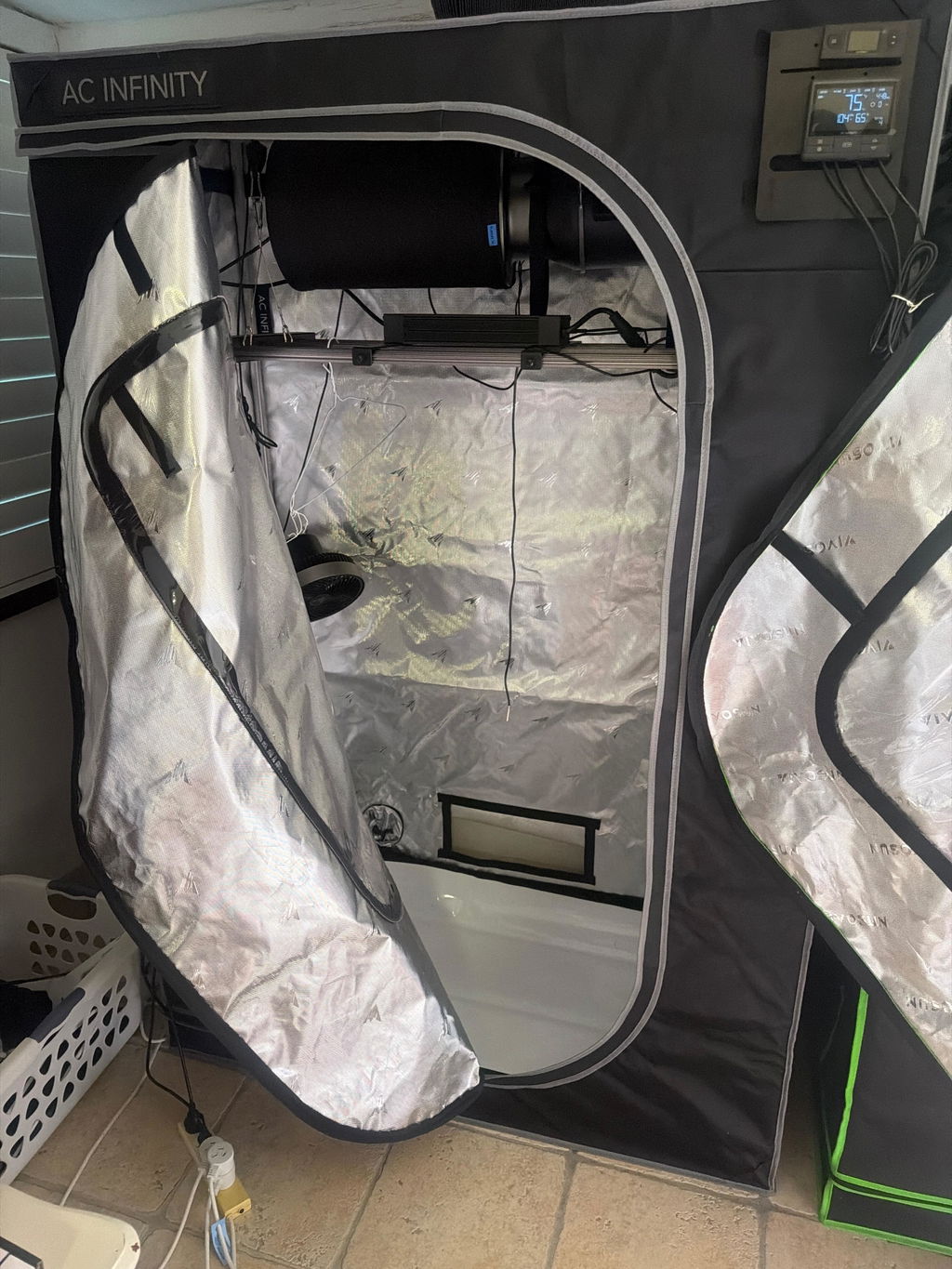
Count the things that need different programs, not the number of devices. A typical single tent runs an extraction fan, a clip fan or two and a humidifier — but the clip fans want the same program as each other, so a splitter hub puts both on one port and the whole tent fits comfortably inside a 69 Pro's four ports. Where you outgrow it is when devices need to behave differently from each other: a heater and an extraction fan on opposing triggers, or a second space on its own schedule. That is the argument for the AI+, and it is about zones and independent programs rather than plug count.
Can I run more devices than the controller has ports?
Yes, and this is the point most people miss. A 4-port splitter hub connects up to four devices to a single controller port, and they all follow that port's one program — ideal for a bank of identical clip fans, or two intake fans that should always match. Hubs can be chained for larger builds. The catch: the devices on a hub cannot be programmed separately from each other, and on the Controller AI+ a hub also gives up device-specific functions like clip-fan oscillation. Put anything that needs its own behaviour on its own port.
Is a Cloudcom enough on its own?
If your space is already stable and you just want to know the numbers, yes — and it is far cheaper than a controller. It is the honest first purchase if you are not sure you have a problem at all: a fortnight of logged data will tell you whether you need to spend anything. Two limits to know. It does not act on what it reads, and it is Bluetooth rather than WiFi, so you pick the history up when you are near it — there is no checking your tent from the office and no push alert when something goes wrong. If being told about a problem while you are out is the point, you want a controller.
69 Pro or 69 Pro+?
Only the number of independently programmed ports differs — four against eight. The programming depth is identical, and both take splitter hubs. Buy the Pro+ if you have more than four things that genuinely need their own settings. If you are choosing between the Pro+ and the AI+, note they are close in price and have the same eight ports, so what you are actually paying for is the second zone, the expandable sensors and the dynamic output.
Can the Controller 69 Pro run on its own, without a fan?
No. The 69 Pro draws its power through the device it is plugged into, so it cannot run standalone. This catches people out when they upgrade and want to redeploy the old controller — the usual workaround is to plug a clip fan into the spare 69 Pro, which powers it and gives you a second independent climate zone. The Controller AI+ has its own power adapter and does not have this limitation.
Will it control a light that isn't AC Infinity?
If the driver has a dimmer port, yes — through a Type-A, Type-B or Type-D lighting adapter, and you get full ramping and scheduling. If it has no control port, a UIS Control Plug will still switch it on and off on schedule. Send us the light model and driver details if you want that confirmed before ordering.
Do I need the app?
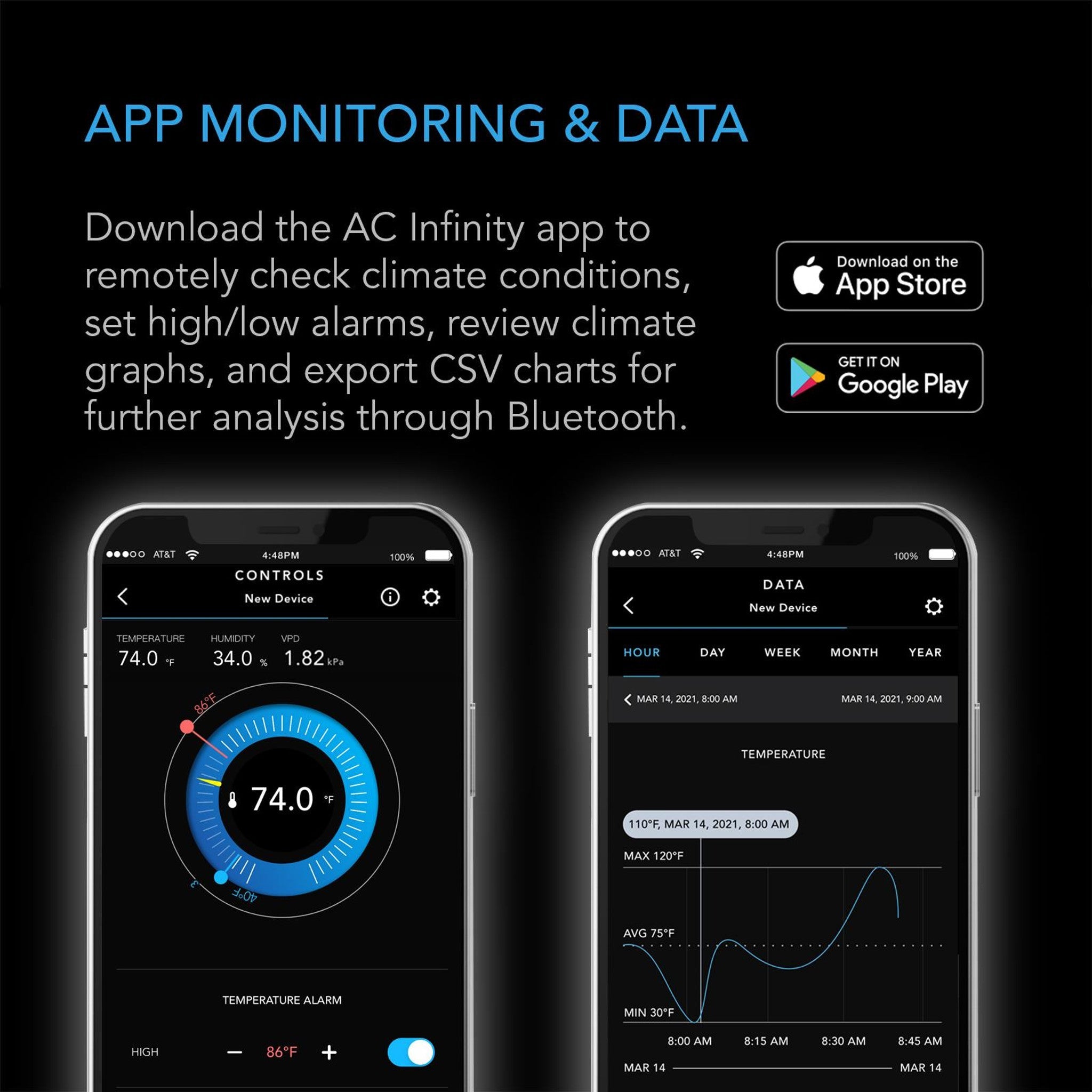
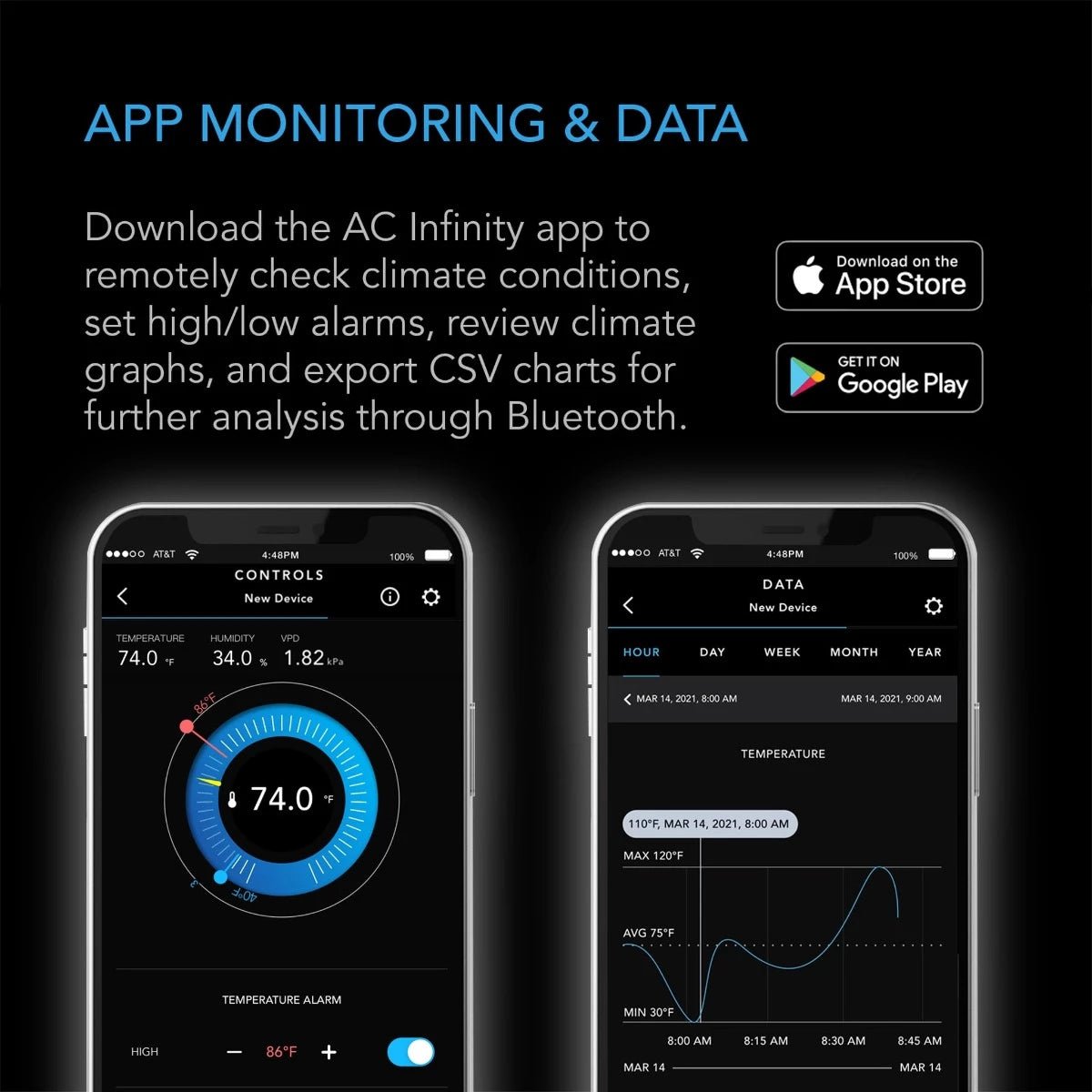
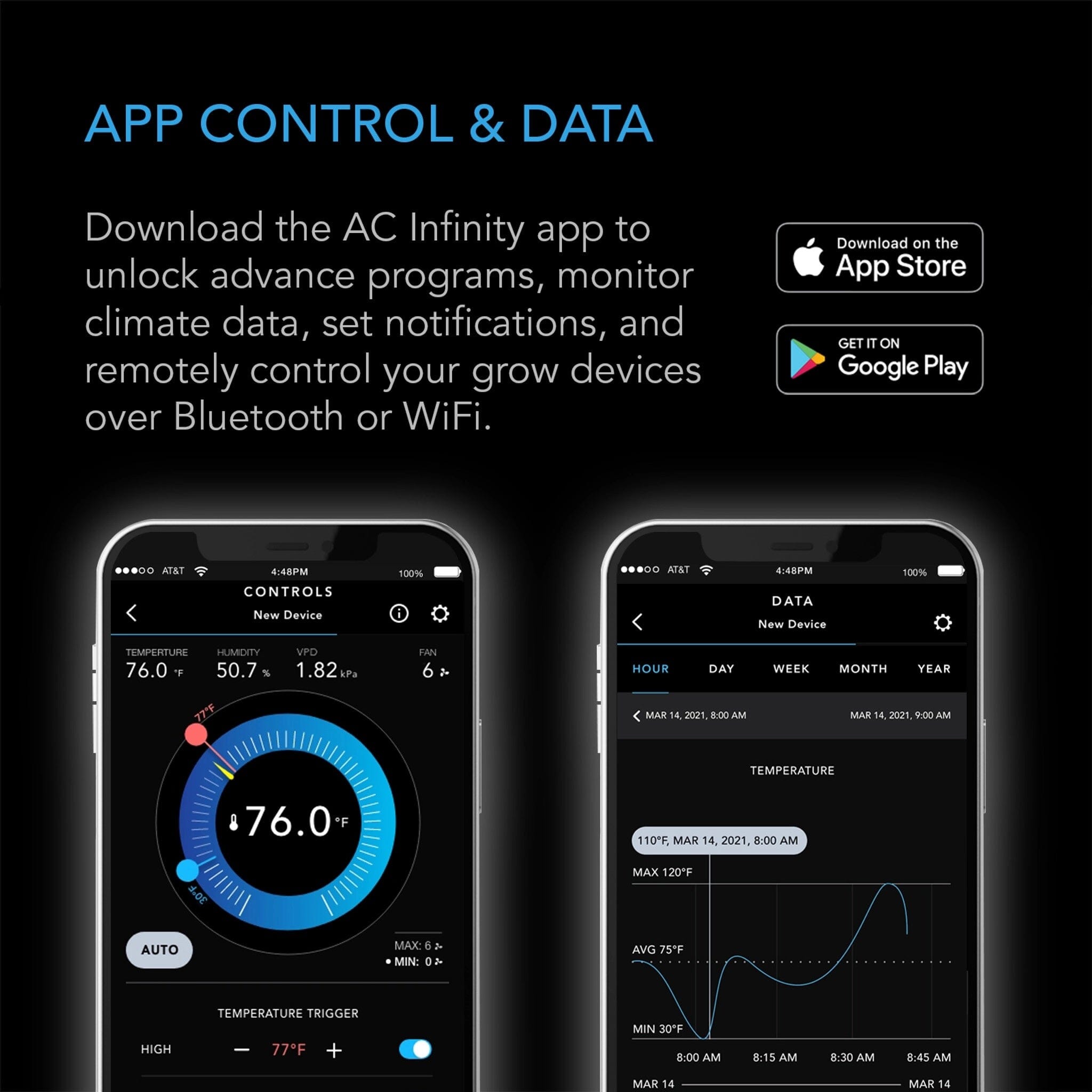
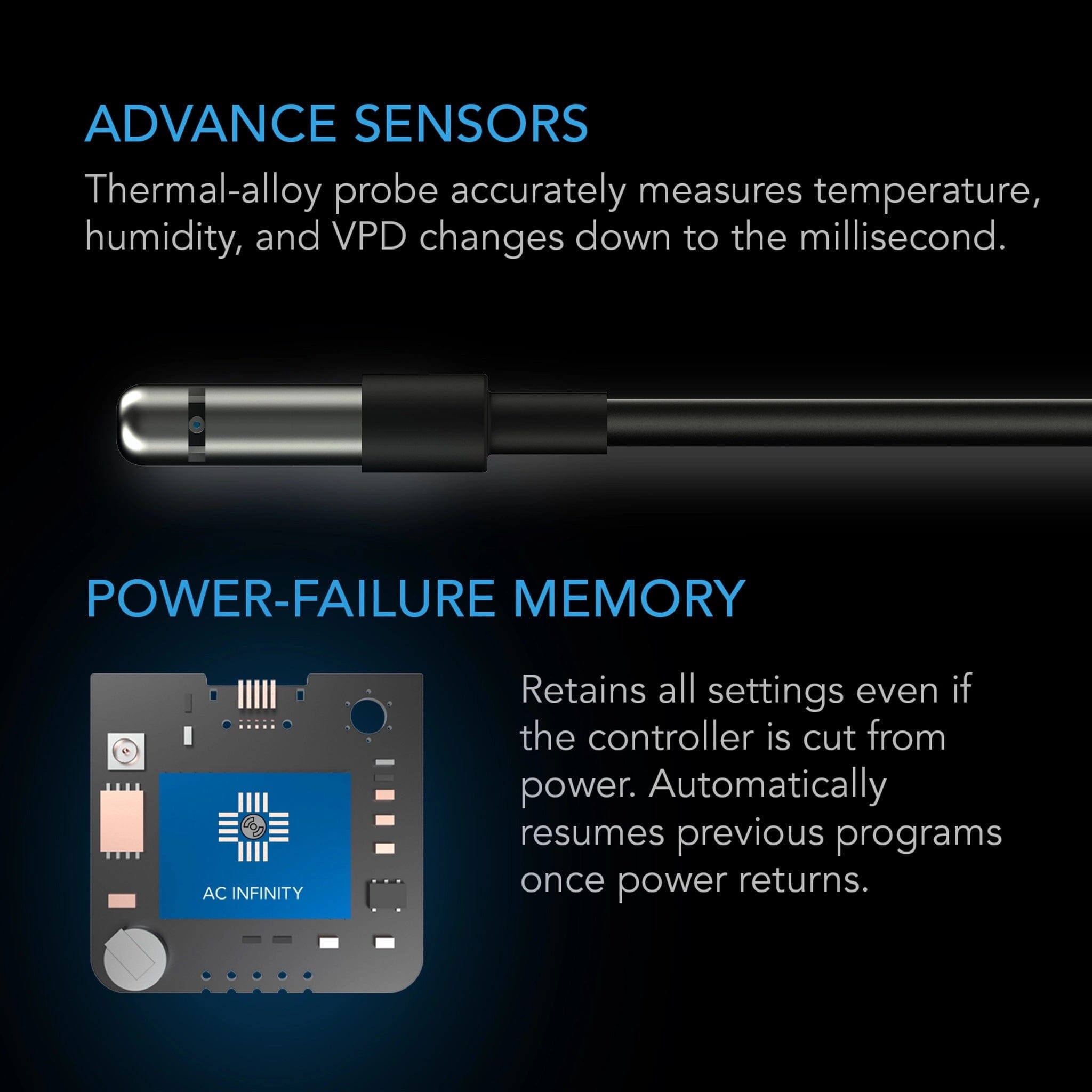
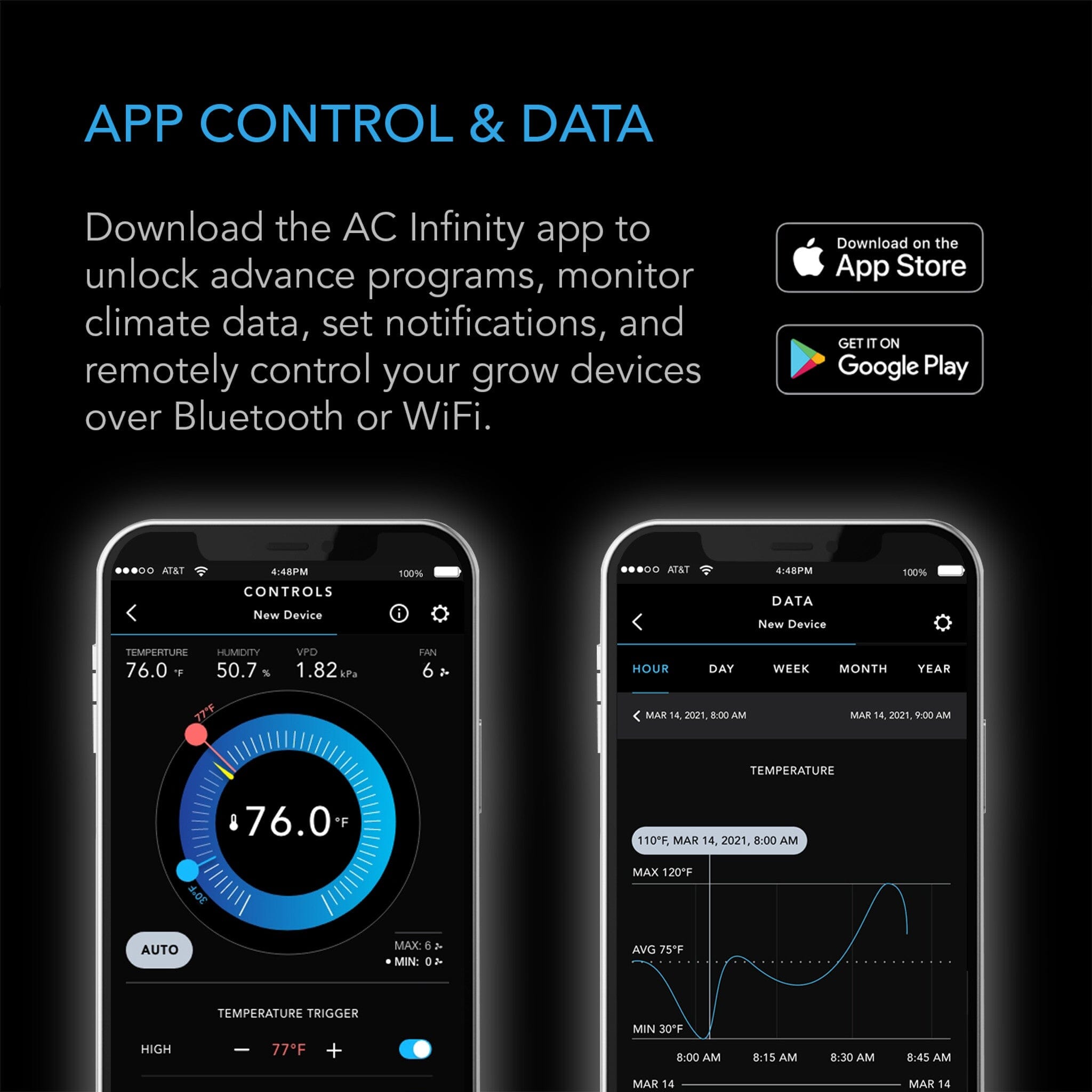
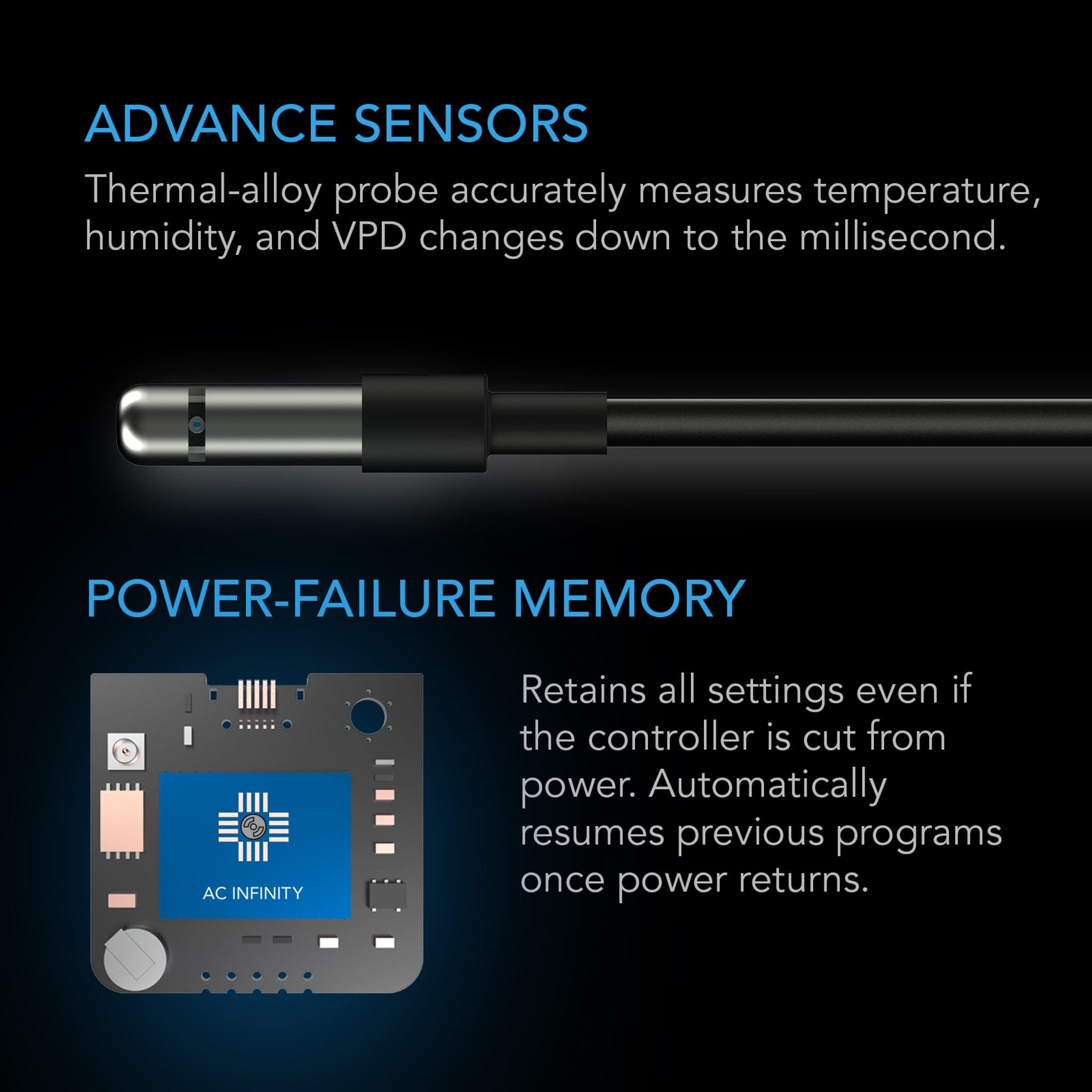
For a controller, no — every program runs on the controller itself and survives a dropped connection or a power cut. The app adds remote access, historical charts, CSV export and push alerts, which are useful but not load-bearing. For a Cloudcom it is the other way around: the display gives you the current reading, but the history and charts live in the app, so pair it if you want the data rather than just a number on a screen.
Is this genuine AC Infinity stock with Australian warranty?
Yes. Quick Bloom Lights is the official Australian importer and distributor for AC Infinity. Stock is held in Sydney, orders ship domestically, every unit comes with an Australian three-pin plug, and warranty is handled here rather than through an overseas seller.