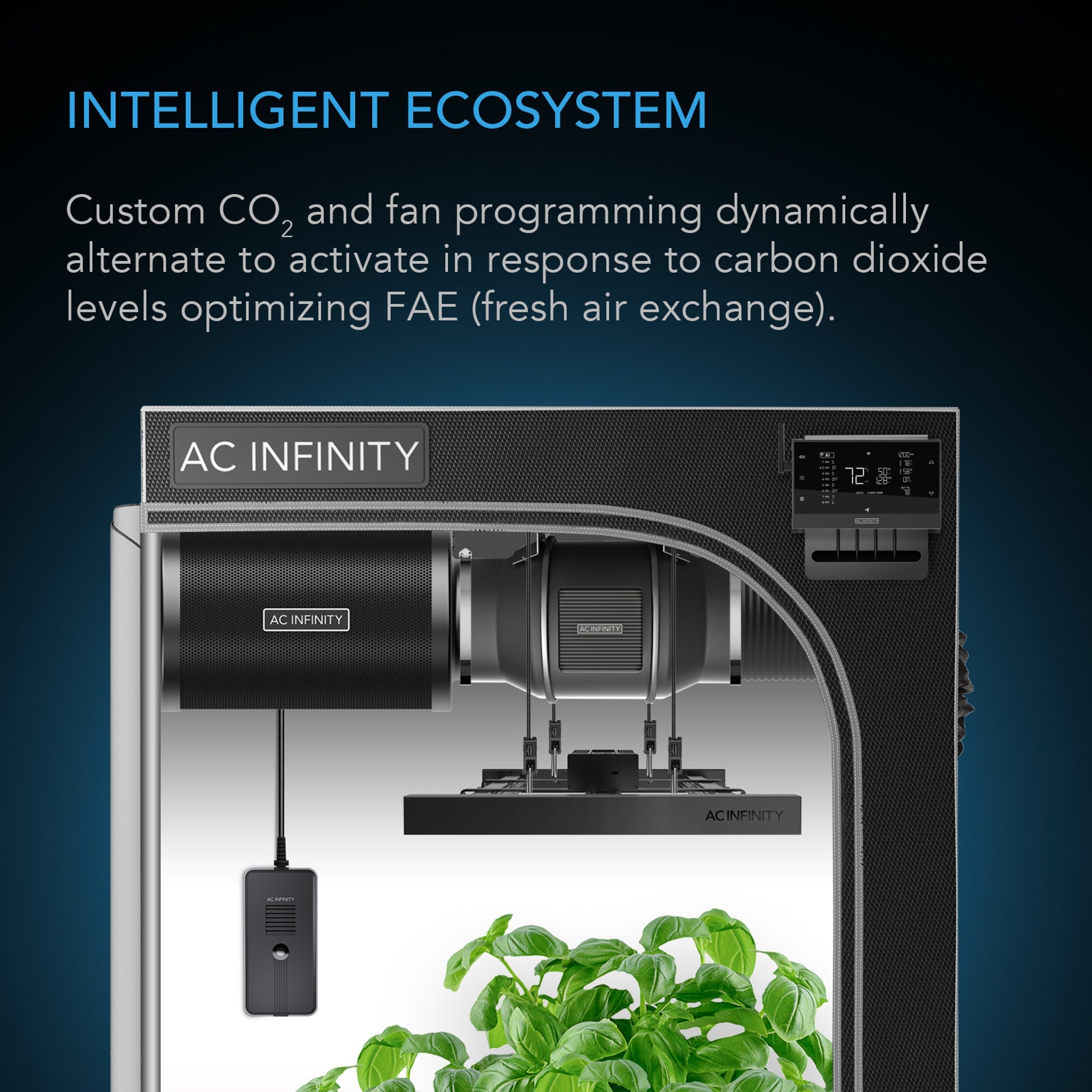
This is AC Infinity's AI-driven control range: a controller that reads your space through its own sensors, learns how the room actually responds, and adjusts output continuously rather than flipping devices on and off at fixed thresholds. The Controller AI+ is the hub — eight UIS™ ports, expandable to 32 devices through splitter hubs, across two independent zones. Around it sit the AI sensor range, the Spectron 7 grow camera, and the adapters that bring non-UIS gear onto the same system. Quick Bloom Lights is the official Australian importer: stocked in Sydney, shipped domestically, warranty handled here.
8 ports
expandable to 32 devices
2 zones
independent climate targets
5 sensor types
climate, CO2, soil, hydro, water
2-year warranty
genuine AC Infinity, QBL-backed
What “AI-powered” actually changes
It is worth being precise about this, because the phrase gets used loosely. A conventional programmable controller works on thresholds you set: humidity above 65%, run the fan at level 7. It has no idea whether level 7 is the right amount of fan for your room, so it overshoots, undershoots, and cycles.
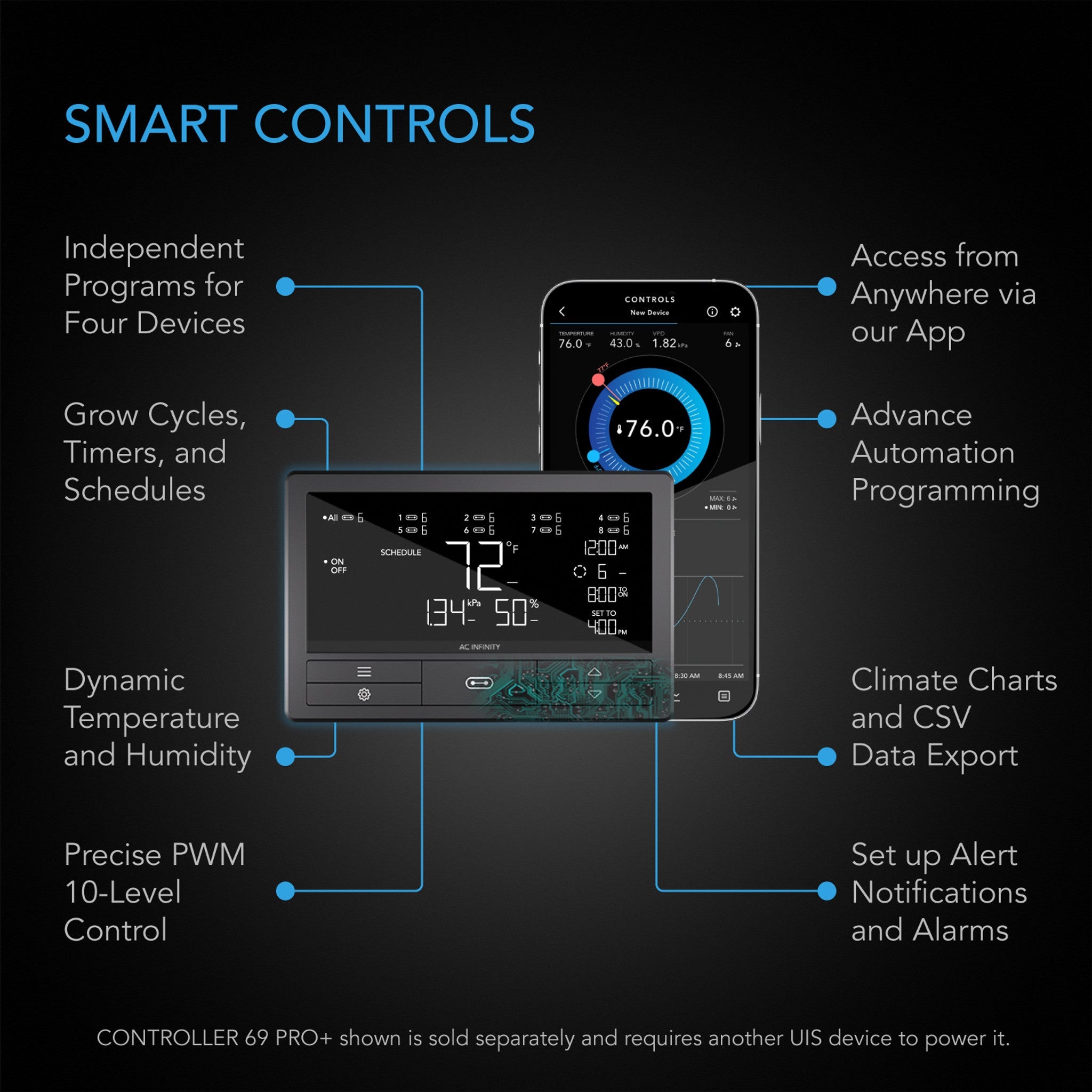
The AI layer changes the second half of that. You still set the target — the temperature, humidity or VPD you want — but the controller works out how much output gets you there, by watching how your space has responded before. A small sealed tent and a large open room need very different responses to the same 5% humidity rise, and the controller converges on each without you tuning it by hand.
What it is not: a replacement for equipment that is the wrong size. No amount of dynamic adjustment makes an undersized fan move more air. Get the hardware right first — our exhaust fan size calculator is the place to start — and treat the controller as what holds a correctly sized system on target.
The sensors, and which ones are worth it
The controller ships with climate sensing built in, so it is useful on day one with nothing added. The rest of the range is genuinely optional, and some of it only earns its price in specific setups. Straight assessment of each:
| Sensor |
What it adds |
Worth it if |
| AI Climate Sensor |
A second temperature, humidity and VPD reading point |
You are running two zones, or want a reading at canopy height as well as at the controller |
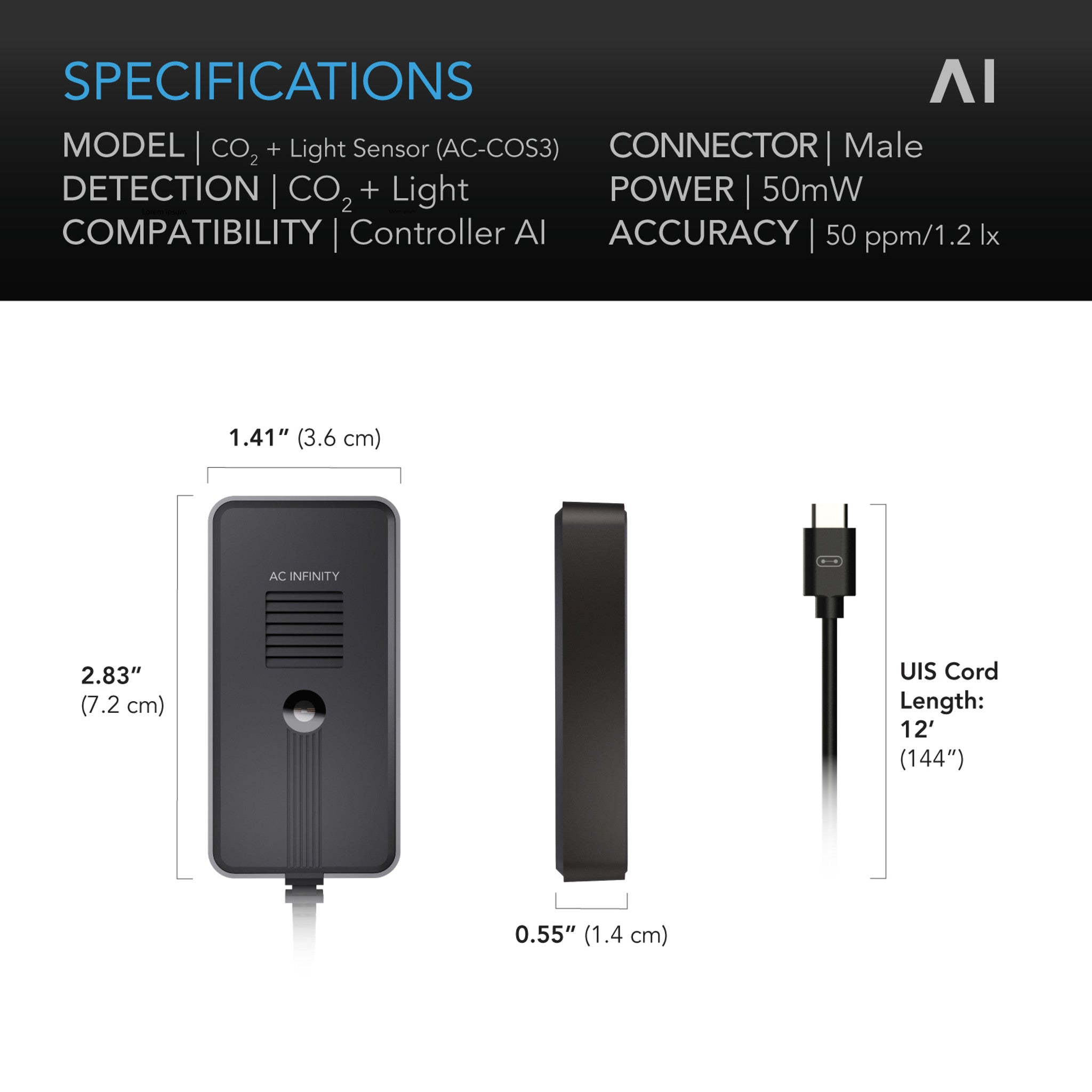
| CO2 + Light Sensor |
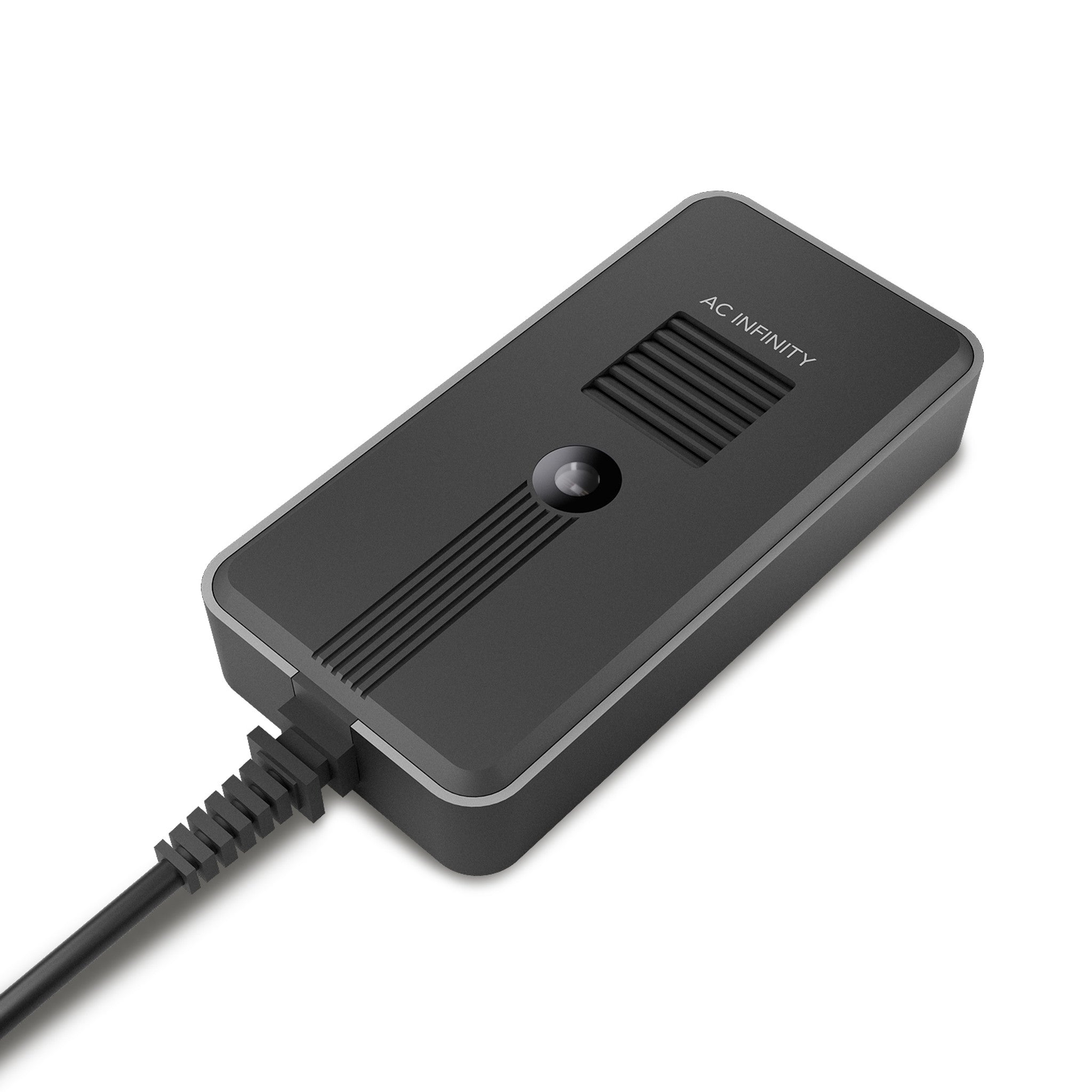
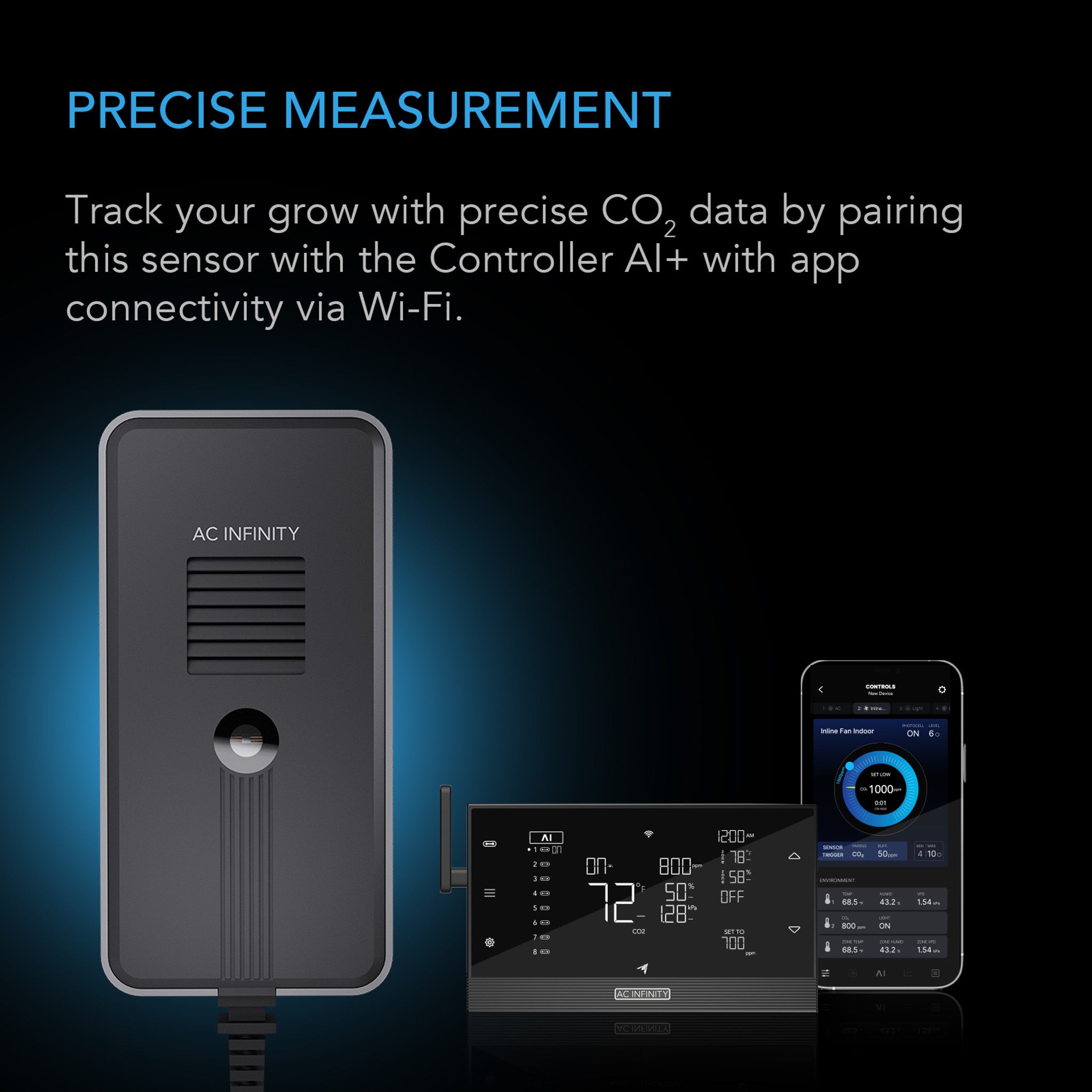
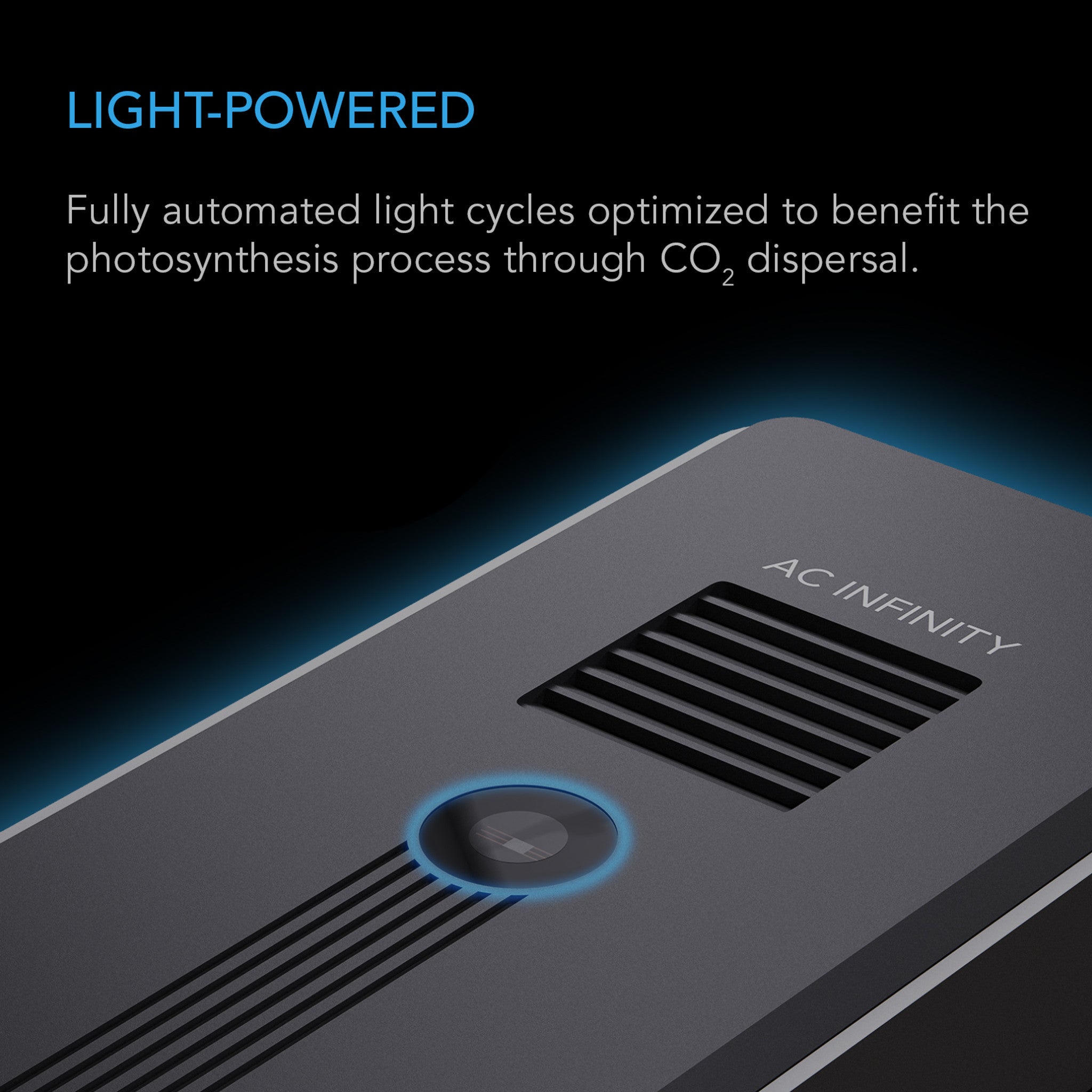
CO2 tracking, light detection for day/night scheduling, FAE timing |
You are dosing CO2, or want fresh-air exchange driven by actual CO2 rather than a timer |
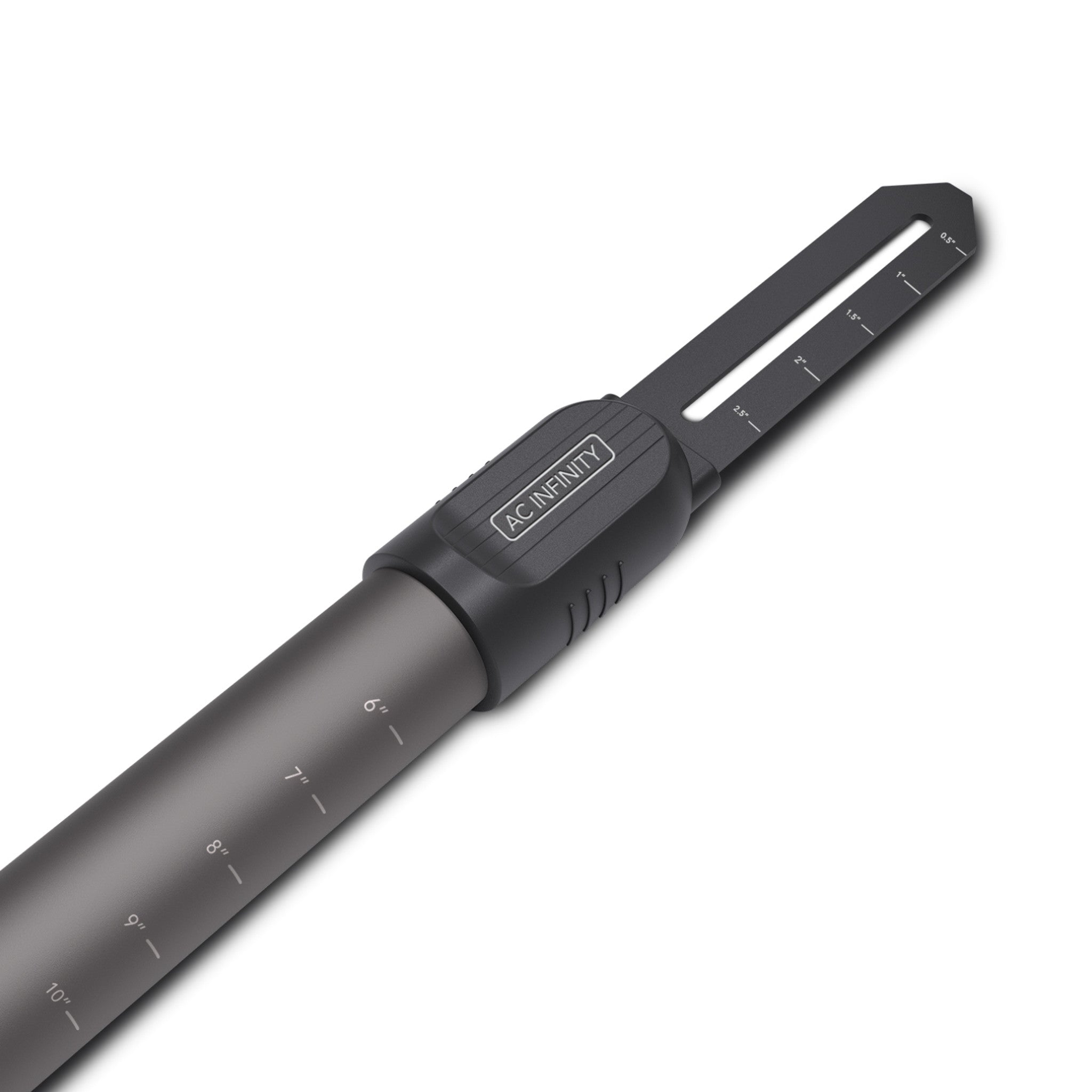
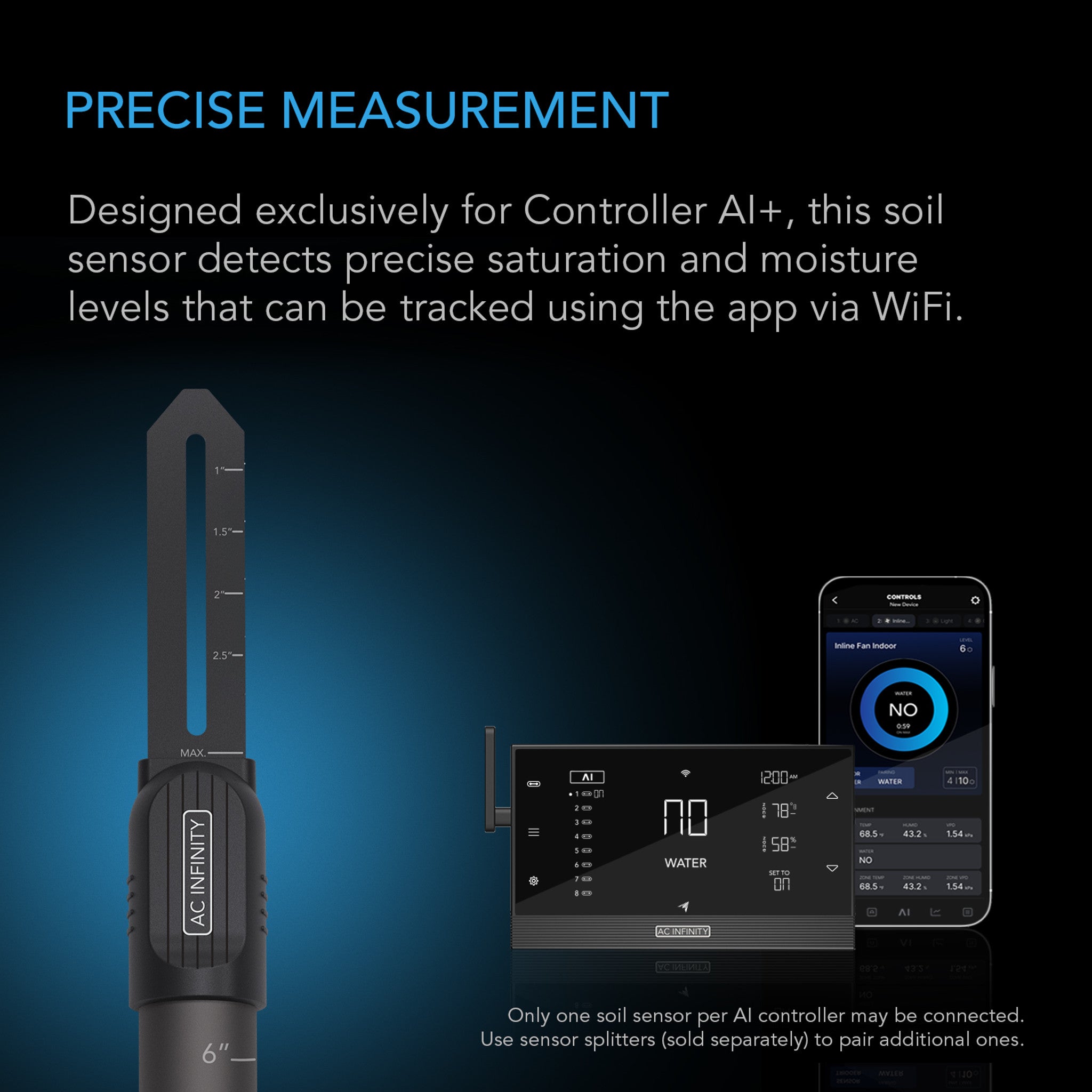
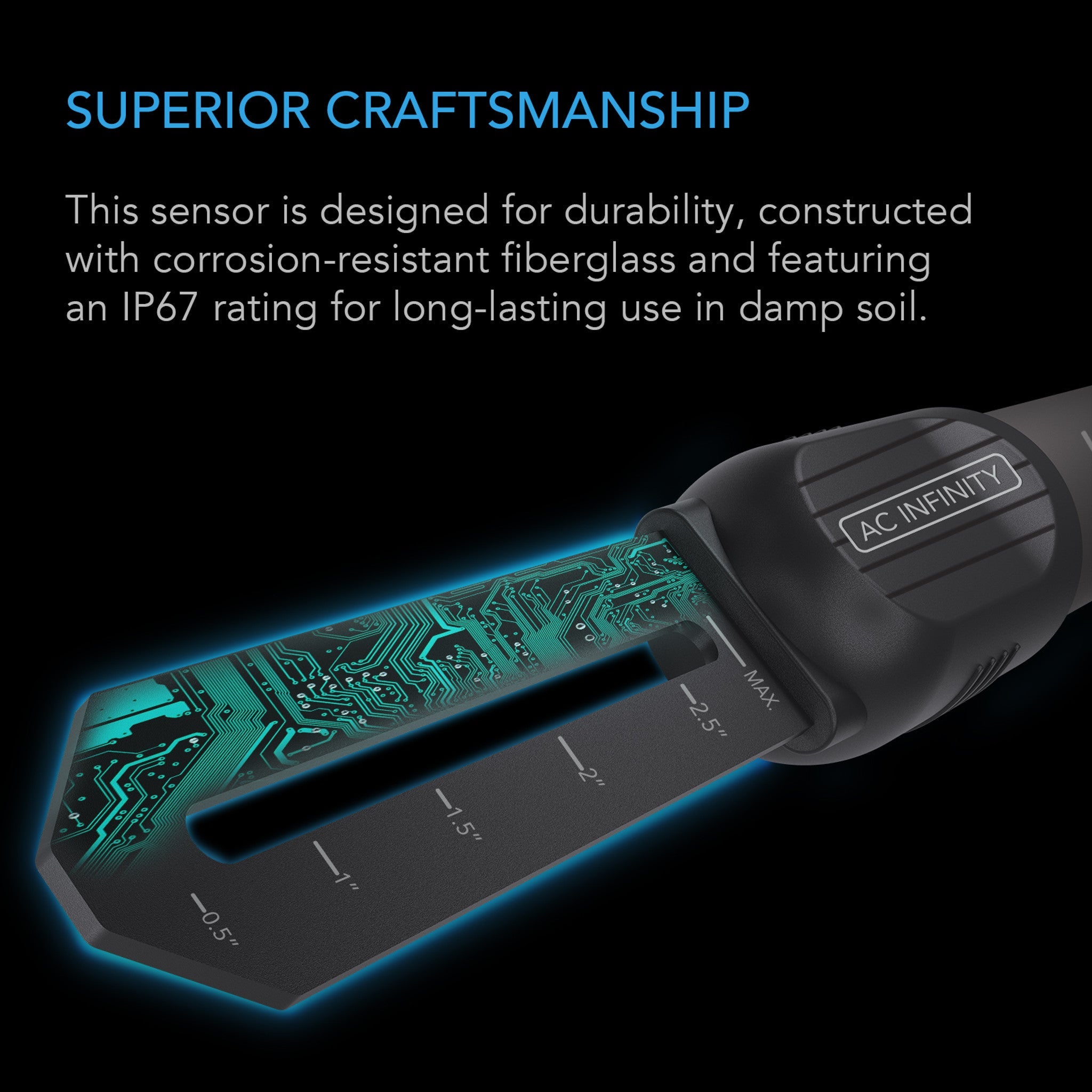
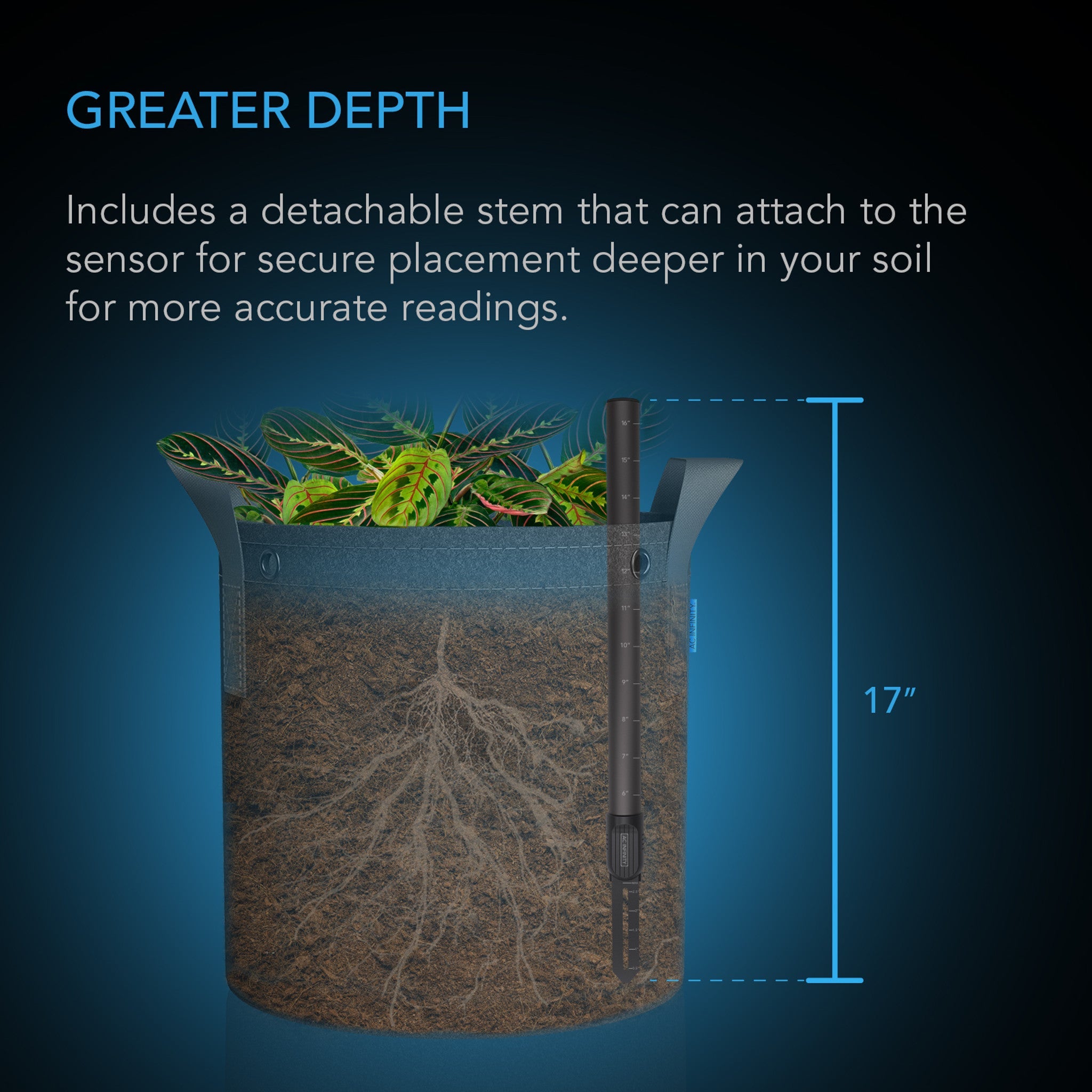
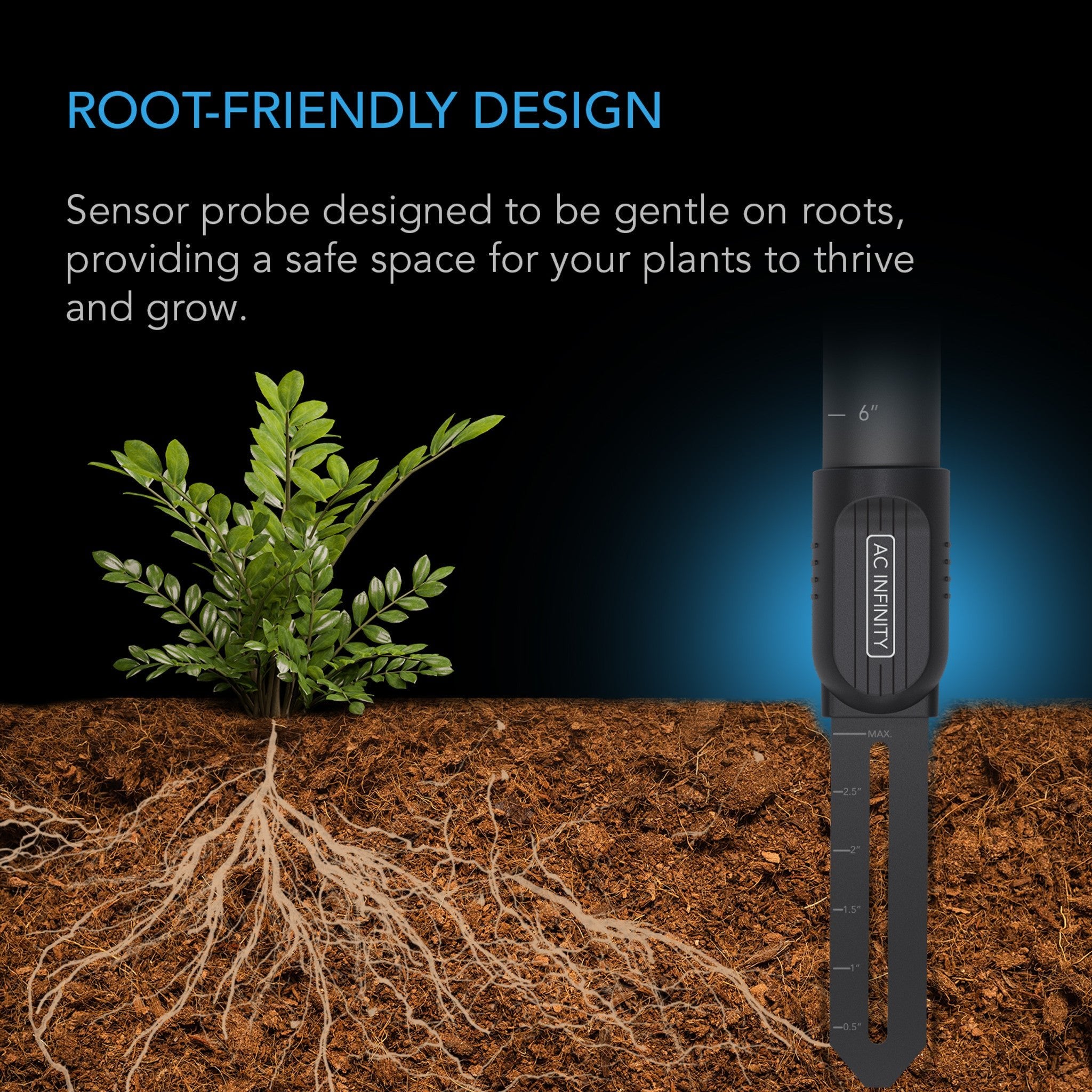
| Soil Sensor Probe |
Substrate moisture readings |
You are hand-watering and want the data; less useful in a scheduled irrigation setup |
| AI Hydro Sensor |
pH, EC, TDS and water temperature, logged continuously |
You run recirculating hydro or a reservoir you currently test by hand — it is the most expensive item here and only pays off if you are testing often |
| AI Water Sensor |
IP68 liquid-presence detection with an alert |
Cheap insurance anywhere a reservoir, pump or drain line could let go unattended |
If you are starting out, start with the controller alone. Add sensors when you have a specific question the built-in climate reading cannot answer — that is a much better way to spend the money than buying the full set up front.
Bringing your existing gear onto the system
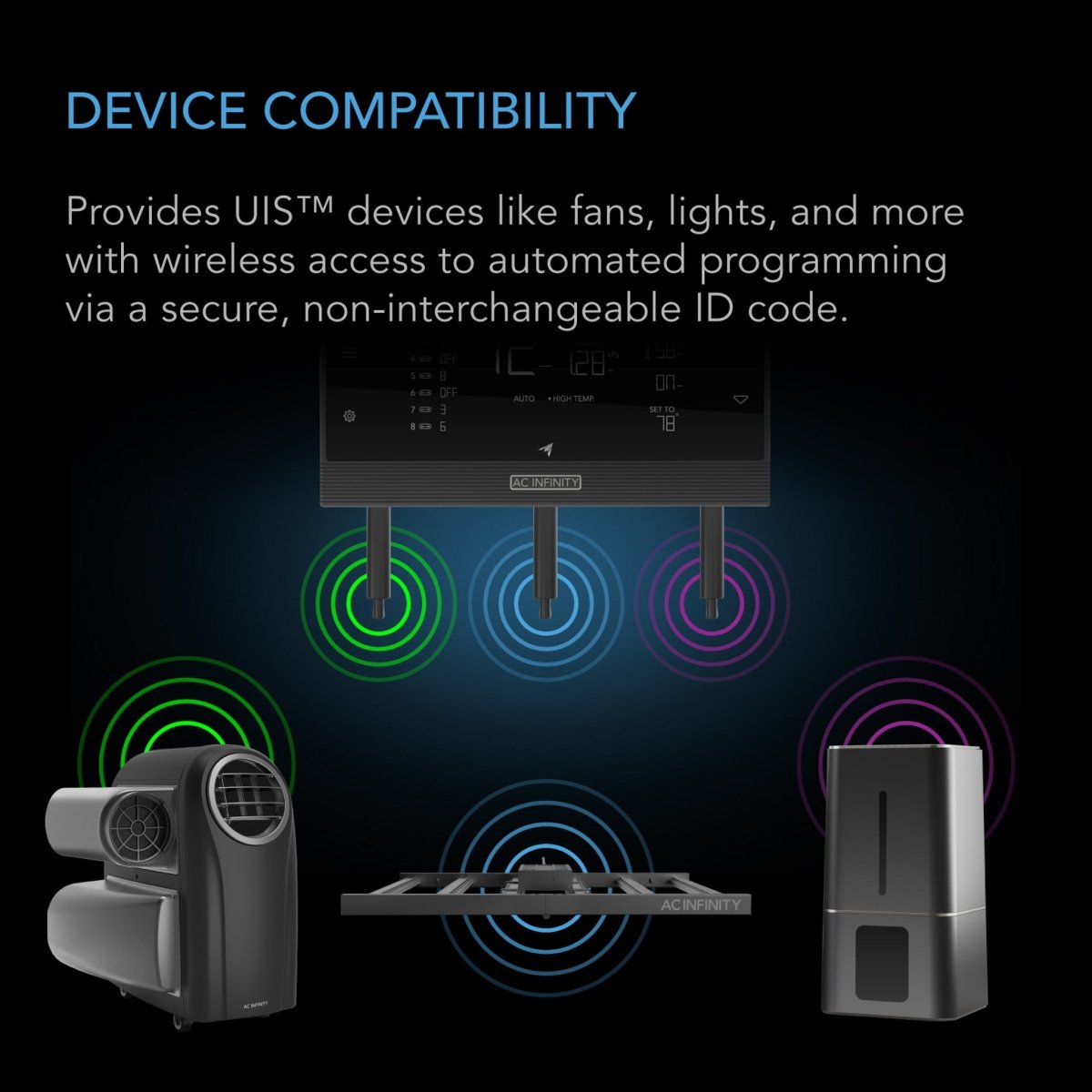
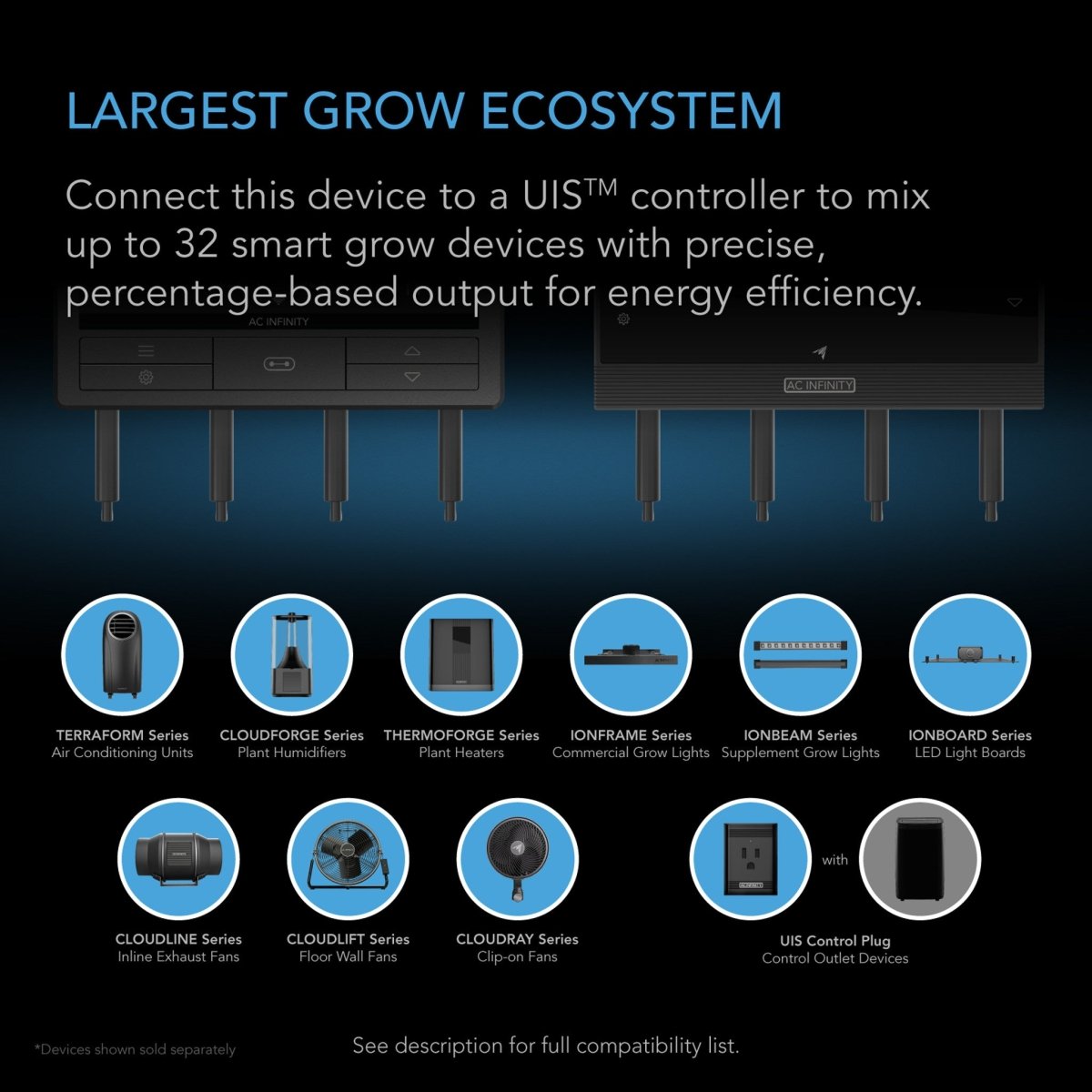
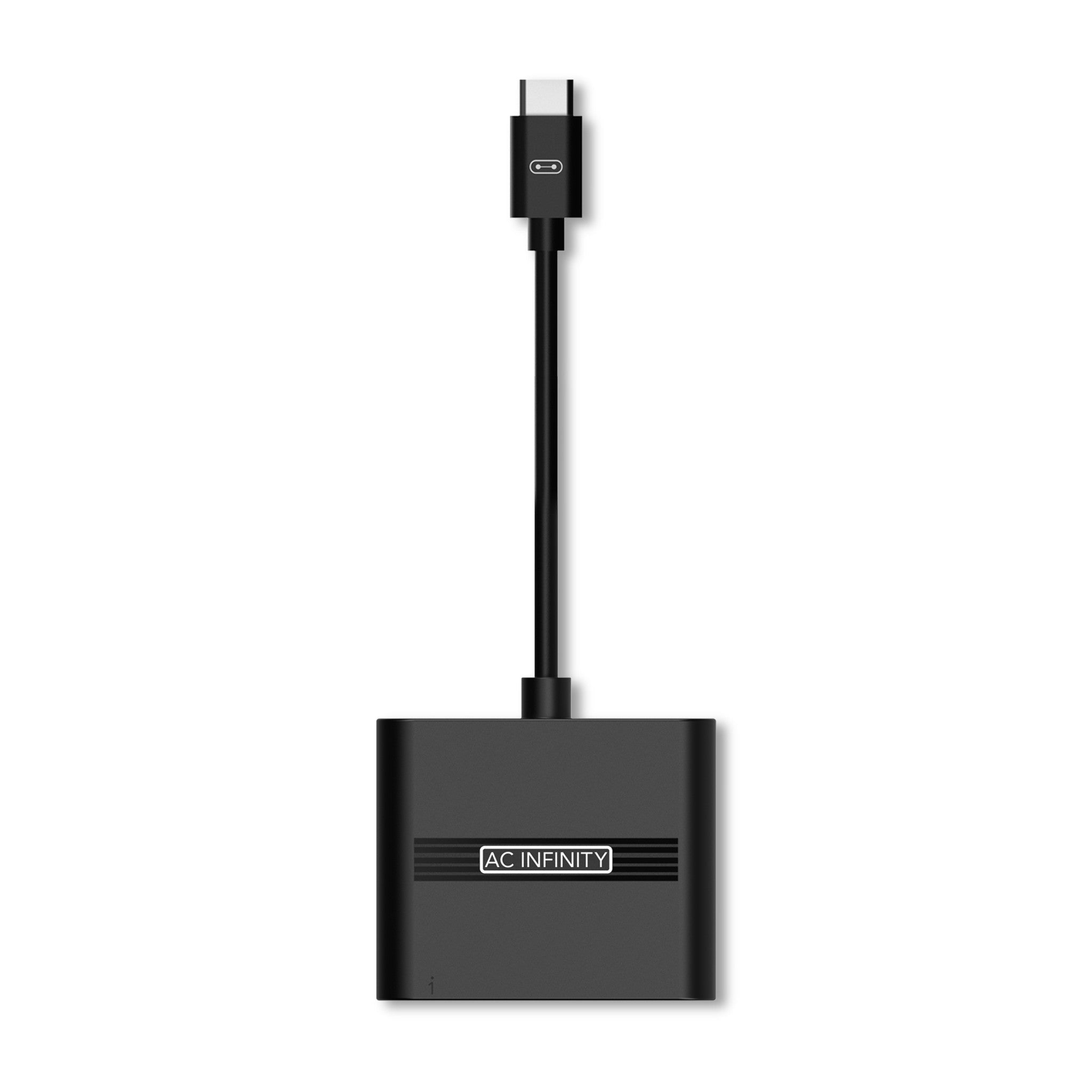
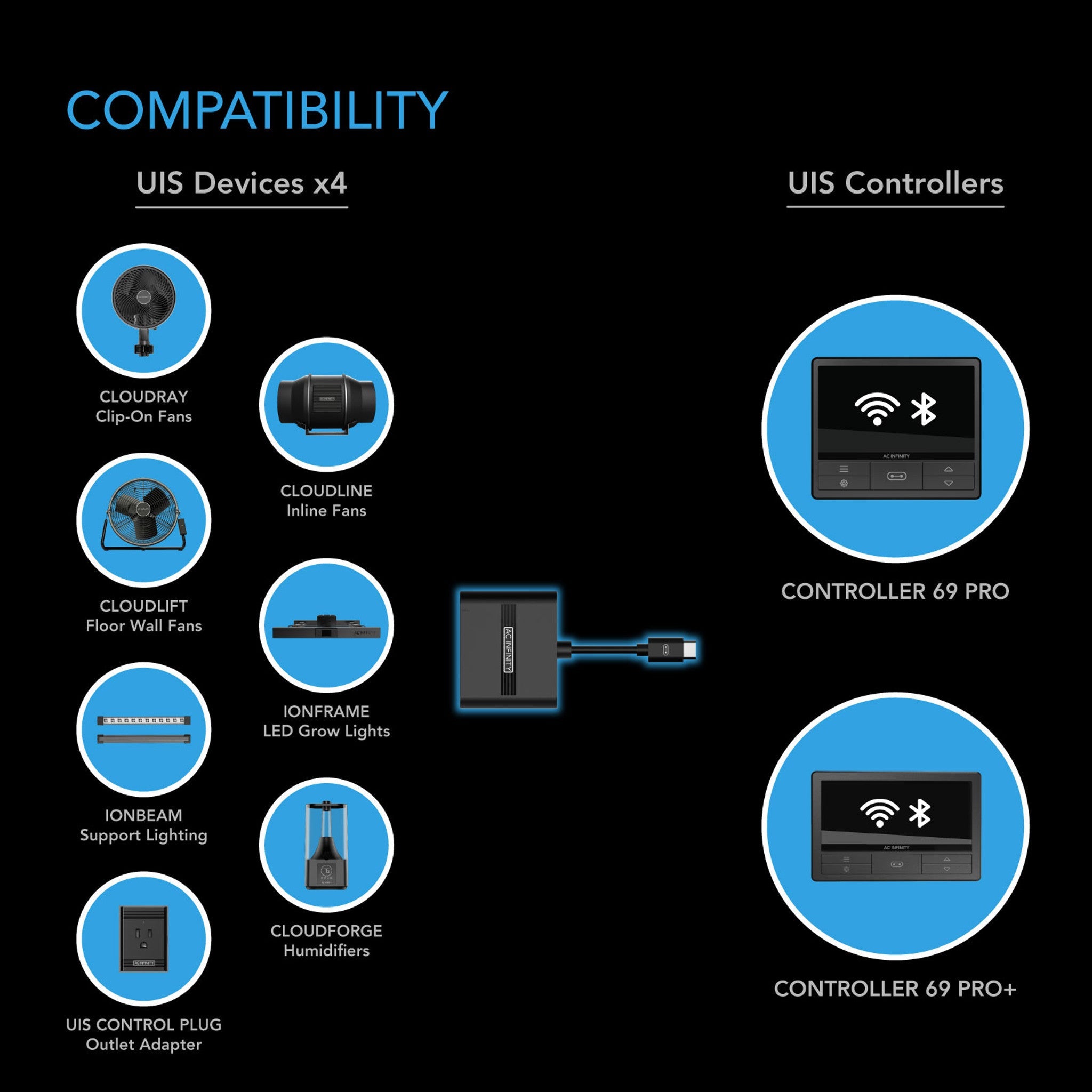
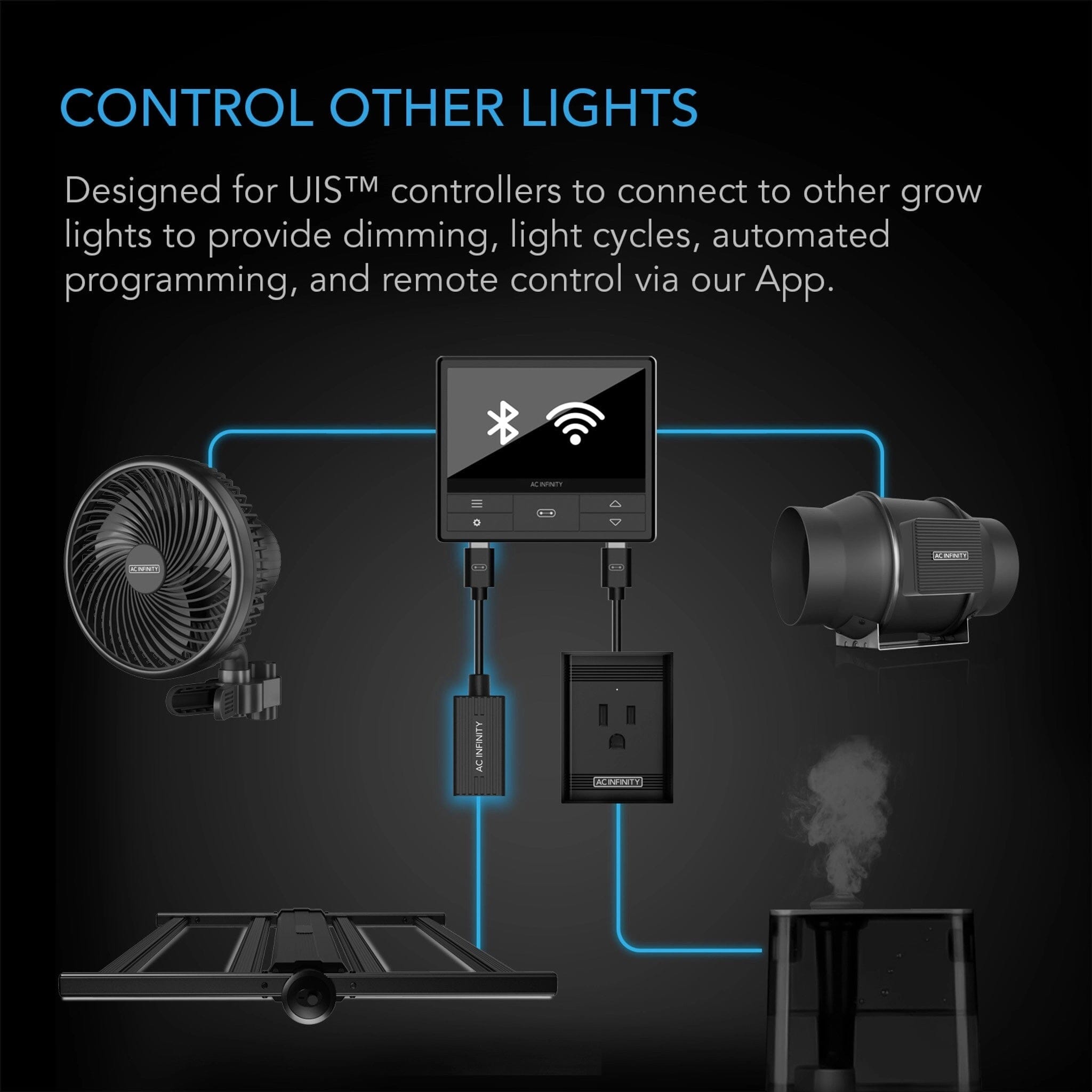
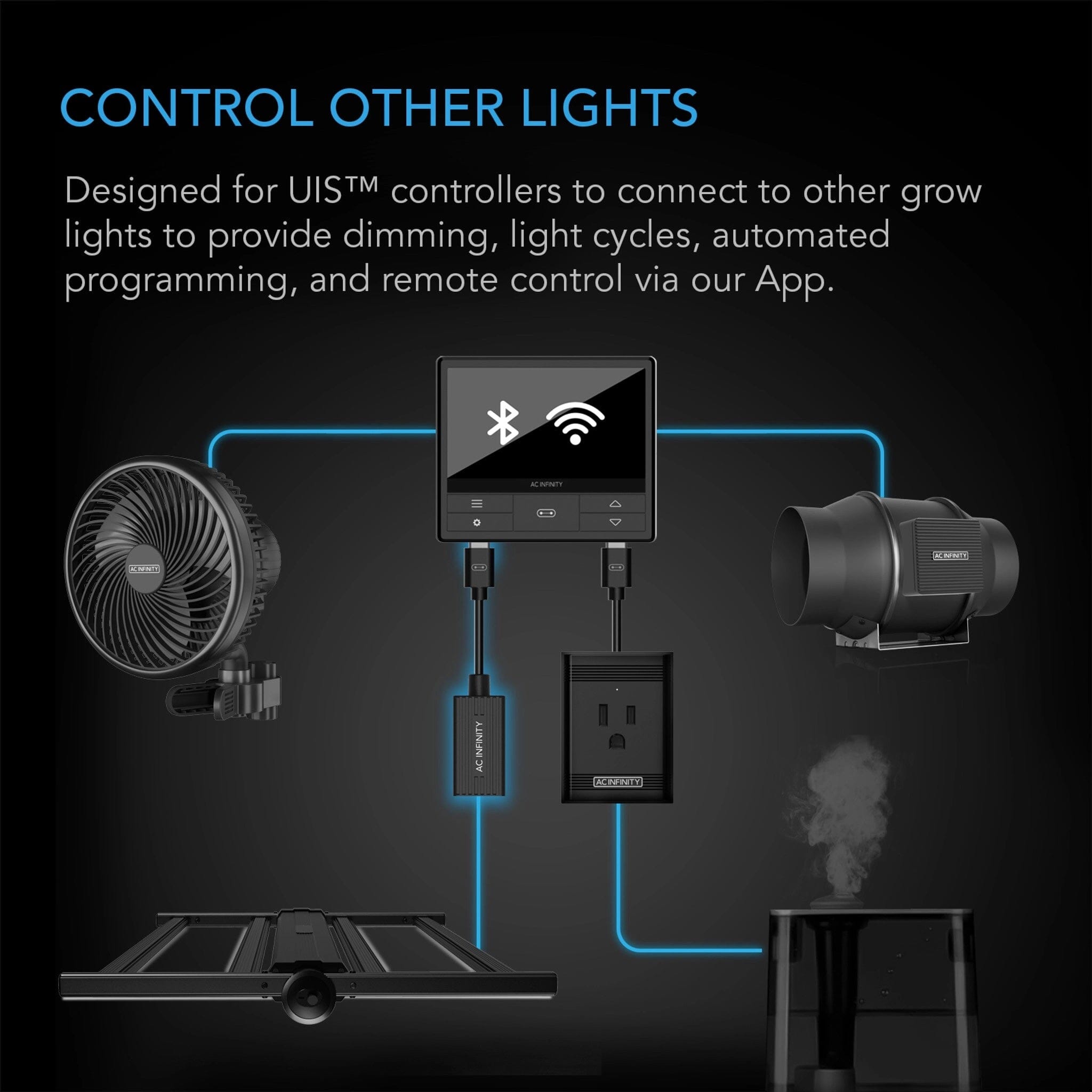
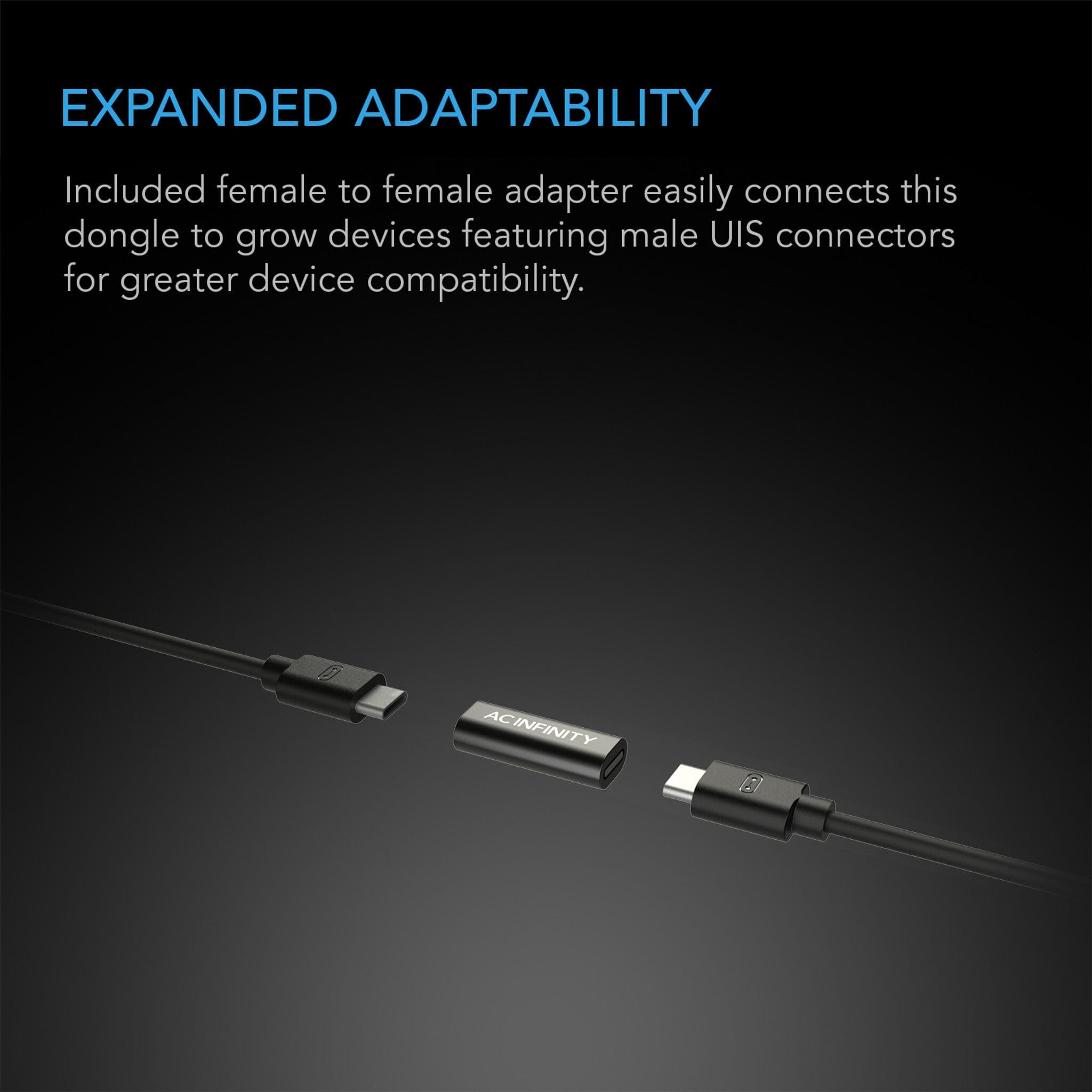
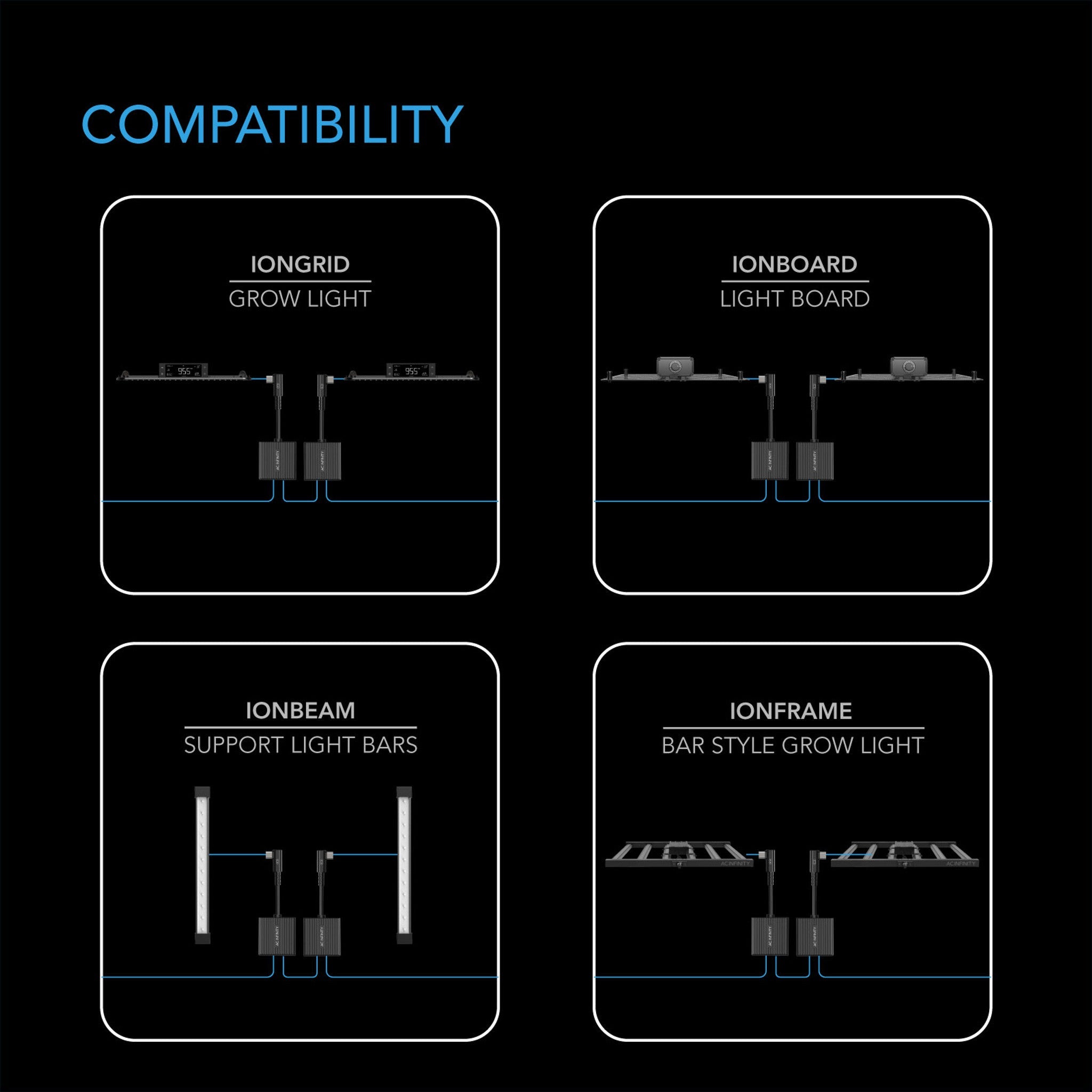
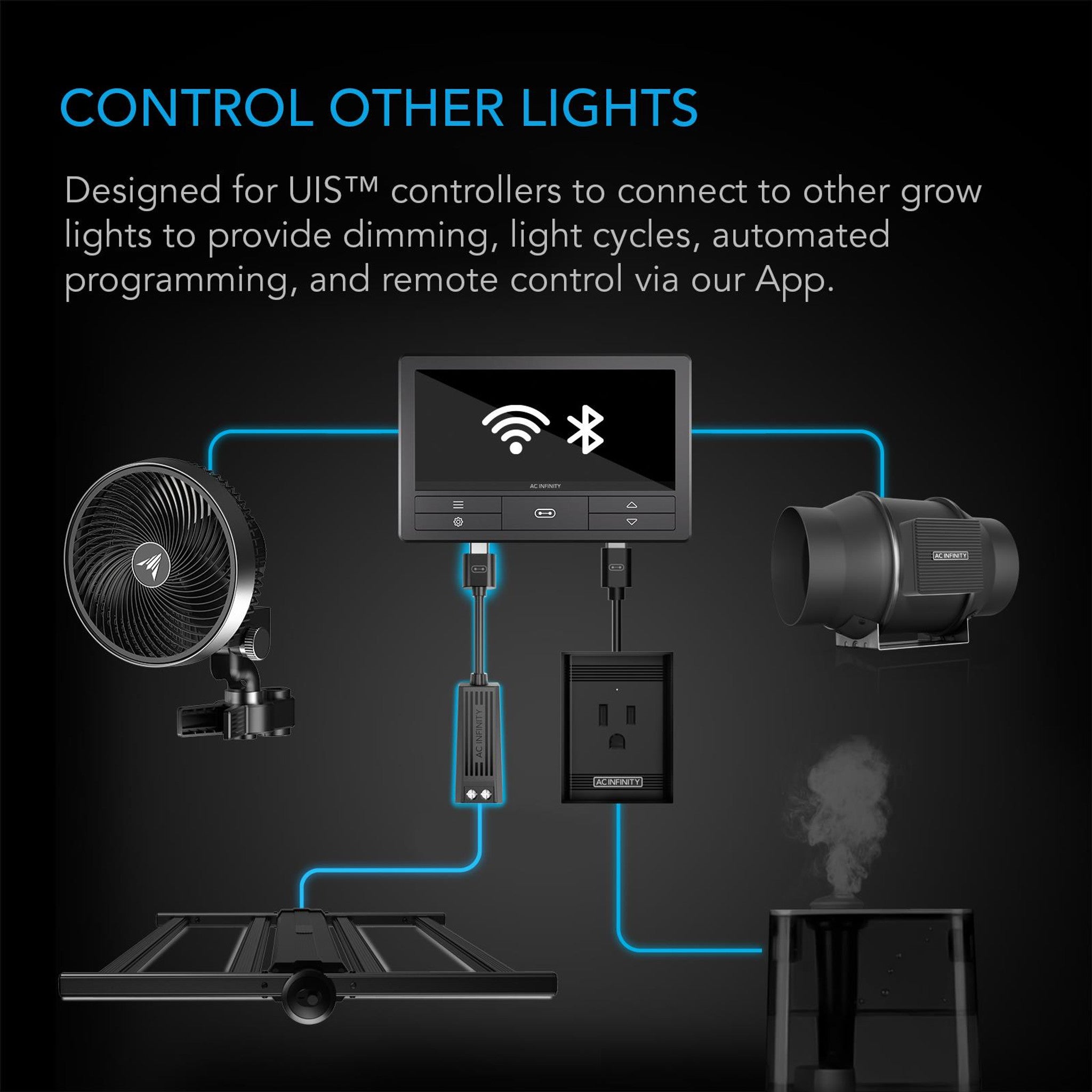
UIS is AC Infinity's control port. Their fans, humidifiers, dehumidifiers and heaters plug straight in. Everything else needs an adapter, and which one depends on what you are connecting:
Lights with a dimmer port
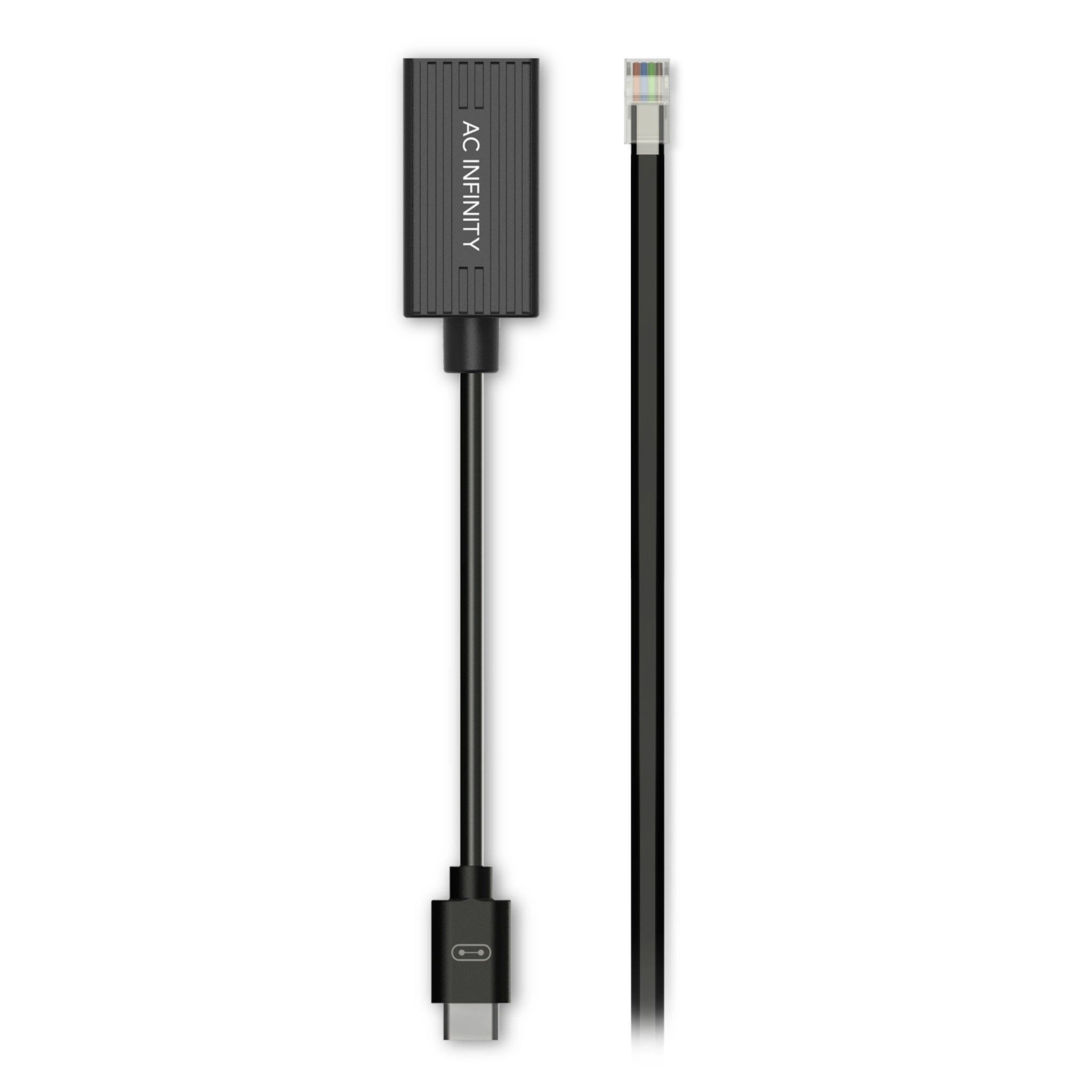
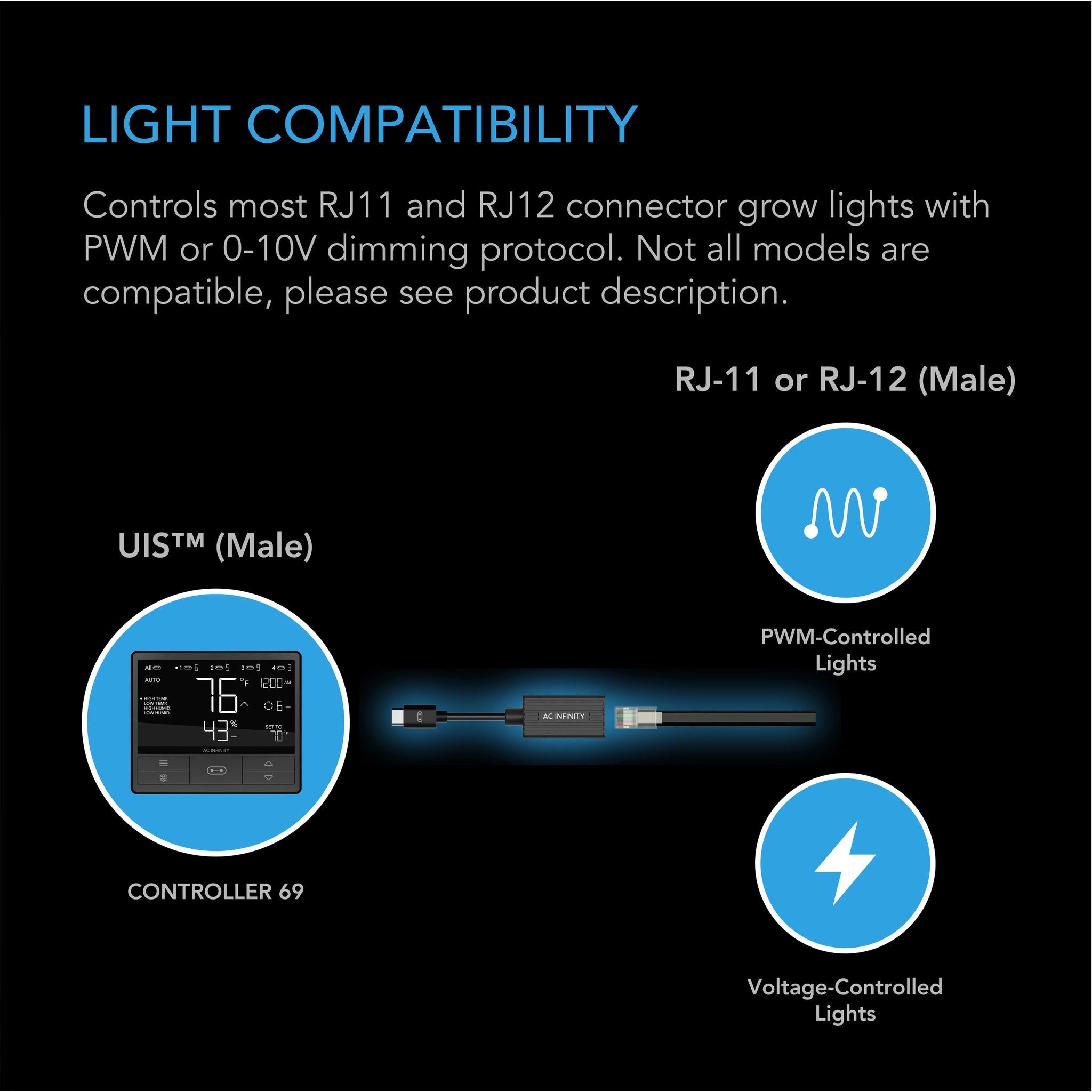
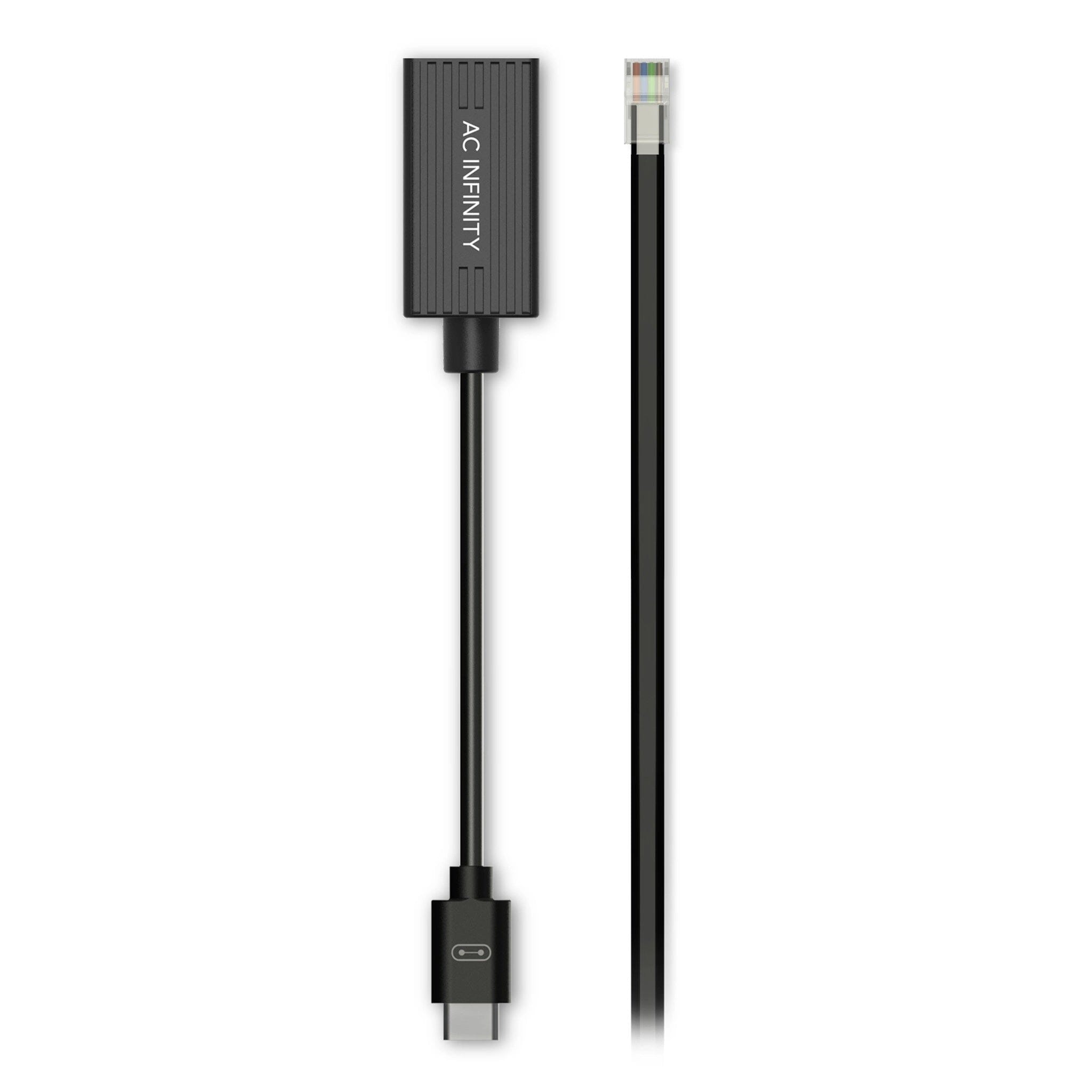
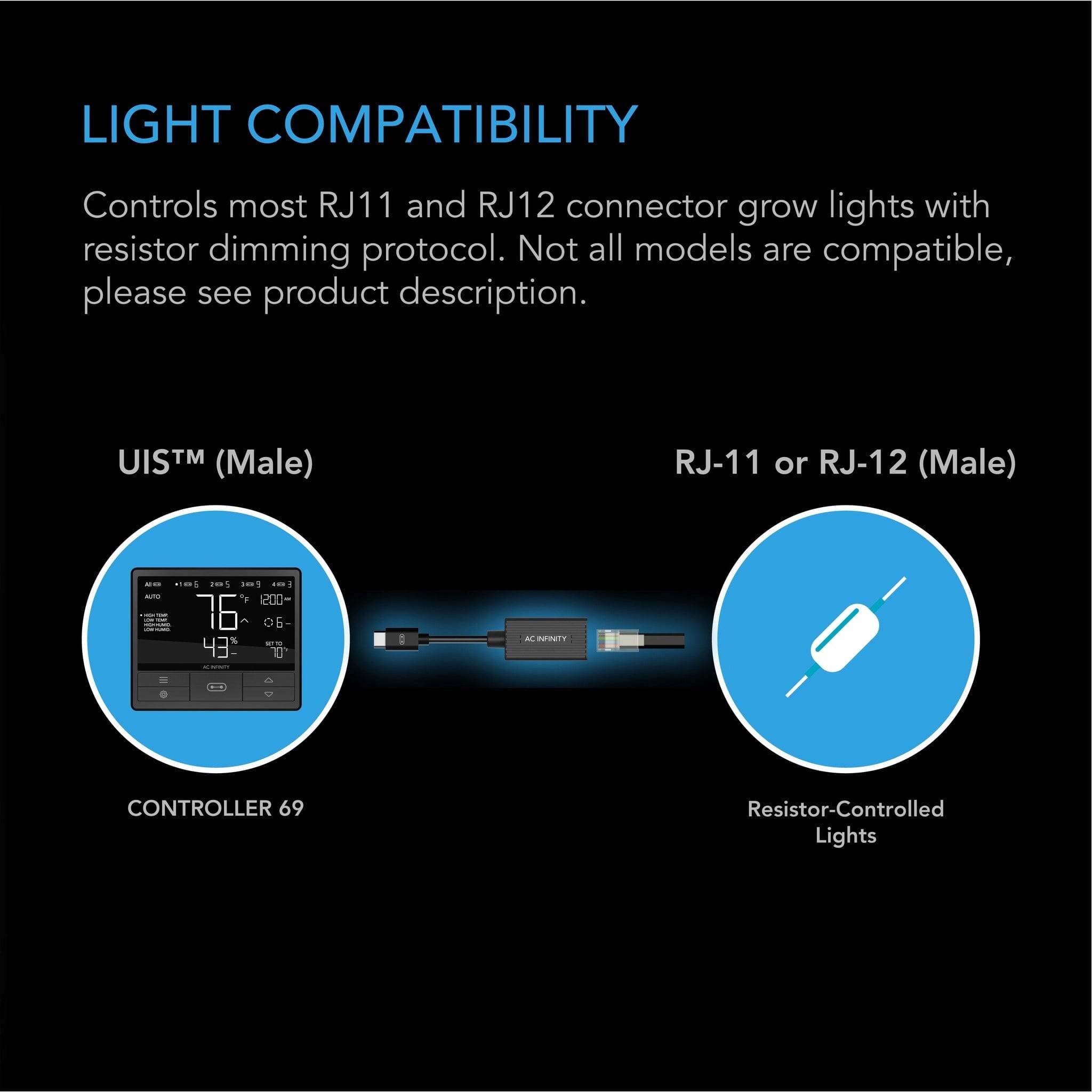
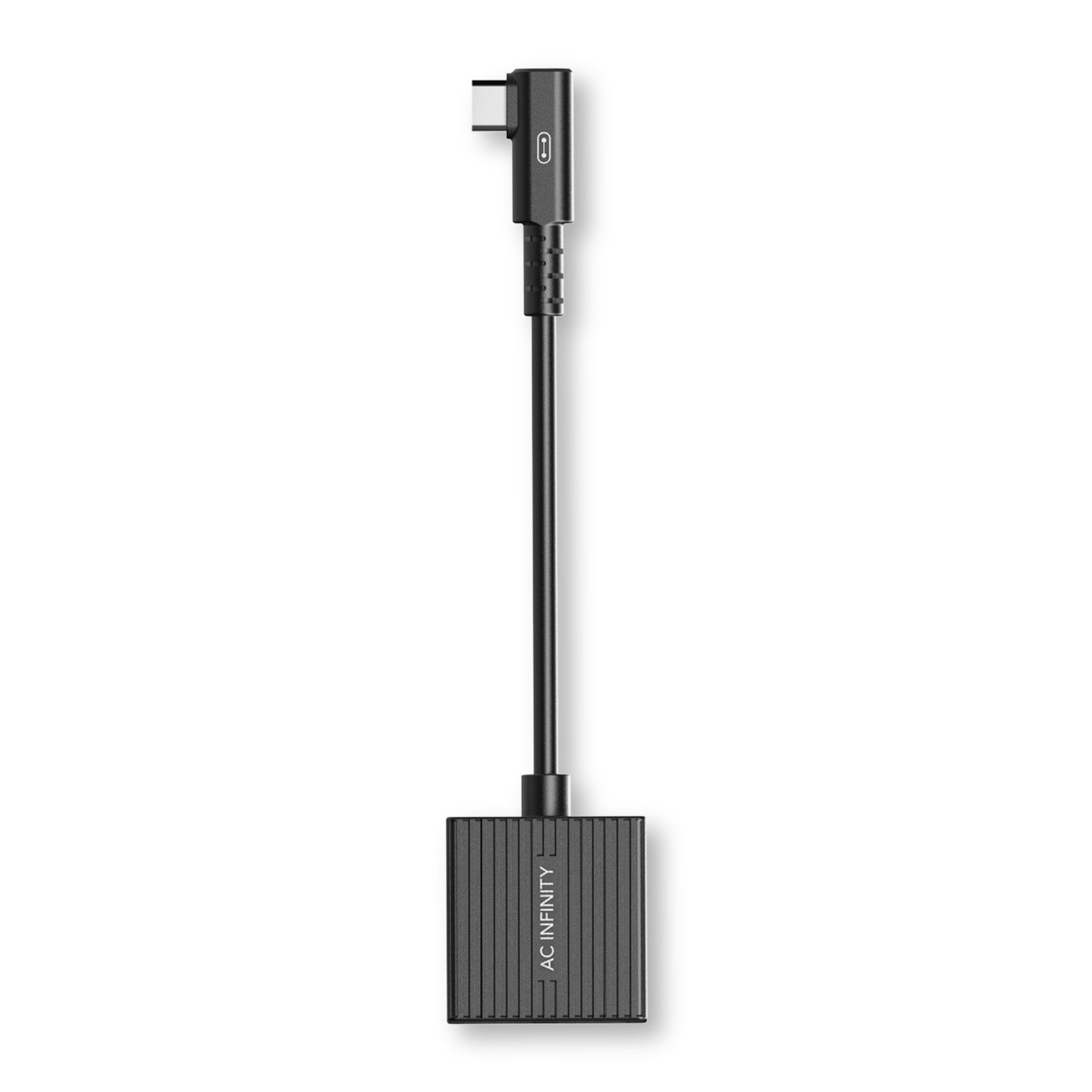
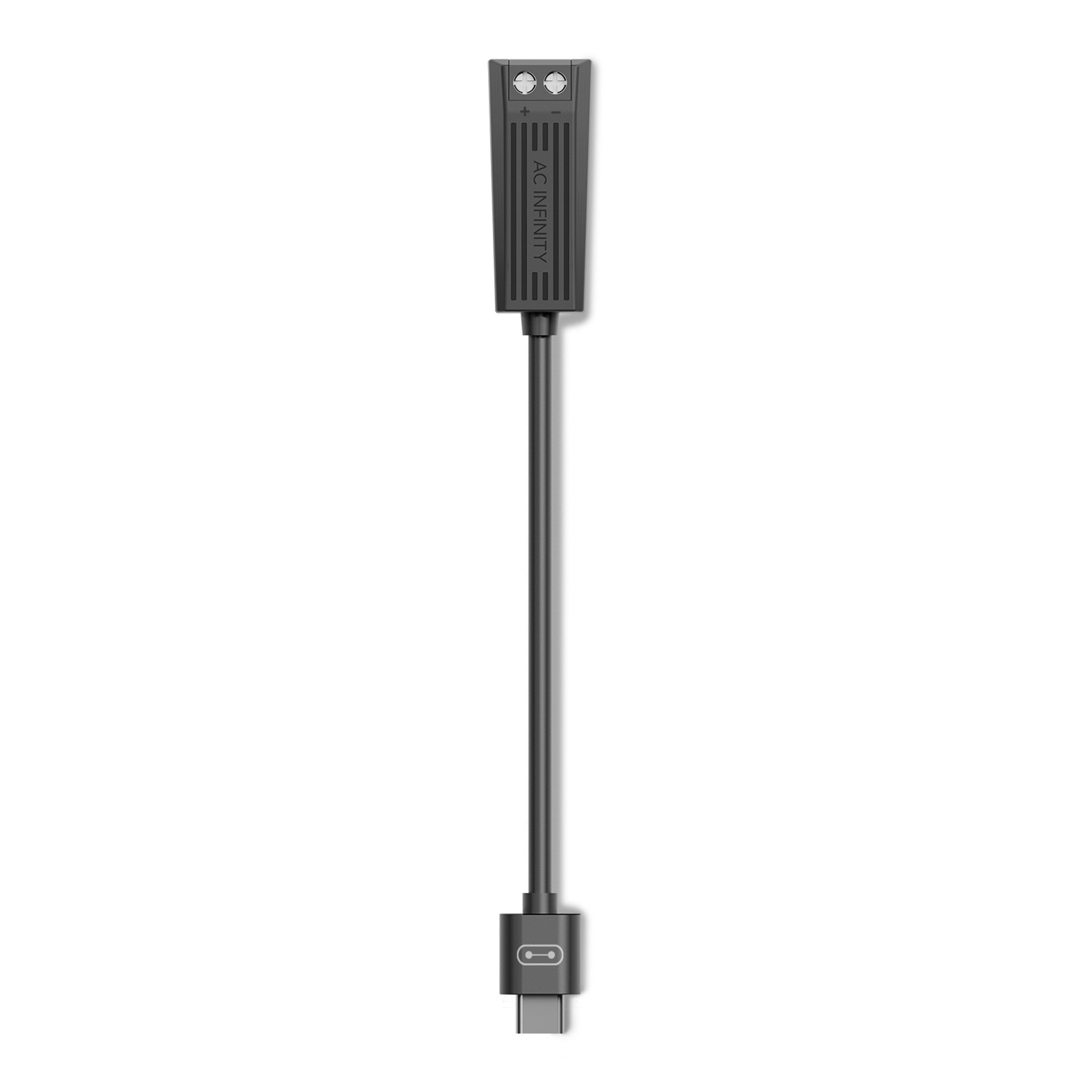
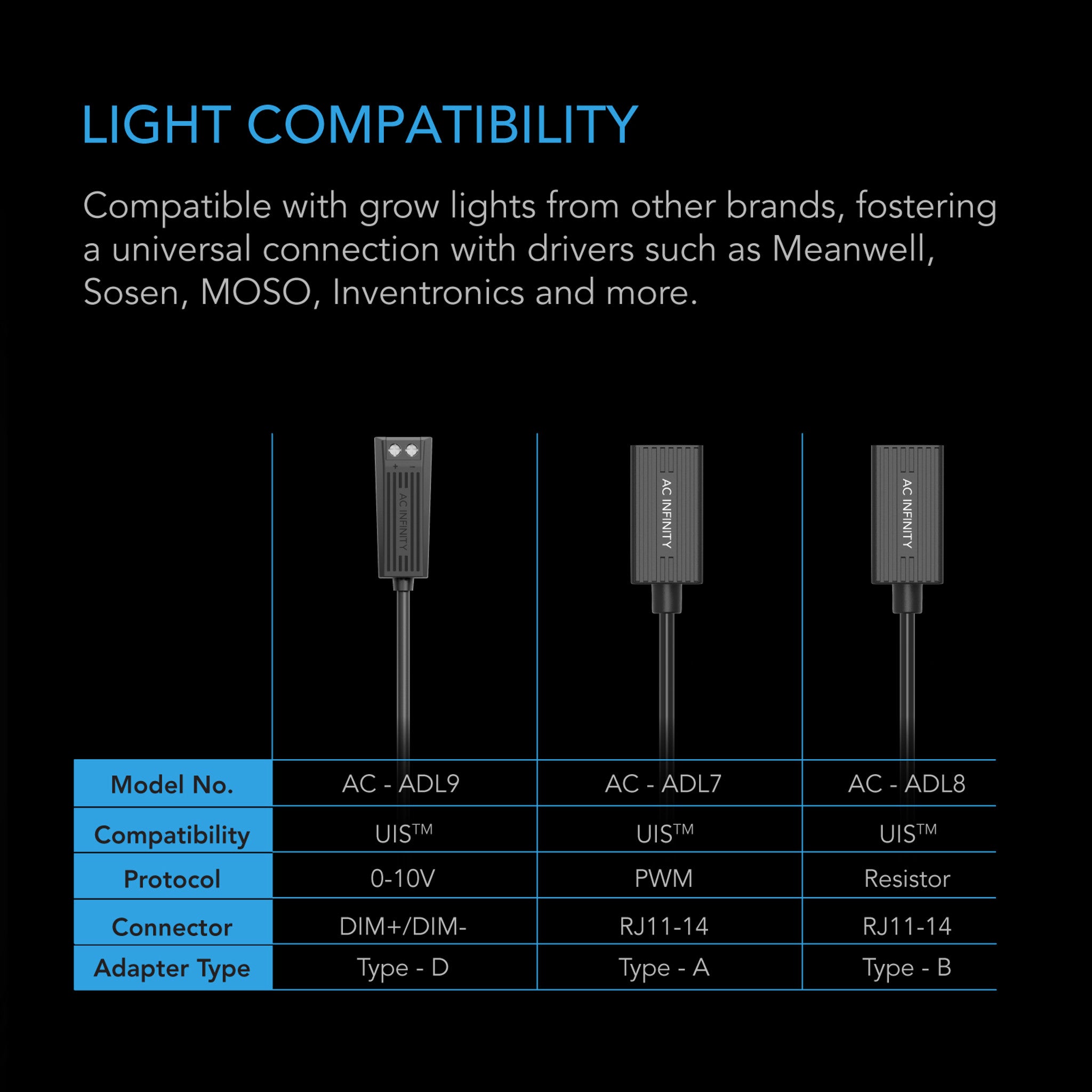
Most LED drivers dim over RJ11/RJ12 or a 0–10 V control wire. Type-A covers PWM and 0–10 V RJ11/12 connectors, Type-B covers other RJ11/12 wiring, and Type-D handles drivers with a bare dimmer control wire.
Type-A · Type-B · Type-D
Anything that just switches on and off
A heat mat, a pump, a third-party humidifier, a light with no dimming. The UIS Control Plug puts an ordinary power outlet under the controller's programming — on/off only, but driven by the same triggers as everything else.
UIS Control Plug
More devices than you have ports
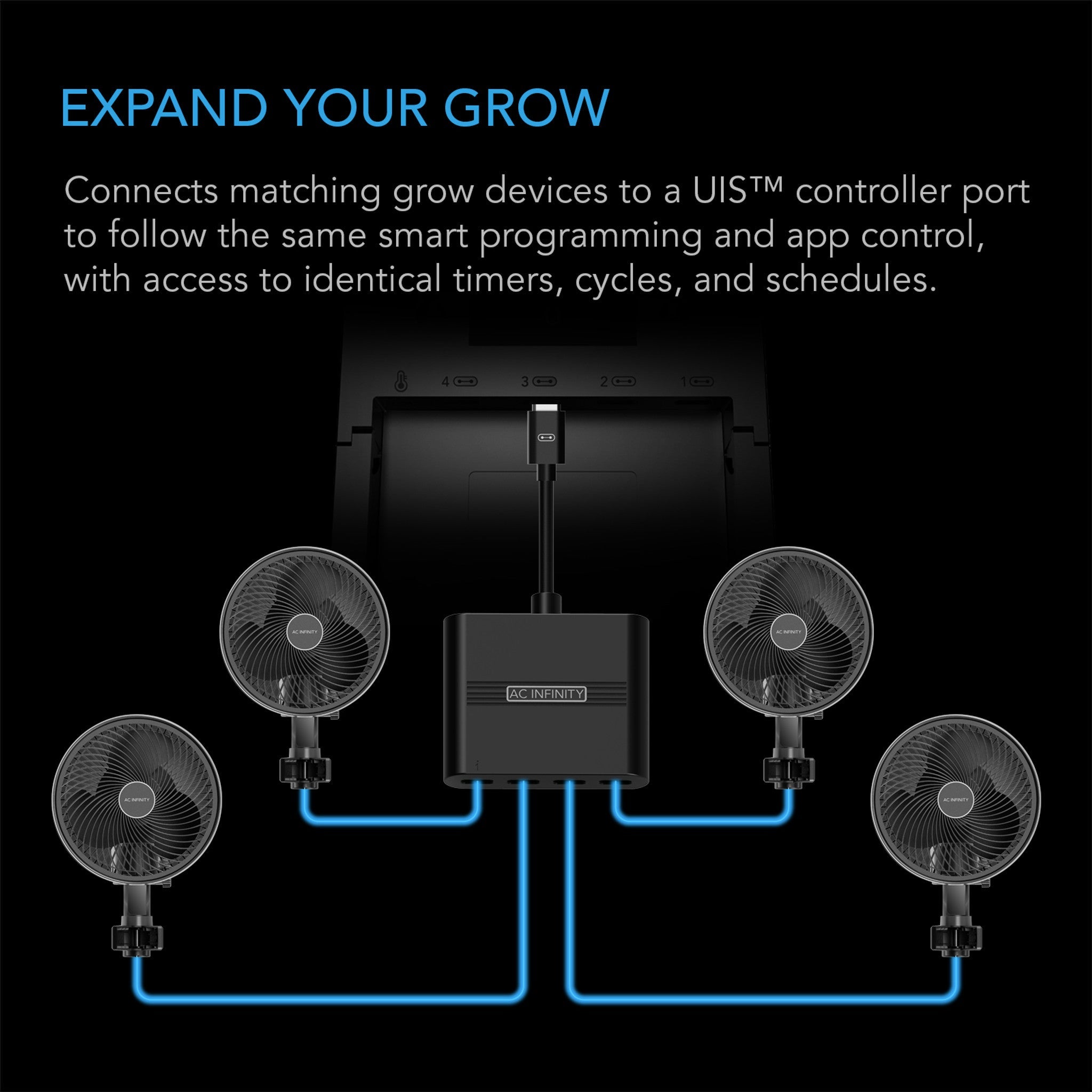
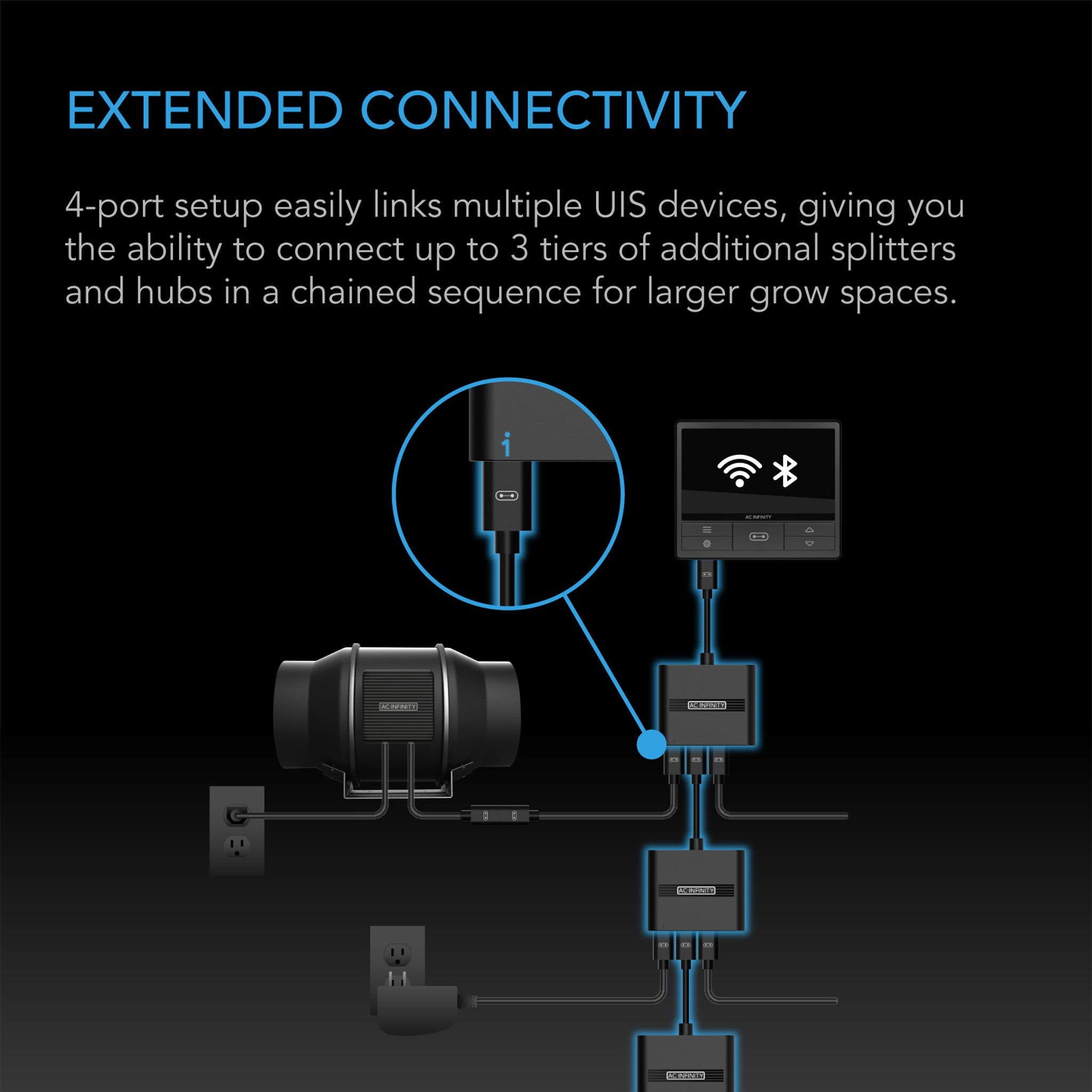
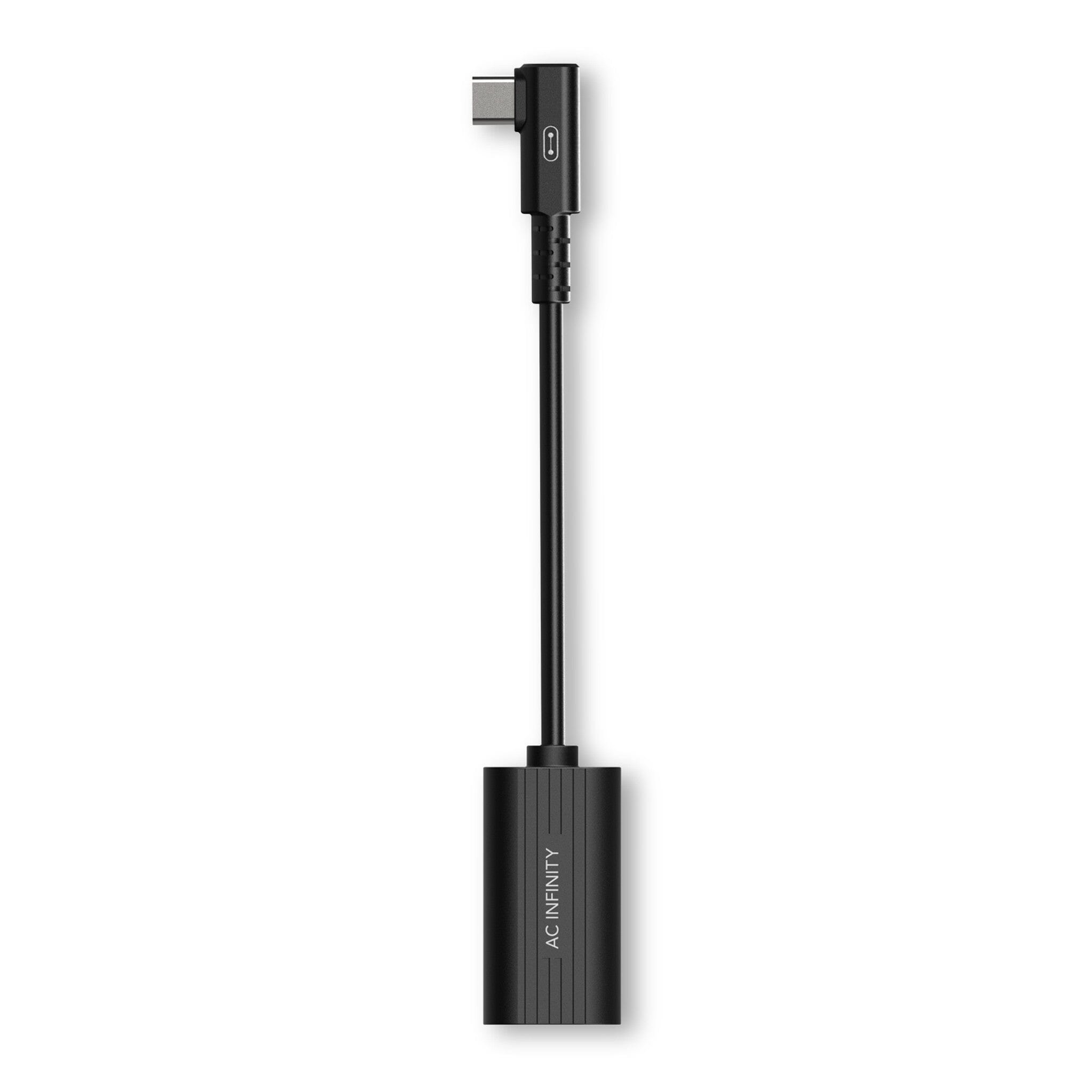
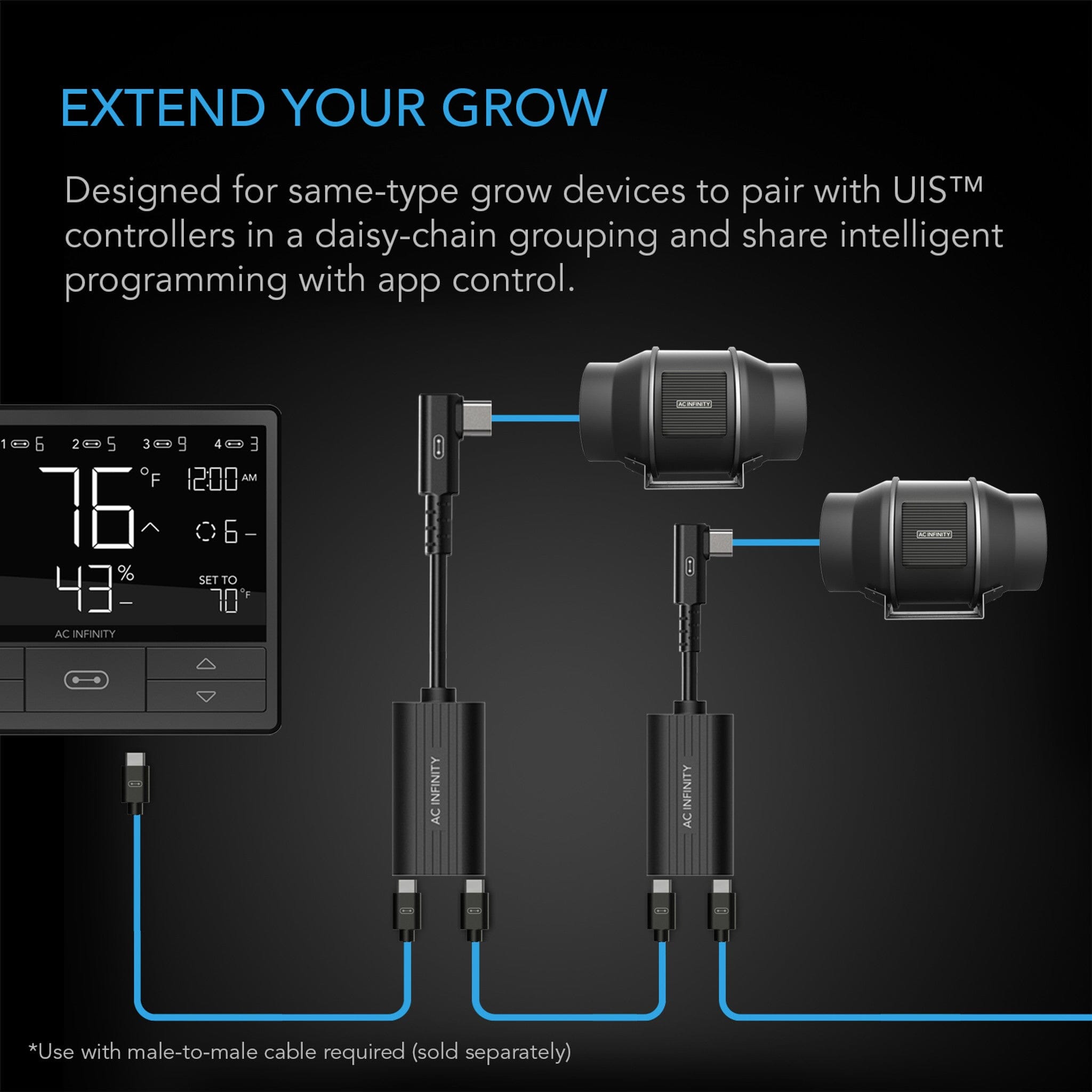
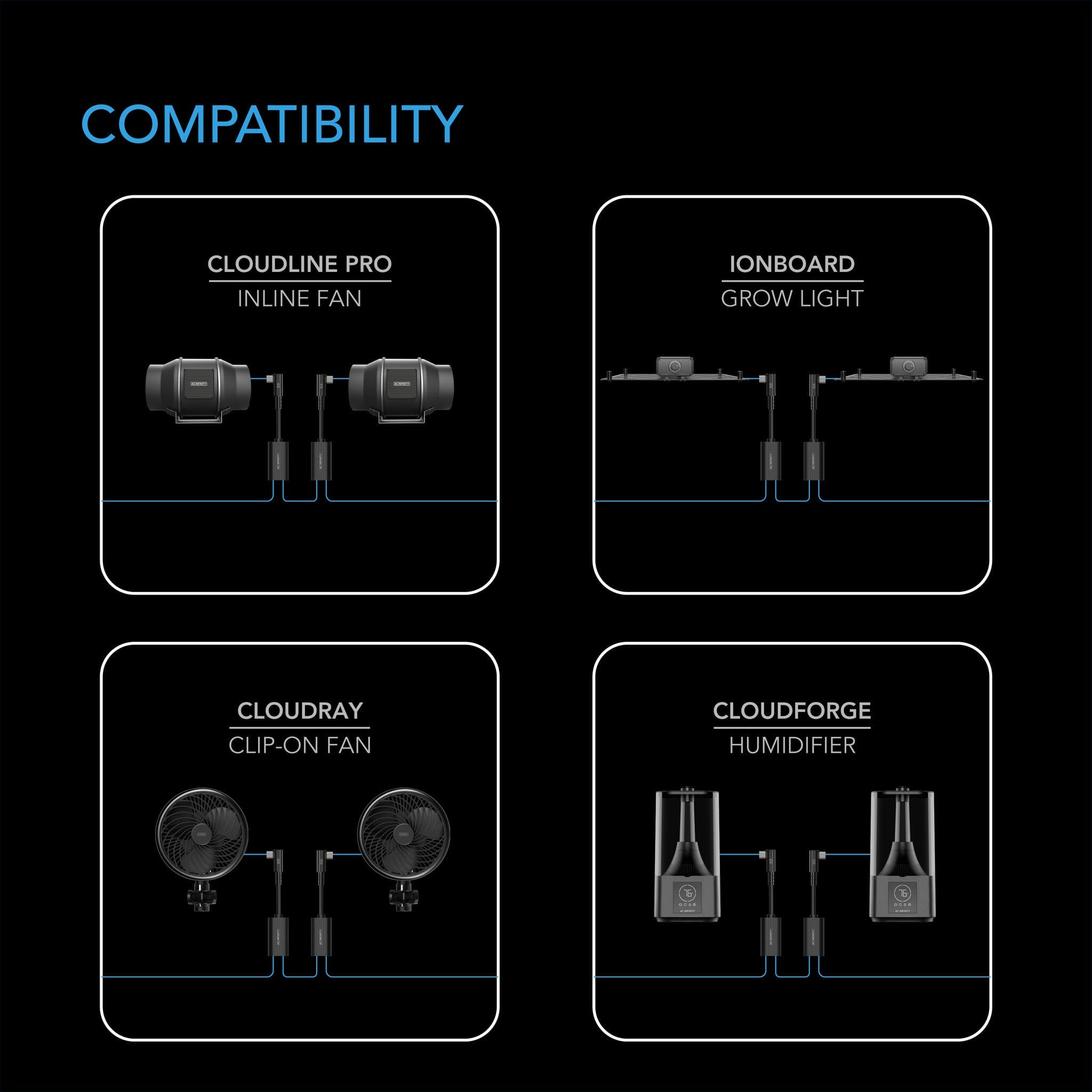
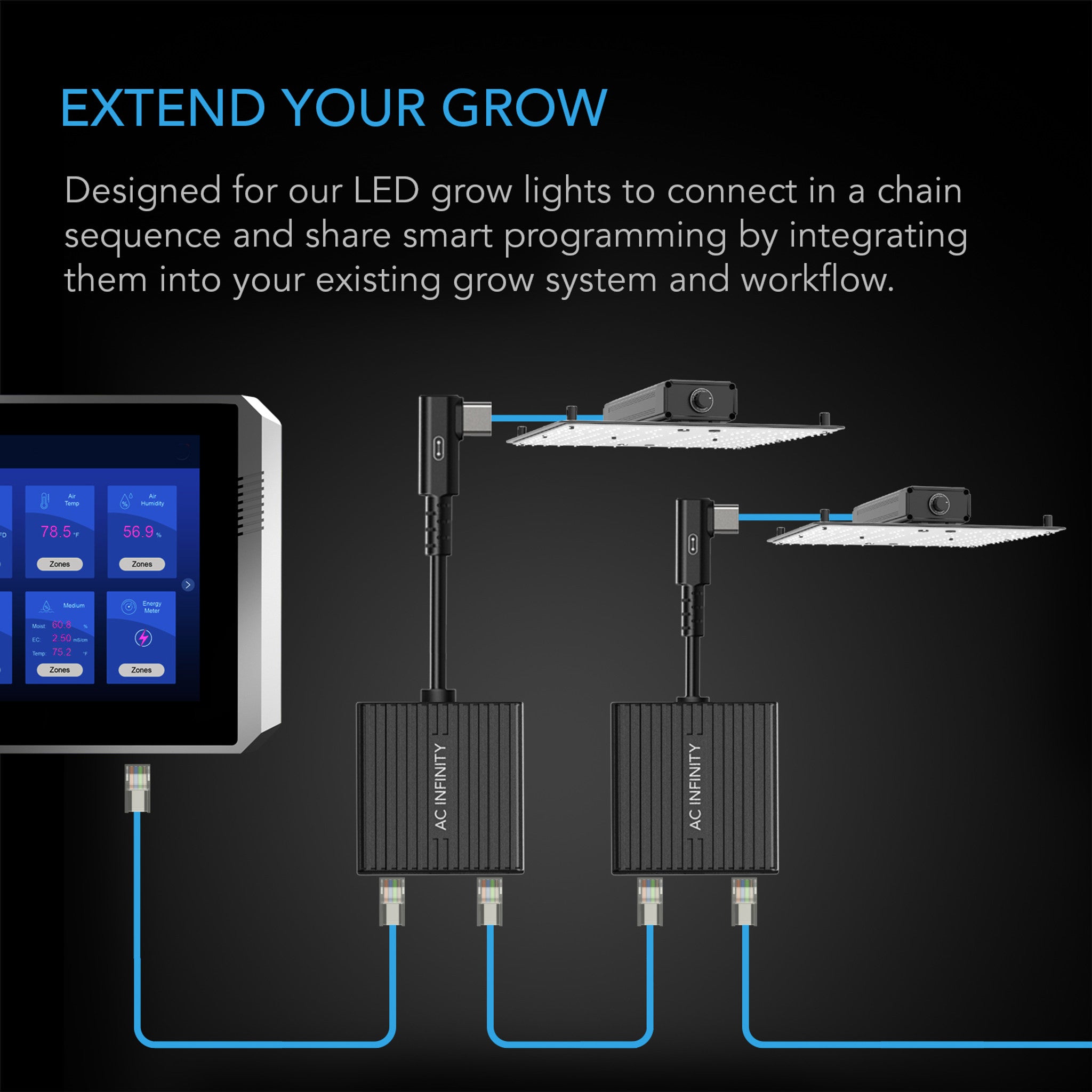
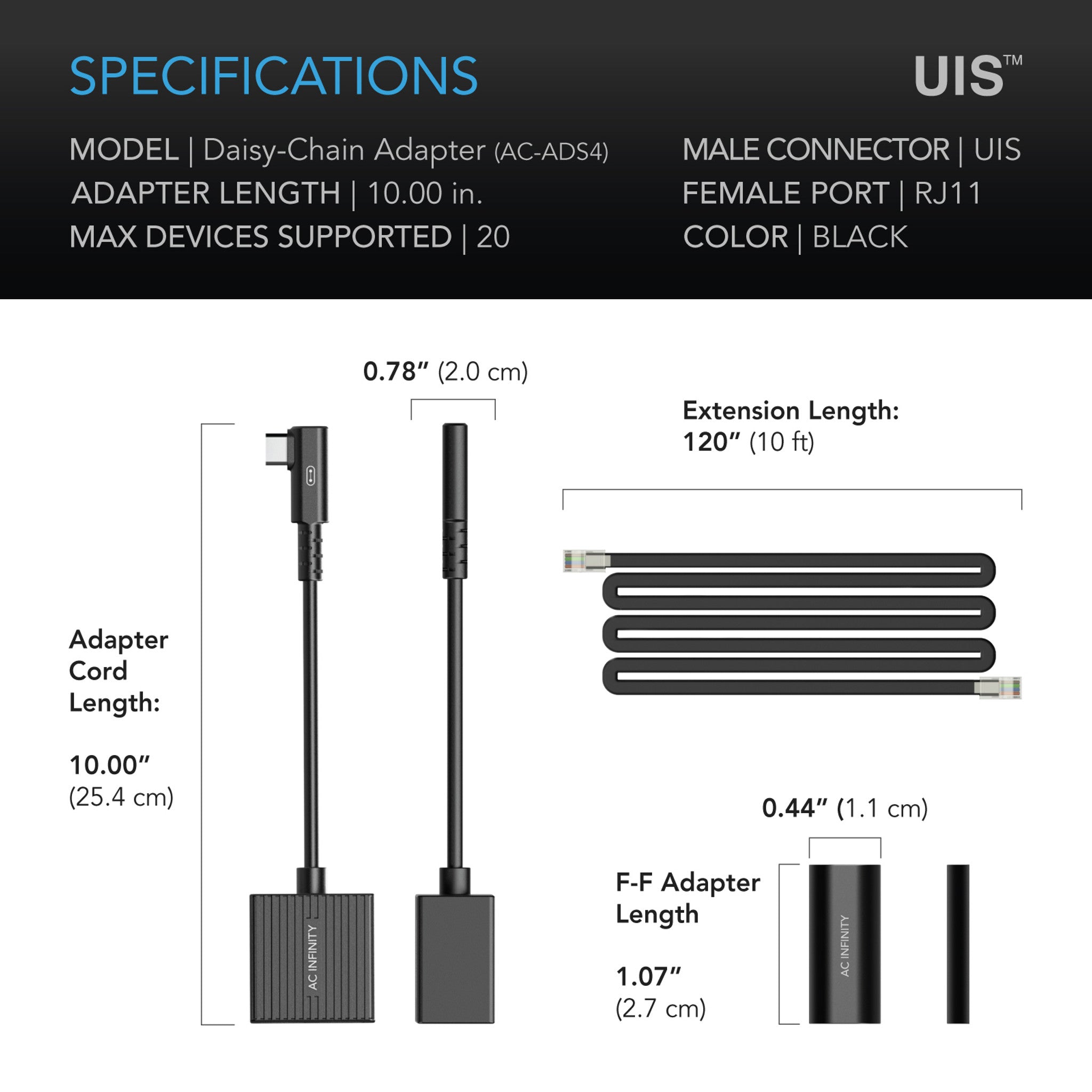
A 4-port splitter hub turns one port into four devices sharing one program — ideal for a bank of identical fans, and how eight ports becomes thirty-two devices. Note that devices on a hub lose device-specific functions such as clip-fan oscillation, so keep those on their own port.
UIS Splitter Hub 4-Port
Devices too far away to cable
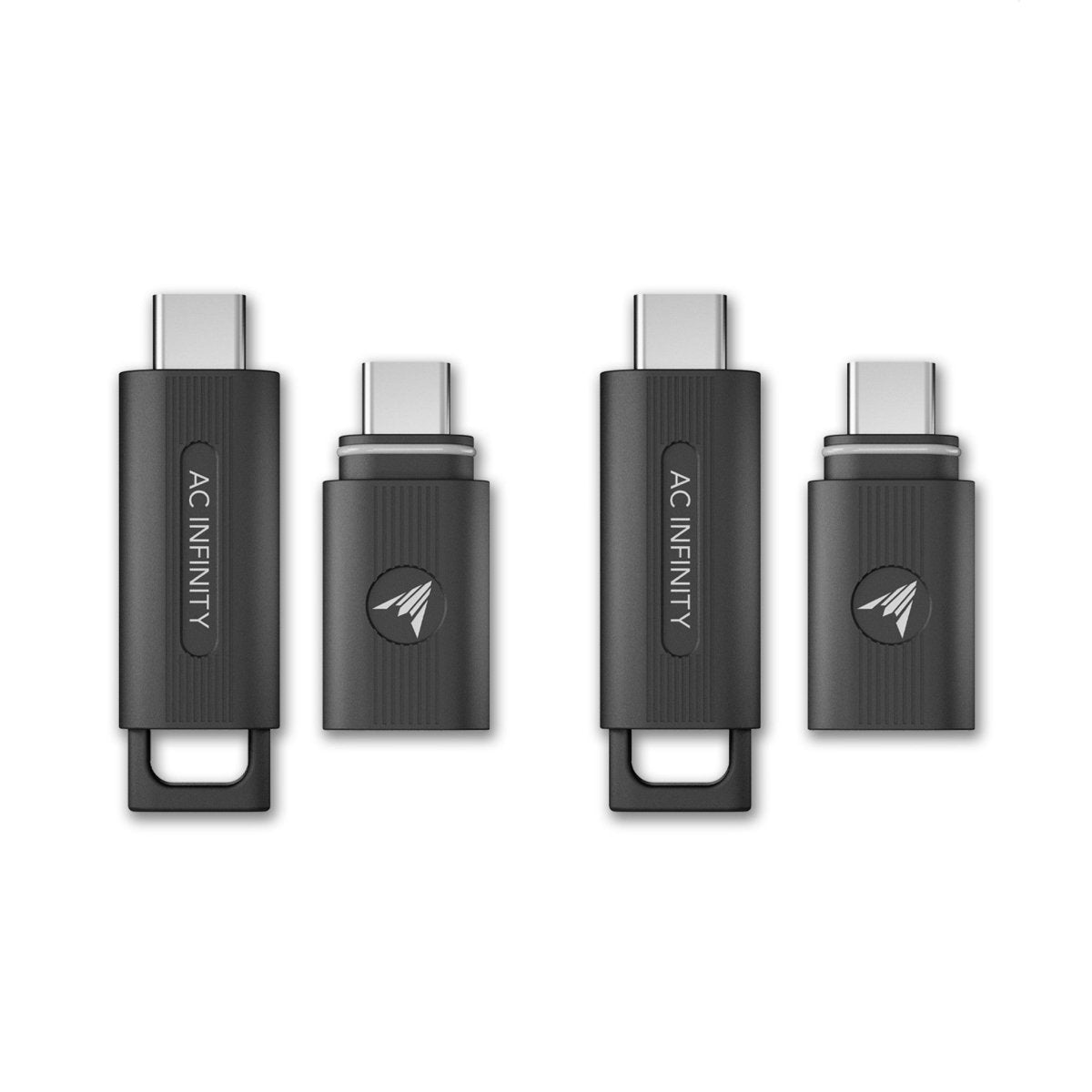
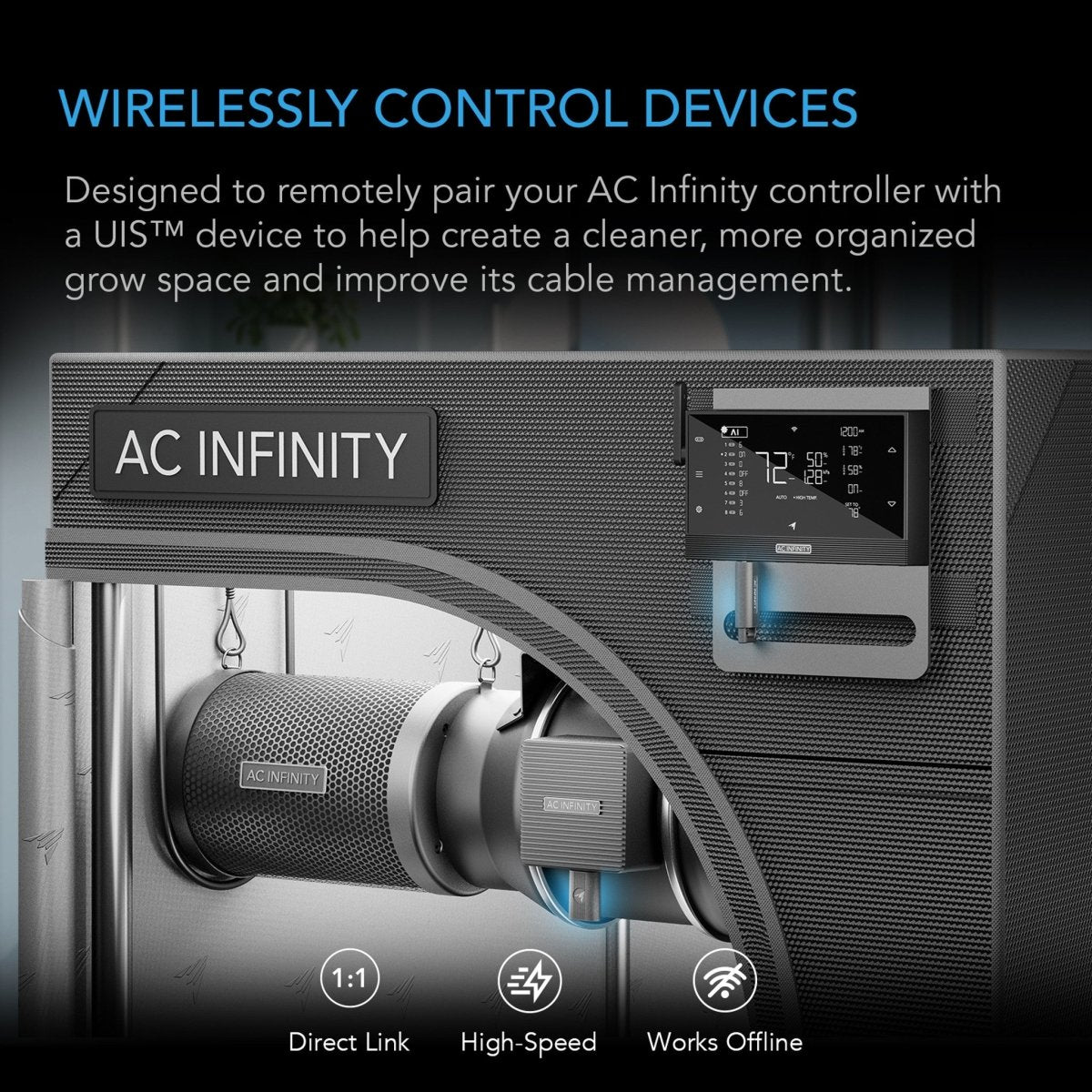
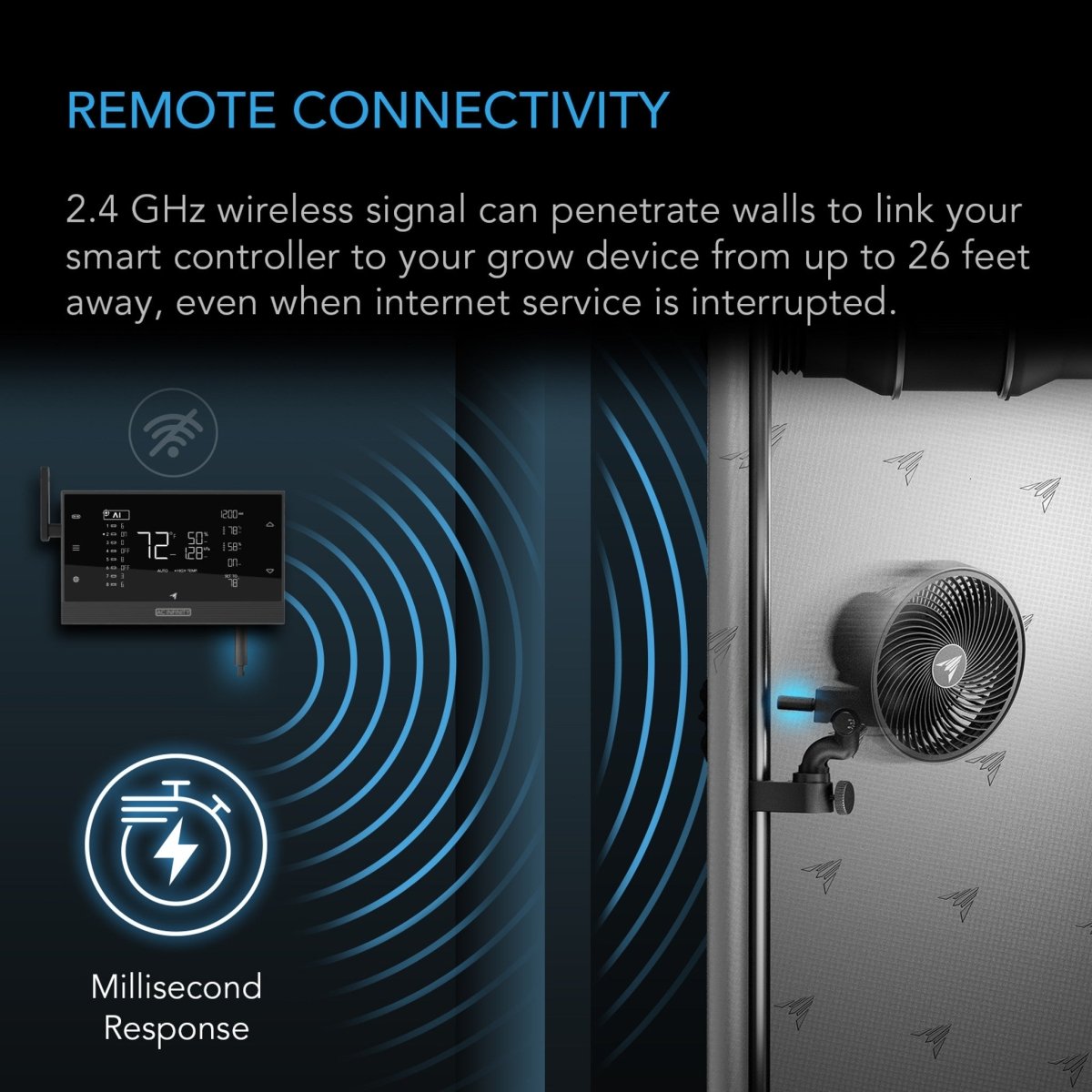
The 1-to-1 transmitter and receiver pair links a device to the controller wirelessly, for when the run is impractical to cable — a second tent across a room, or gear on the other side of a wall.
UIS 1-to-1 Transmitter & Receiver
UIS™: one controller, one app, one set of programs for the whole room. Add a fan, a humidifier or a heater later and it joins the same system — you are not buying a separate controller per device, and the gear you buy now stays compatible with the controllers that come after it.
FAQ
Controller AI+ or Controller 69 Pro?
If you are buying your first controller now, the AI+ is the one we would point you to. It has twice the ports (eight against four), two independent zones rather than one, the expandable sensor range above, and the dynamic adjustment described at the top of this page. The 69 Pro is the cheaper way to automate a single tent with up to four independent programs, and it does that well — but the gap in capability is wider than the gap in price, and most people who buy the 69 Pro first end up adding a second controller within a year or two.
Do I need to buy sensors to make it work?
No. Climate sensing is built in and it covers temperature, humidity and VPD out of the box. Every sensor in the table above is an addition for a specific job, not a missing part.
Will it control lights and equipment that aren't AC Infinity?
Usually, yes, with the right adapter — see the section above. Dimmable LED drivers connect through the Type-A, Type-B or Type-D lighting adapters and can then be ramped and scheduled like any UIS device. Anything without a control port can still be switched through the UIS Control Plug, though on/off is all you get. If you are unsure which adapter suits your light, send us the model and driver details and we will tell you before you buy.
Does it need WiFi to work?
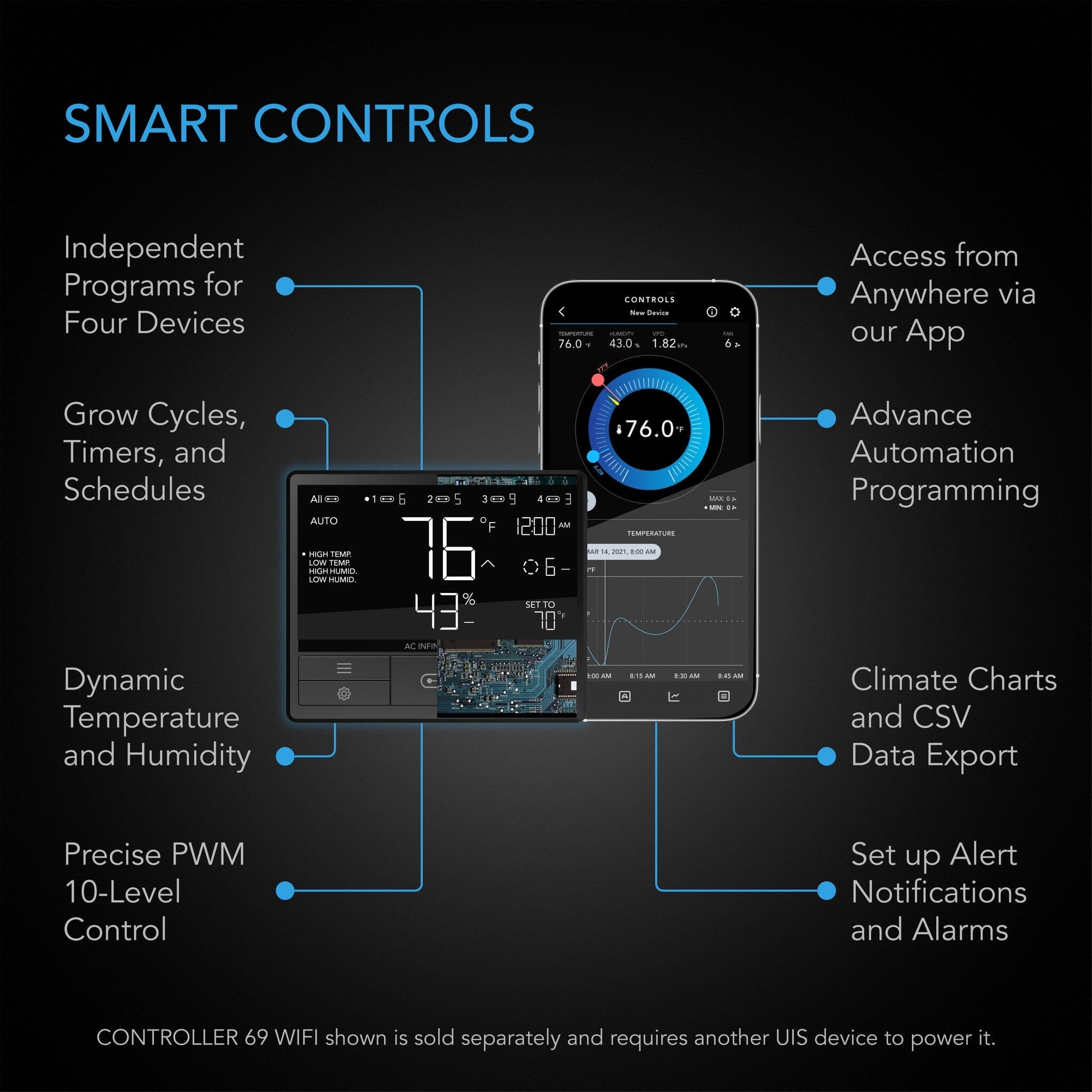
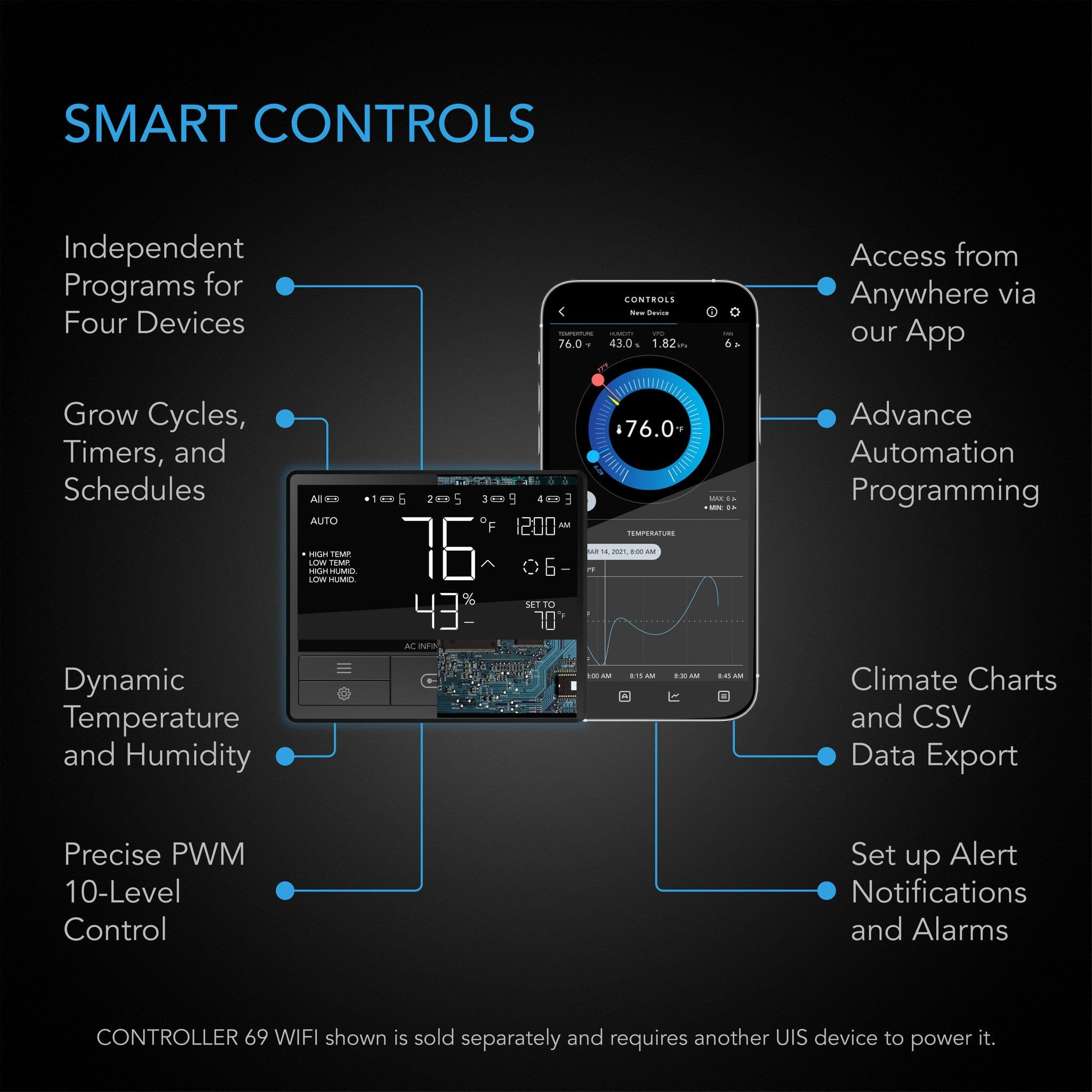
No. WiFi gets you the app — remote control, charts, alerts and logging — but the controller keeps running its programs on the unit itself if the network drops. Bluetooth also works for direct setup when there is no WiFi in the space at all, which is common in a garage or a shed.
Can one controller run two tents?
Yes, that is what dual-zone is for: two independent sets of climate targets and their own devices, on one controller. The practical limits are cable reach and port count — and the wireless transmitter pair solves the first of those. Where it stops making sense is if the two spaces are genuinely different environments running different schedules; at that point two controllers are simpler to live with than one.
Is the Spectron 7 a controller?
No, and it is worth being clear about that. The Spectron 7 is a 4K camera with AI image analysis — it watches and reports, it does not drive your fans or lights. Buy it because you want to see what happened while you were away, not because you expect it to control anything.
Is this genuine AC Infinity stock with Australian warranty?
Yes. Quick Bloom Lights is the official Australian importer and distributor for AC Infinity. Stock is held in Sydney, orders ship domestically, every unit comes with an Australian three-pin plug, and warranty is handled here rather than through an overseas seller.