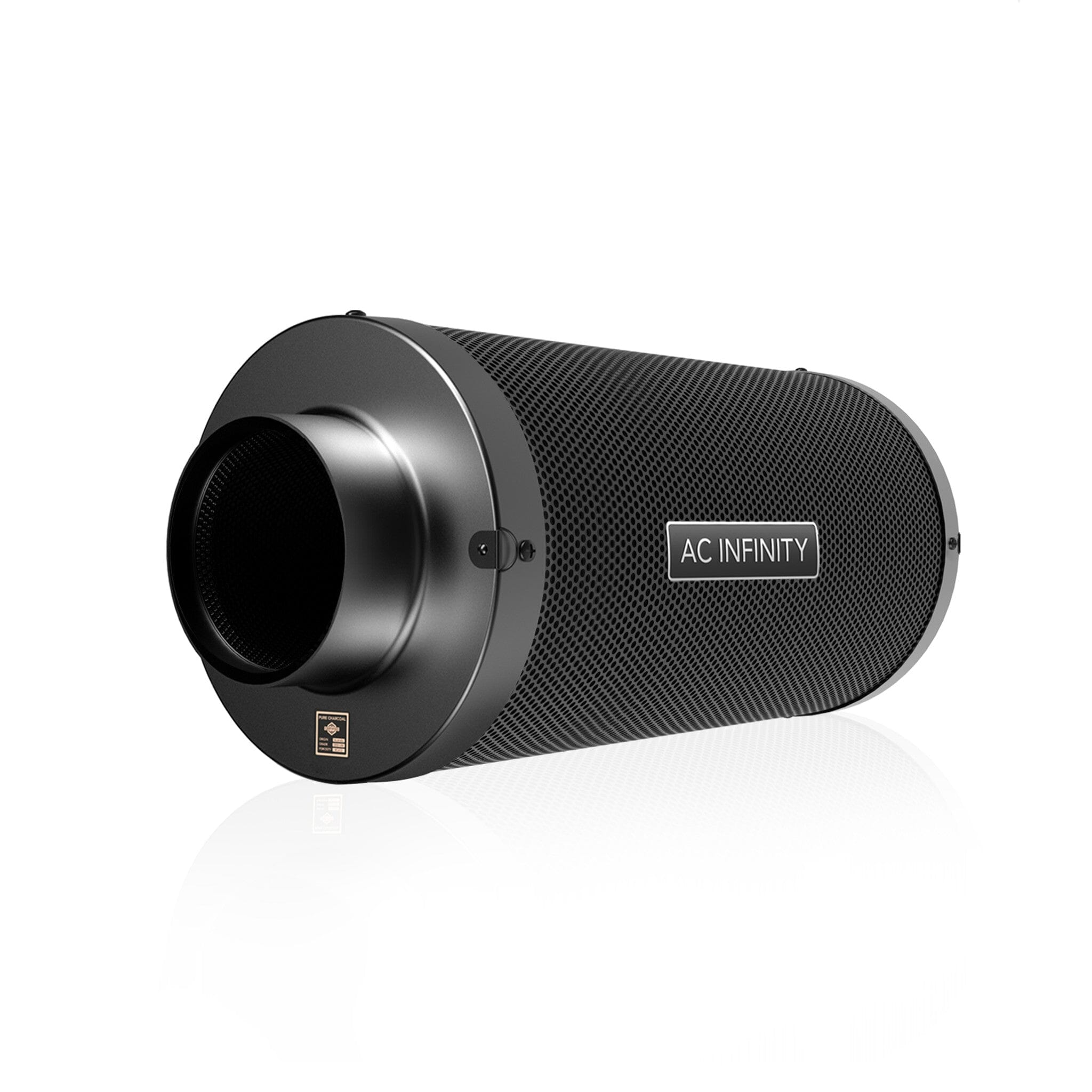
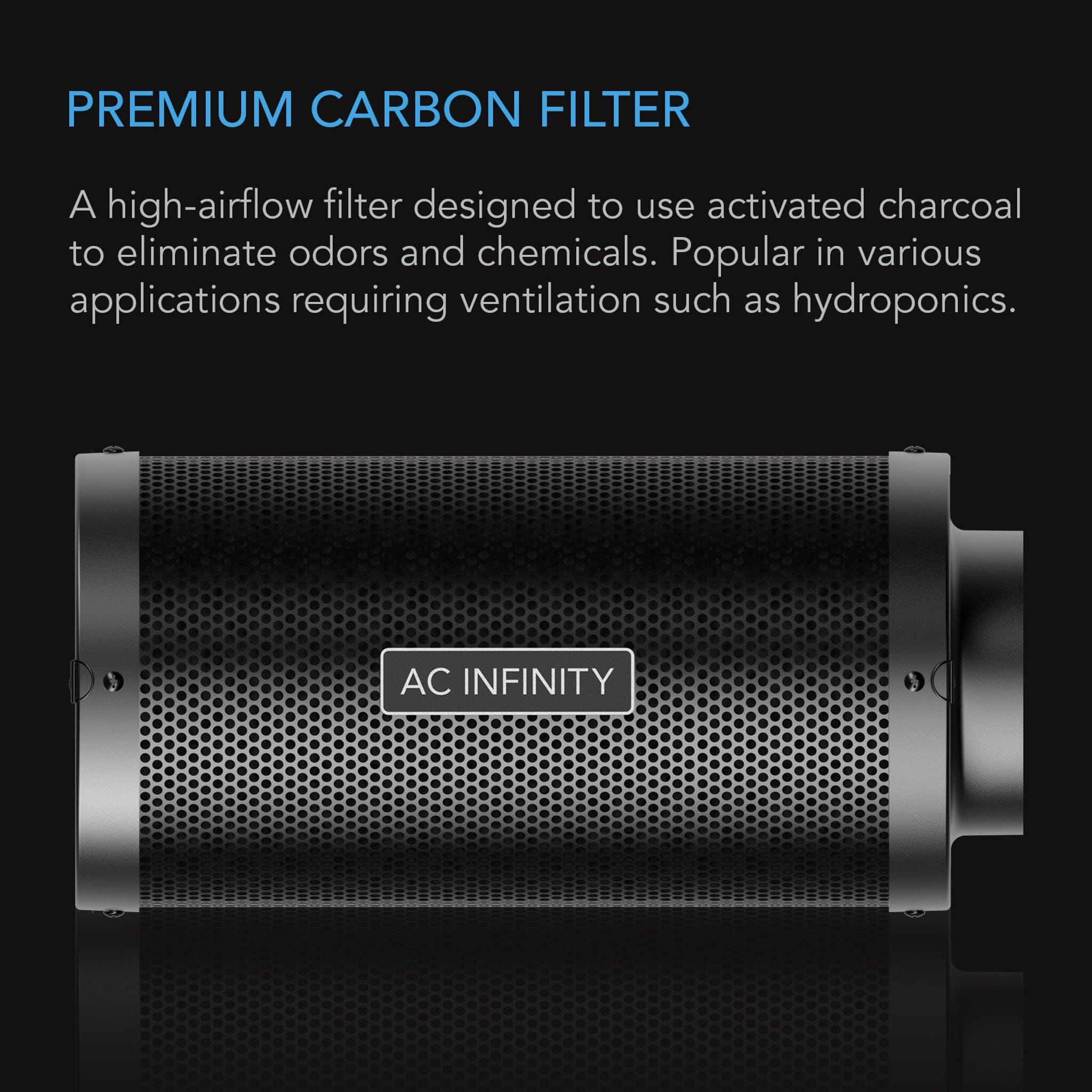
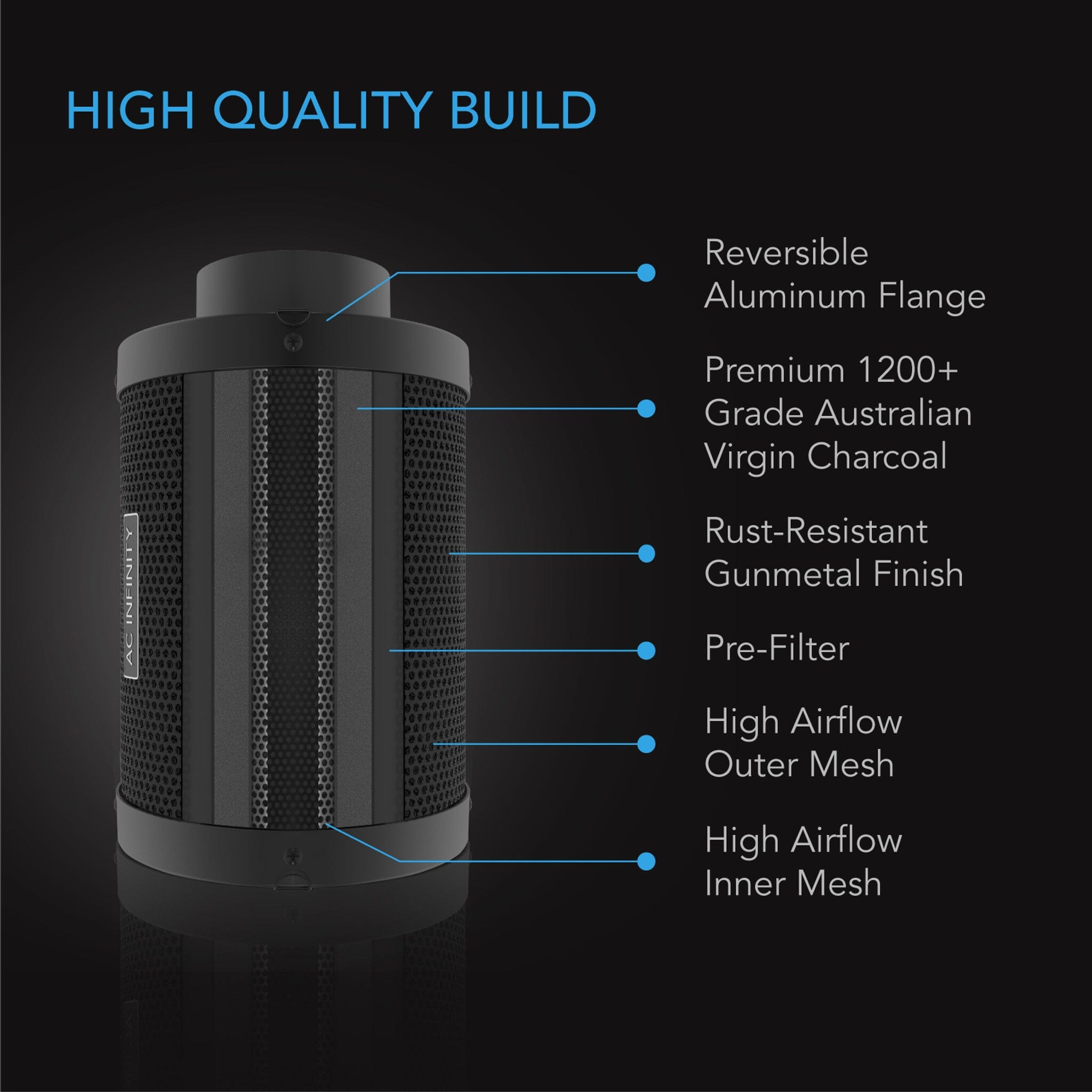
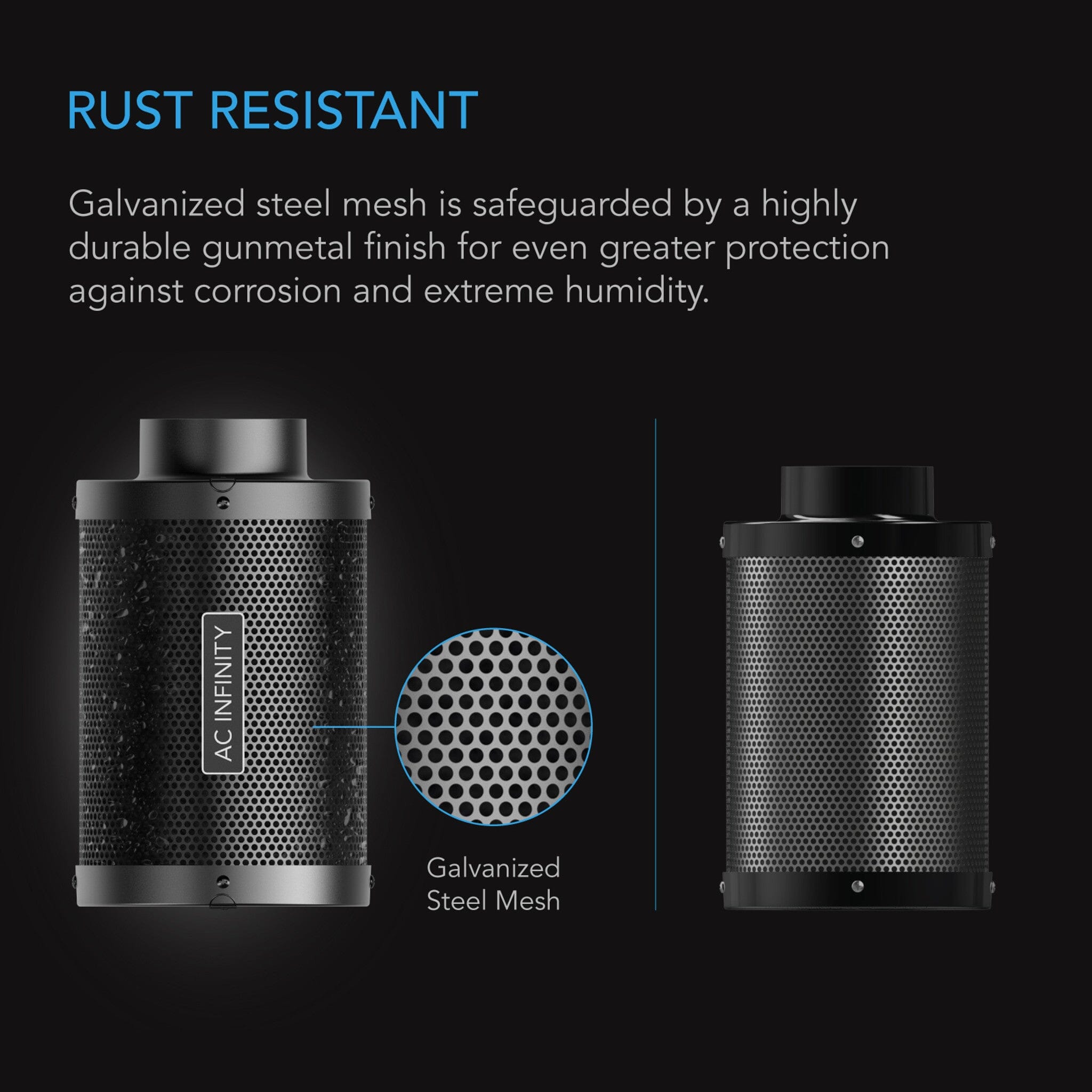
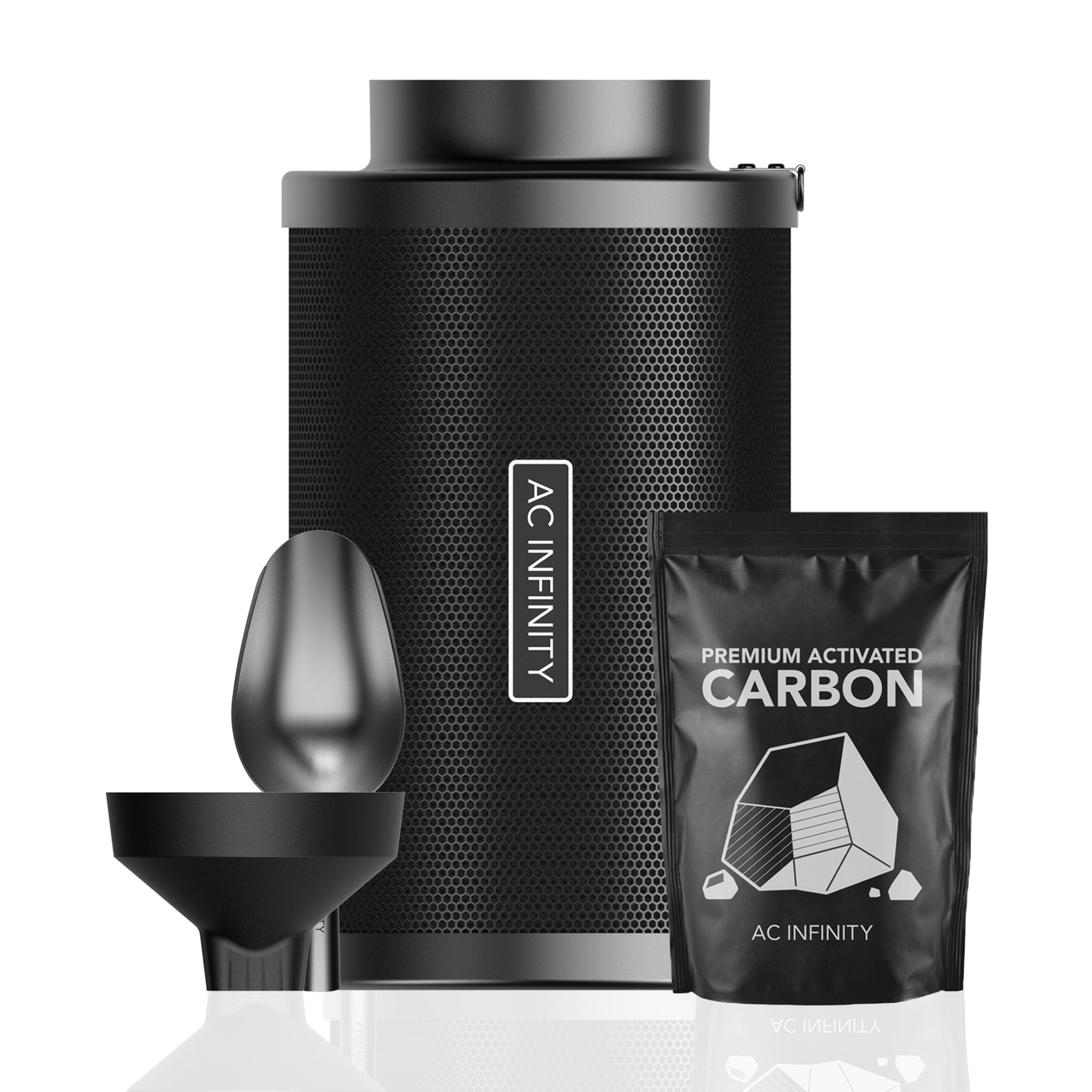
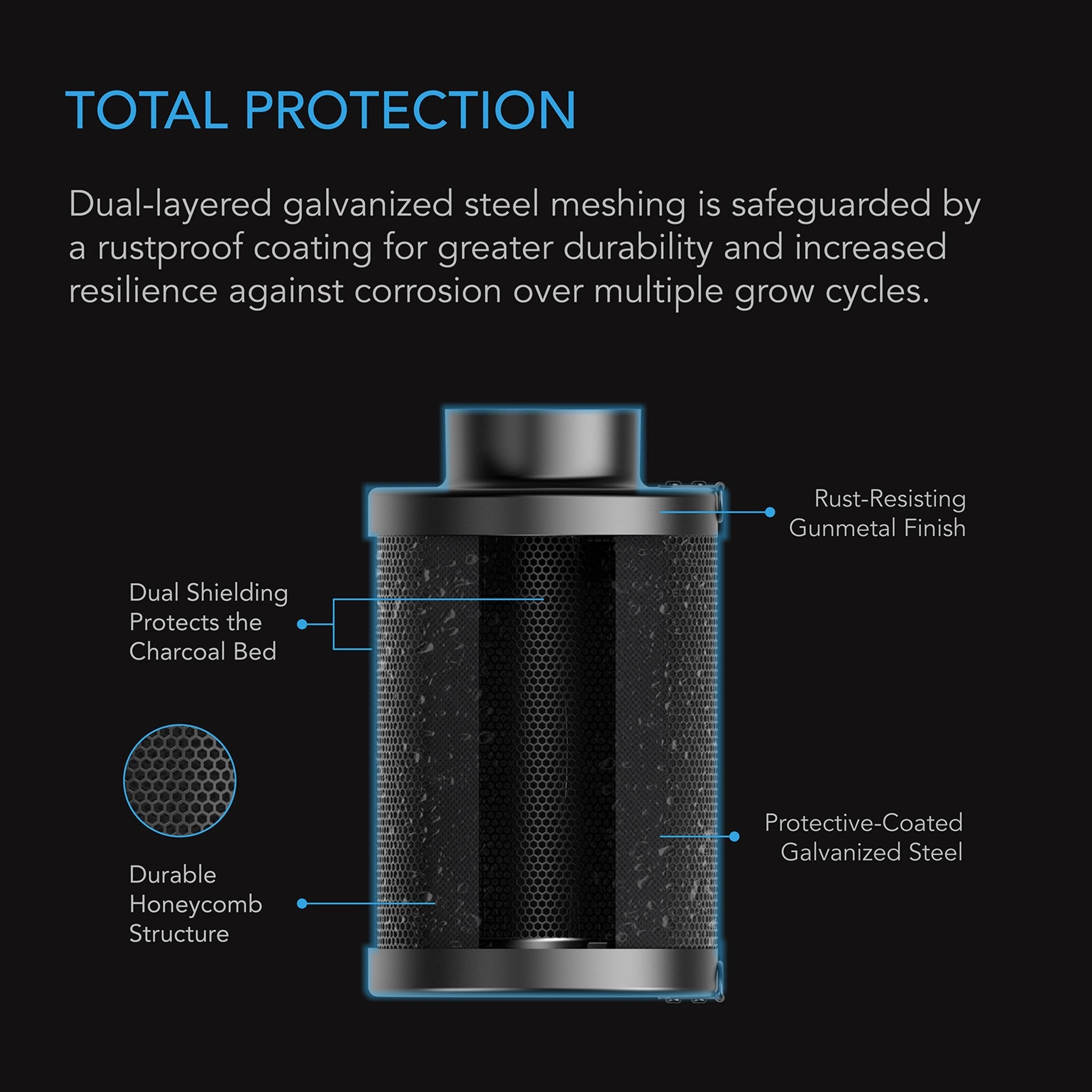
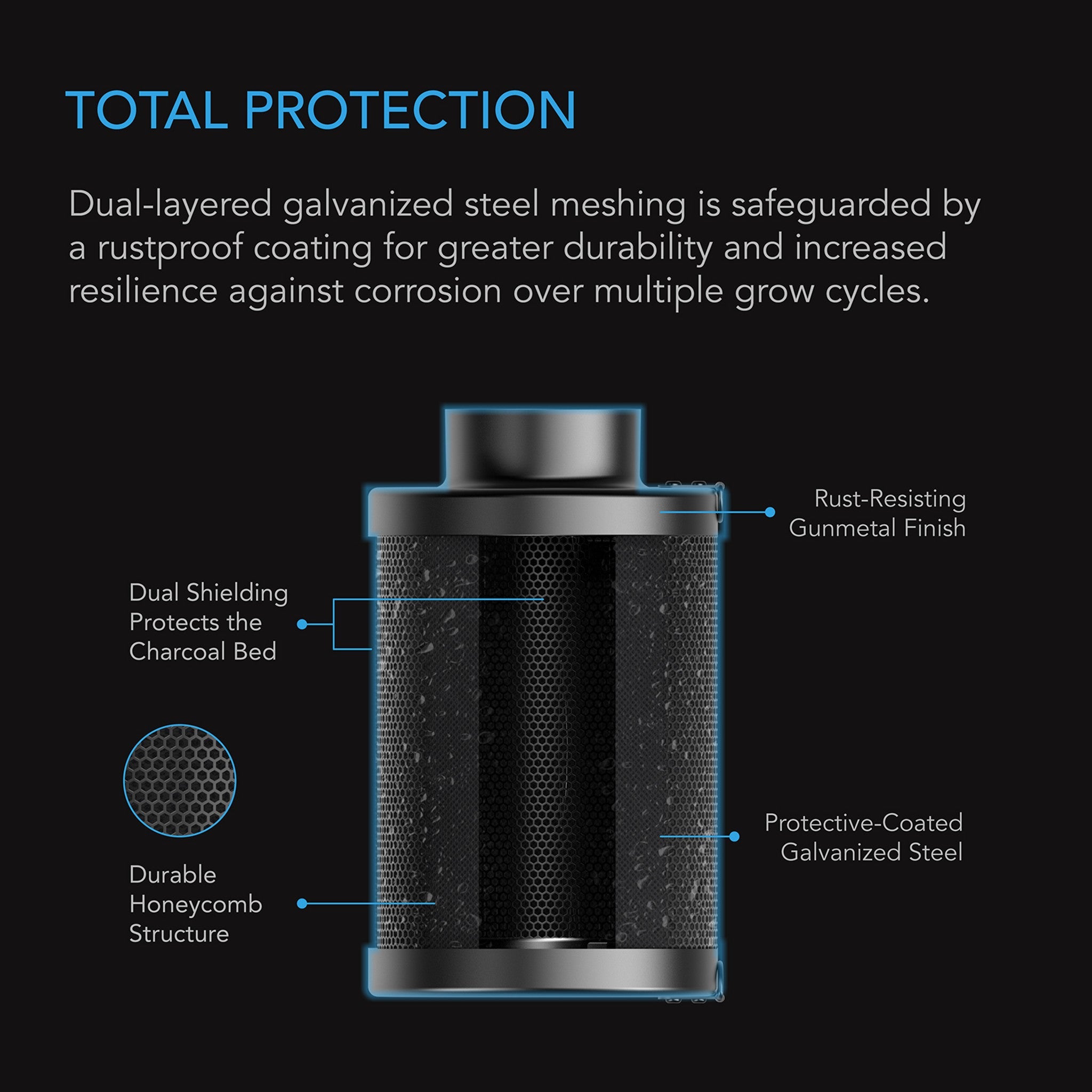
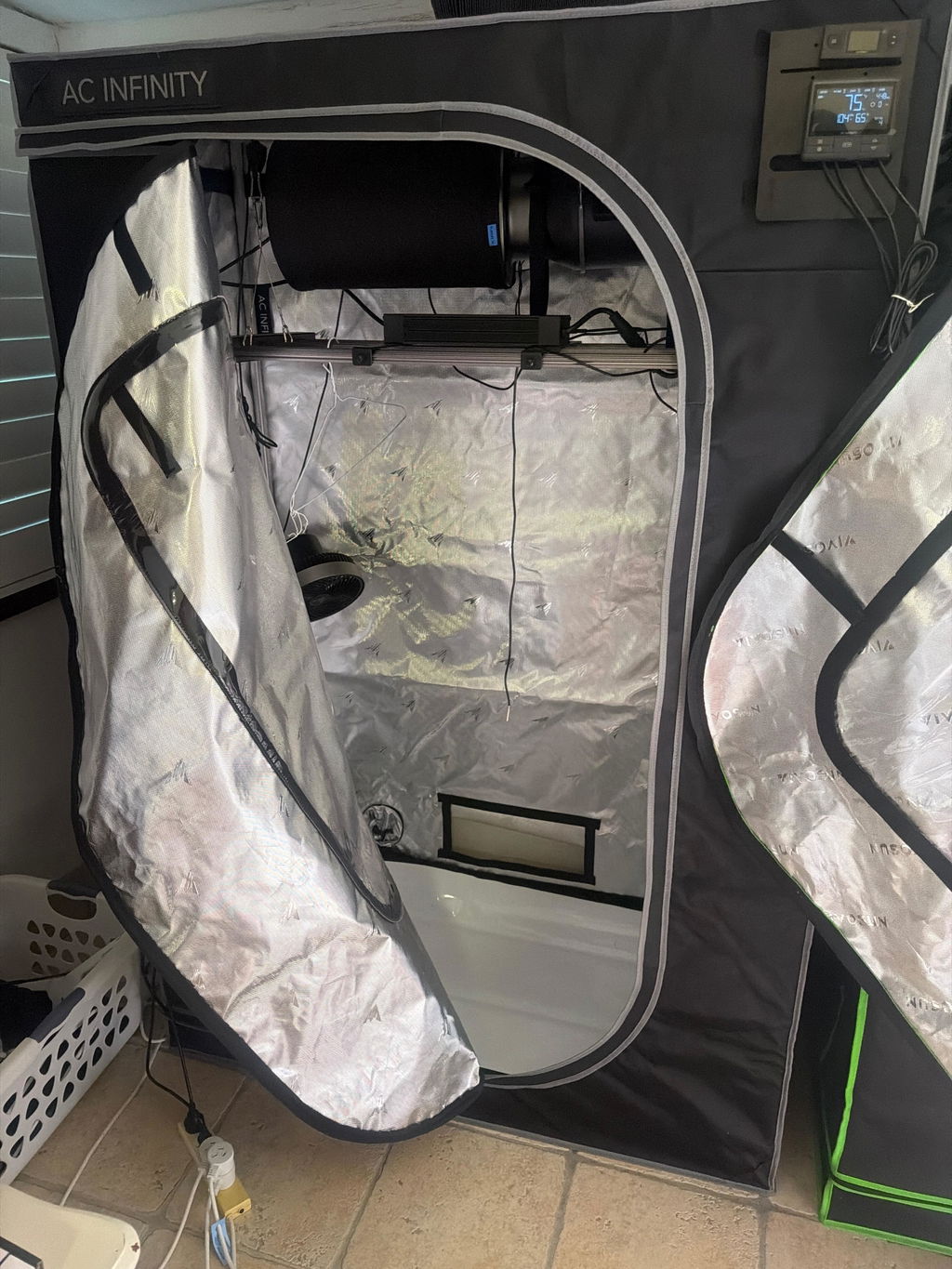
AC Infinity carbon filters use premium Australian virgin charcoal (RC412) in a 38 mm carbon bed rated 1200+ IAV — the measure of how much odour the carbon can actually hold. Aluminium flanges and dual-layer galvanised steel mesh keep them rust-resistant in the humidity a flowering room produces. Every filter here reverses to extend its life, and the refillable range can be repacked with fresh carbon as well. Quick Bloom Lights is the official Australian importer: stocked in Sydney, shipped domestically, warranty handled here.
1200+ IAV
Australian RC412 virgin charcoal
Reversible
every filter — flip to extend life
100–300 mm
4″ through 12″
Why the reversible flange matters
Air doesn't pass through a carbon bed evenly. It loads the intake end hardest, so that end saturates and stops adsorbing while the far end is still largely unused. On a conventional sealed filter that's the end of its life — half the carbon is spent, the rest is wasted, and you buy a new one.
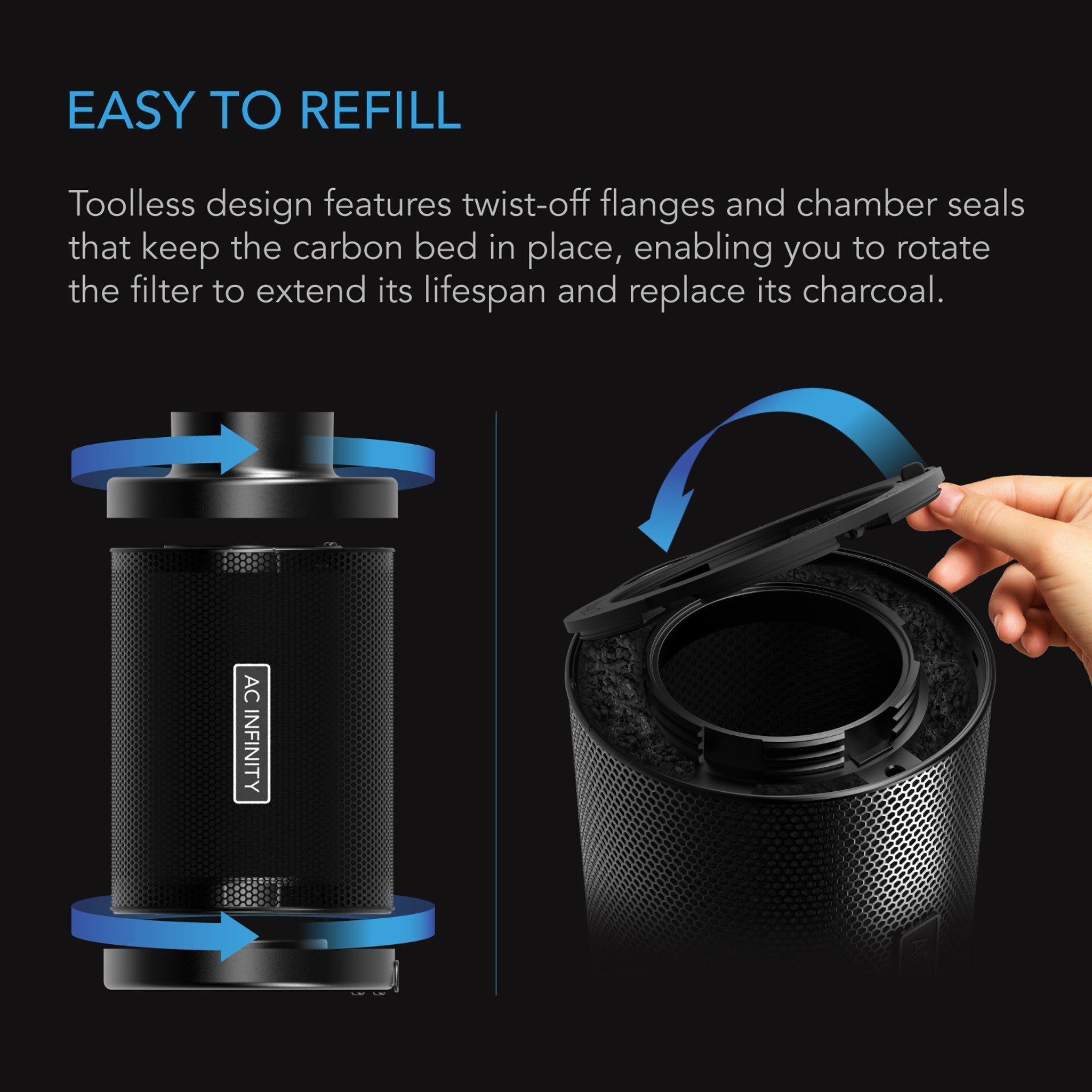
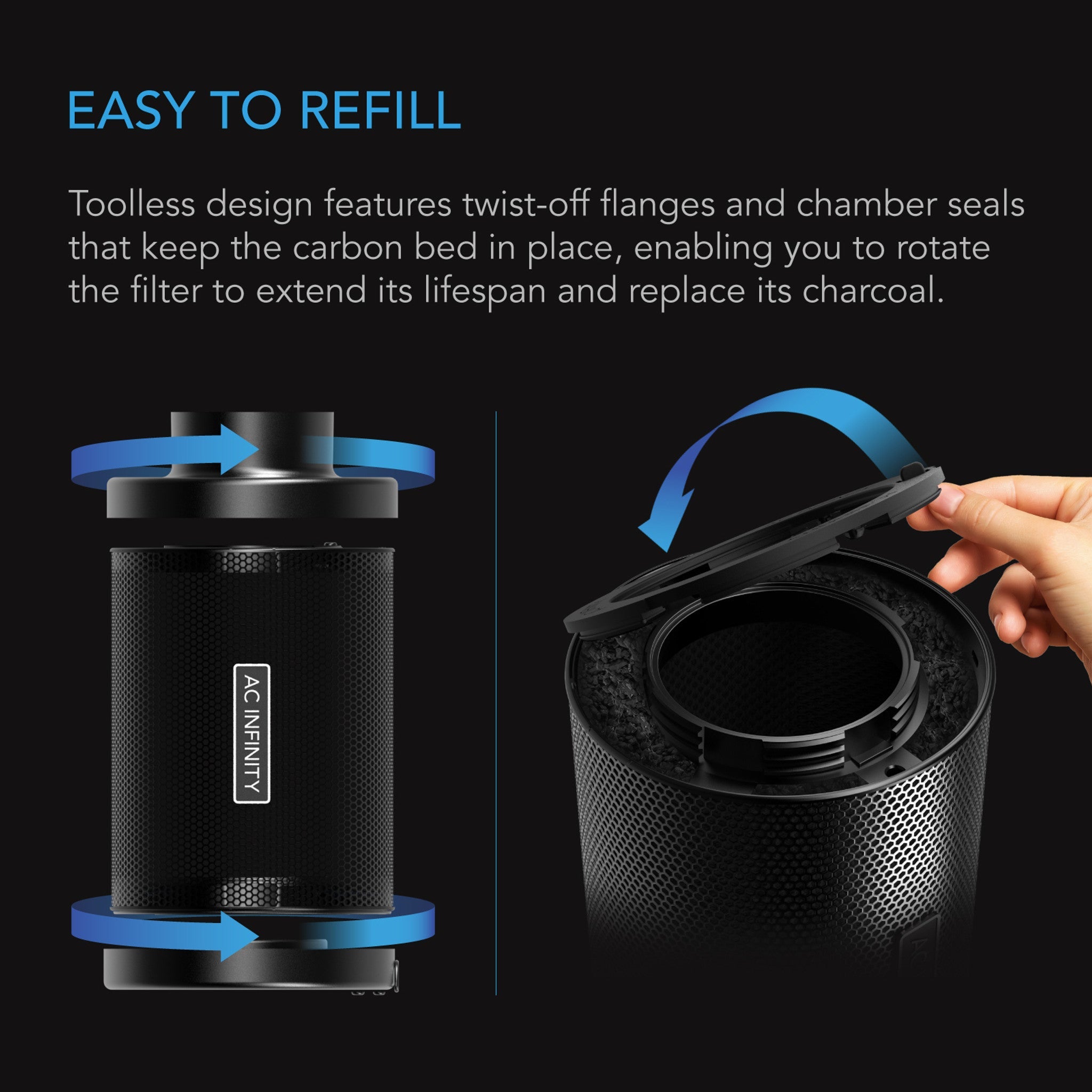
Every AC Infinity filter on this page unscrews at both ends. When odour starts getting through, take the filter down, remove the top and bottom flanges, turn the body around and reassemble it the other way up. The unused end of the carbon is now facing the airflow, and you get a substantial second stretch of service out of a filter you already own. It costs nothing but ten minutes, and almost no other filter on the market allows it — most are sealed at both ends and get binned with usable carbon still inside.
Duct Carbon Filter or Refillable Carbon Filter Kit?
Both use the same 1200+ IAV Australian charcoal in a 38 mm bed, and both reverse. The difference is what happens after that.
Duct Carbon Filter
Reversible, but the carbon bed is sealed — once both ends are spent, the filter is done. The simpler option, and the only one available in 250 mm and 300 mm, so it's what you'll fit on a T10 or T12.
100 mm · 150 mm · 200 mm · 250 mm · 300 mm
Refillable Carbon Filter Kit
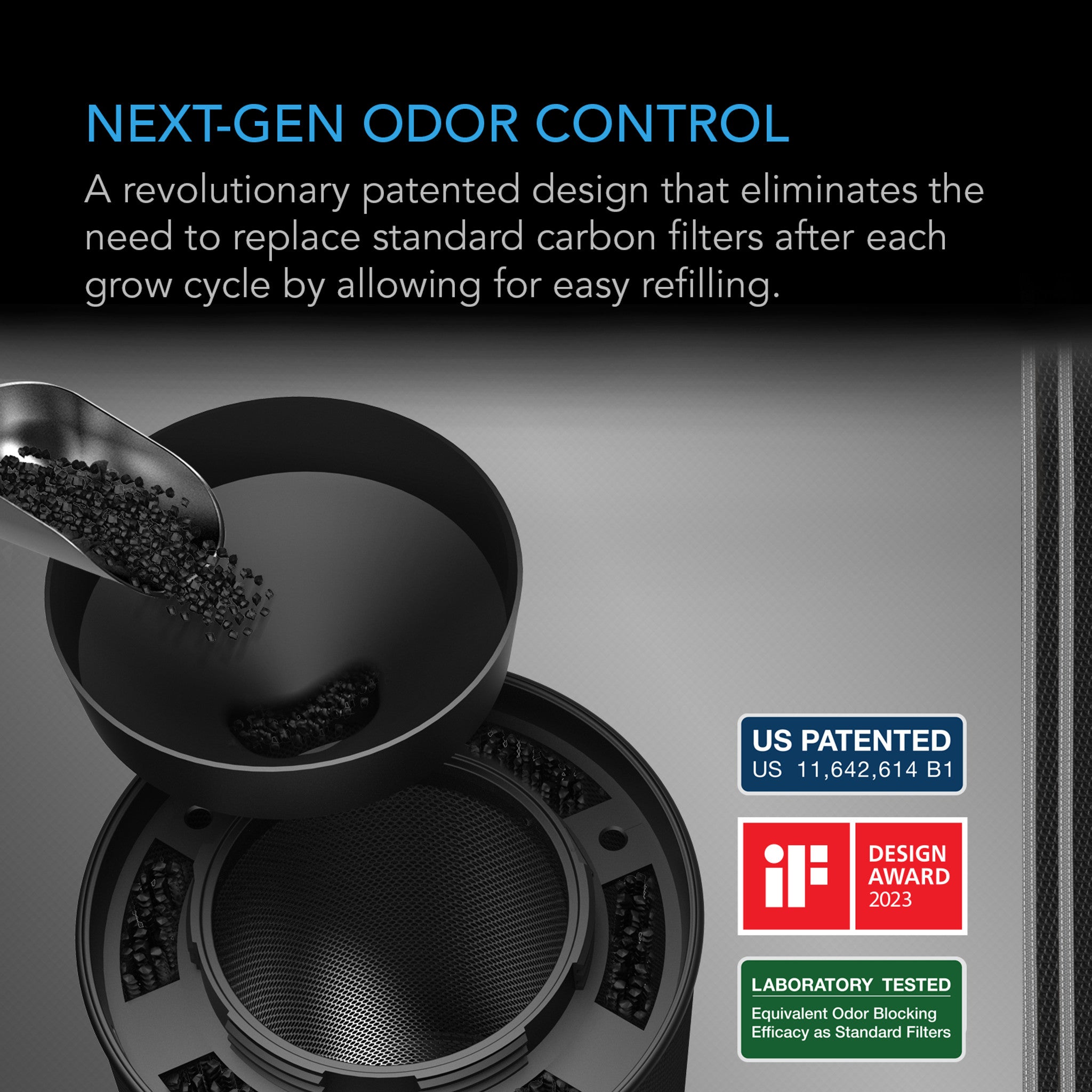
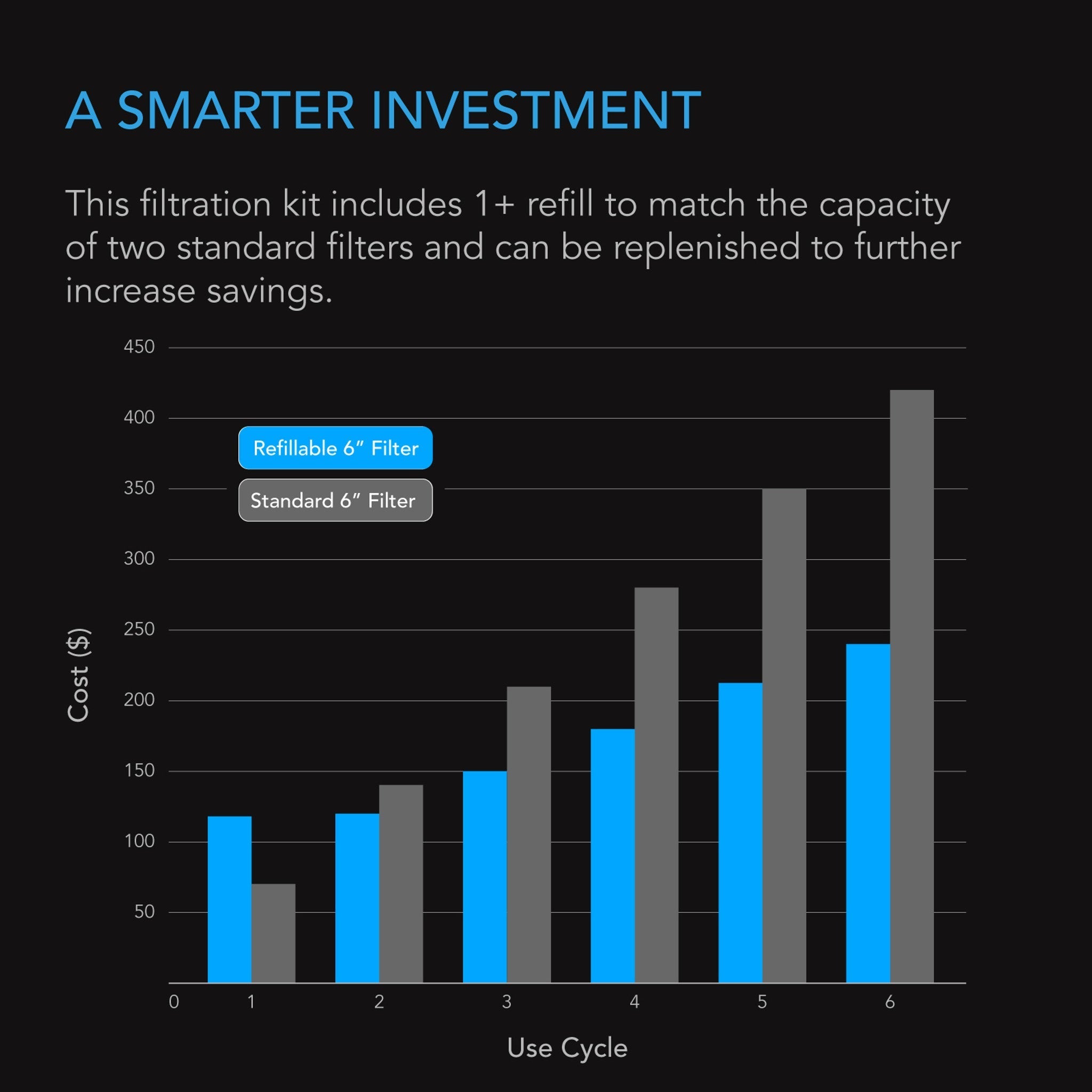
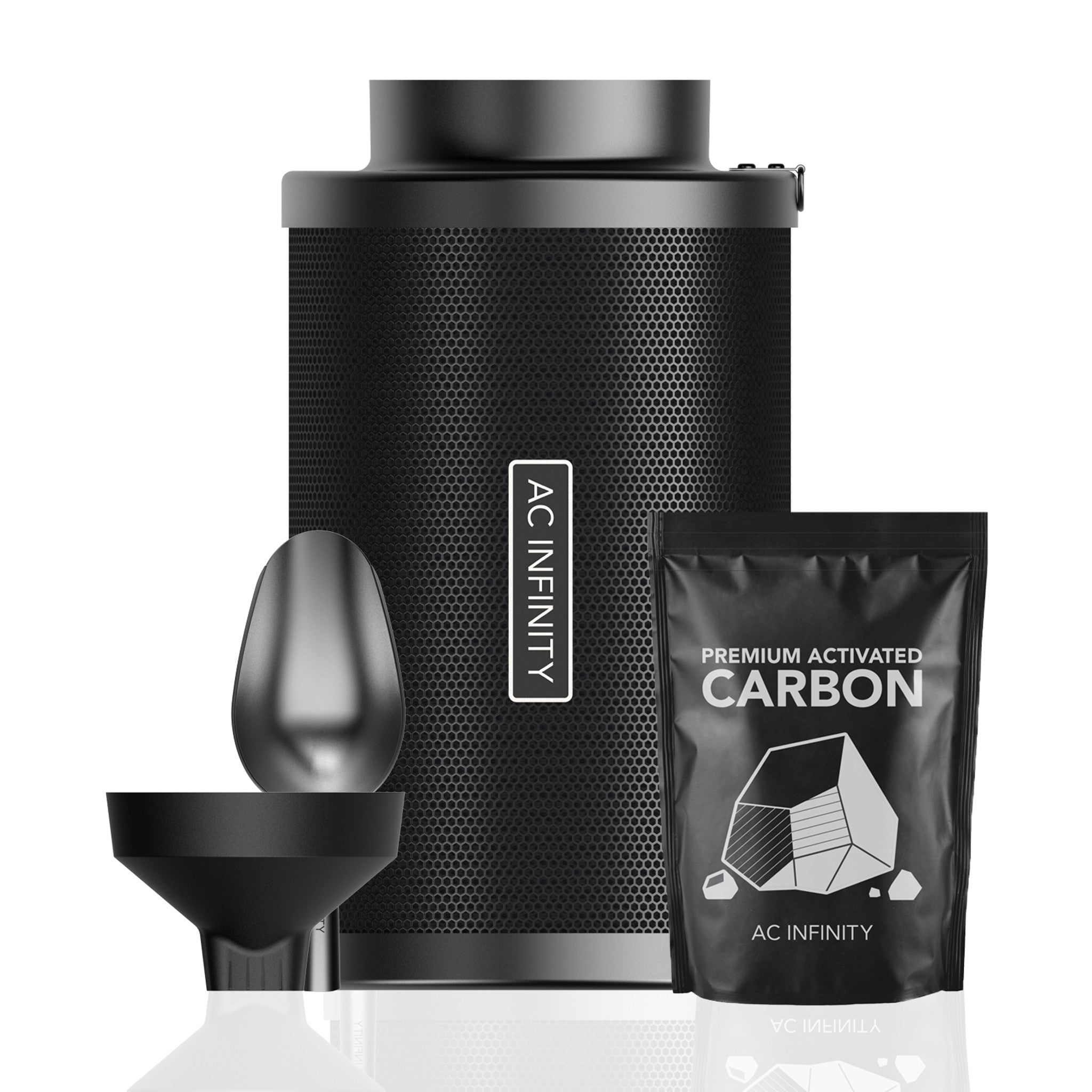
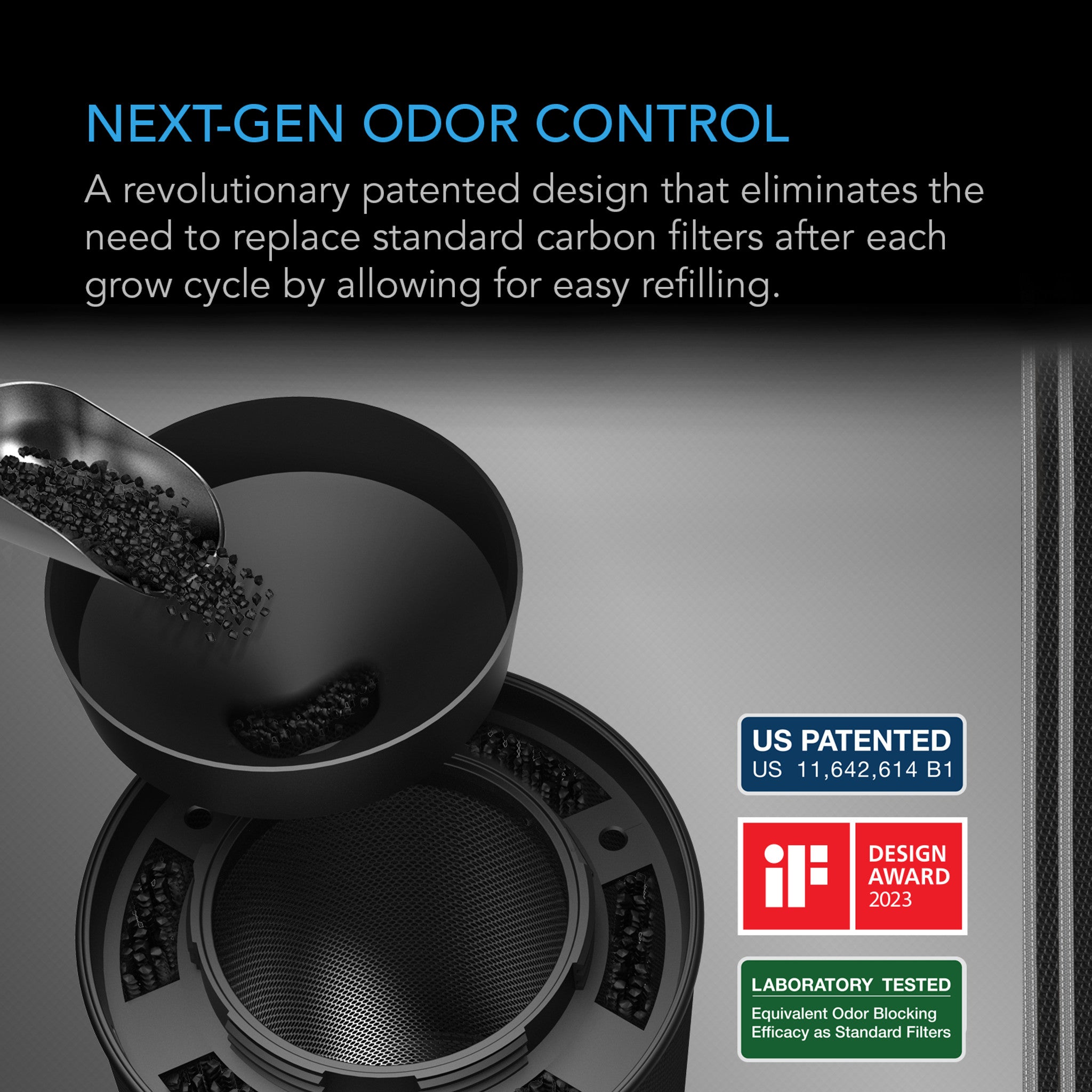
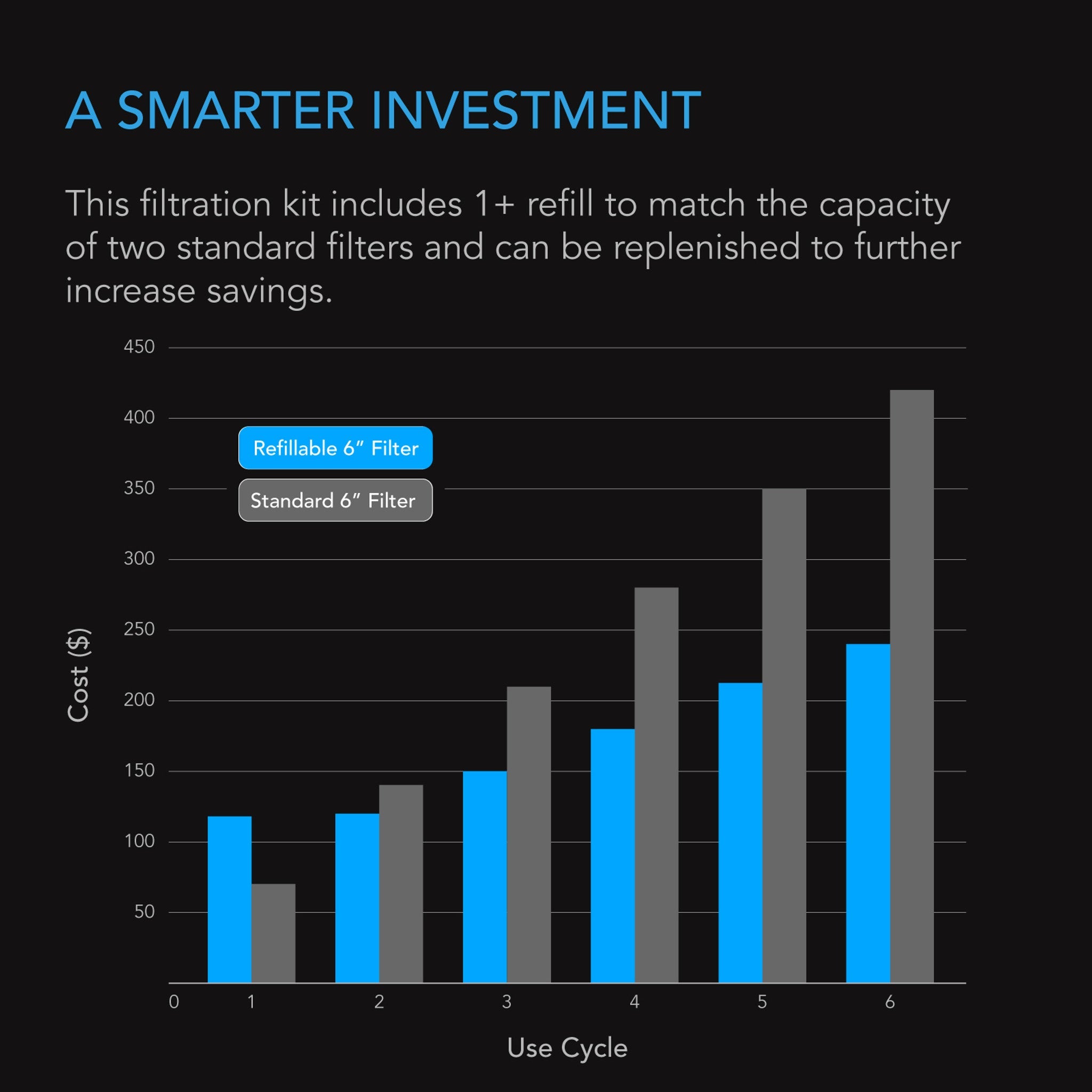
Reverses the same way, and opens up to be repacked. When the carbon is finally spent you tip it out and refill with fresh 1200+ IAV charcoal, keeping the housing, mesh, flanges and pre-filter. Bulk carbon costs considerably less than a new filter, so the running cost drops every cycle and the filter itself can stay in service for years. Available 100 mm, 150 mm and 200 mm.
100 mm · 150 mm · 200 mm
Straight answer: if your fan is 100, 150 or 200 mm, the refillable kit is the better long-term buy — it does everything the standard filter does and refills on top, so the only thing you ever buy again is
bulk charcoal (8, 16 and 32 lb bags). Choose the standard Duct Carbon Filter if you'd rather have the simpler unit, or if you're running a T10 or T12, where 250 mm and 300 mm are the only sizes made.
Don't run it before you need it
Here's advice that costs us a filter sale and saves you money: in early veg, leave the filter off.
Veg is when humidity is highest and odour is lowest — often barely any at all. Running a carbon filter through that stage is close to the worst thing you can do to it. The carbon spends weeks adsorbing water vapour instead of odour, its pores clog with moisture, and you burn through filter life scrubbing air that had nothing much in it to scrub.
Run the fan and ducting as normal for airflow, and fit the filter when you actually need it: when you first notice odour, or at the flip into flower once humidity comes down. A filter introduced at that point goes into service with its full capacity intact — and it will last considerably longer than one that has been hanging in a humid veg tent since day one.
Match the filter to your fan
Filter and fan should be the same diameter. Choking a larger fan into a smaller filter raises static pressure, drops real airflow well below the rated figure, and makes the fan louder rather than quieter.
| Filter size |
Pairs with |
Available as |
| 100 mm (4″) |
Cloudline S4 / T4 |
Standard & refillable |
| 150 mm (6″) |
Cloudline S6 / T6 |
Standard & refillable |
| 200 mm (8″) |
Cloudline S8 / T8 |
Standard & refillable |
| 250 mm (10″) |
Cloudline T10 |
Standard only |
| 300 mm (12″) |
Cloudline T12 |
Standard only |
Not sure what size fan you need in the first place? Use our exhaust fan size calculator.
FAQ
What's the difference between the Duct Carbon Filter and the Refillable Carbon Filter Kit?
Same carbon, same bed depth, and both reverse. The refillable kit adds one thing the standard filter can't do: it opens up so you can tip out the spent charcoal and repack it with fresh carbon, keeping the housing. That works out cheaper per cycle, because bulk carbon costs less than a whole new filter. The standard Duct Carbon Filter is the simpler unit and the only one available in 250 mm and 300 mm.
How long does a carbon filter last?
Around 12 months is the usual working figure, and in favourable conditions growers report 18 months or more. But that number is a guide, not a guarantee — filter life depends far more on your environment than on the calendar. What shortens it: running the fan hard around the clock, a heavy odour load, dusty air, and above all high humidity.
Carbon adsorbs water vapour as readily as it adsorbs odour. In a persistently humid room the charcoal takes on moisture, the pores clog, and the filter loses effectiveness long before its carbon is chemically spent. Keeping humidity under control doesn't just help your plants — it directly extends the life of the filter.
Should the filter be running during veg?
Usually not. Veg combines the highest humidity with the least odour, so the filter absorbs moisture rather than smell and ages for no benefit. Keep the fan and ducting running for airflow, and add the filter when odour appears or at the flip into flower once humidity drops.
How do I know when it needs attention?
Odour is the signal. When smell starts escaping a room that previously contained it, the intake end of the carbon has loaded up — reverse the filter and run the fresh end. When odour returns after that, the bed is genuinely spent: on a refillable kit, repack it; on a standard filter, it's time for a new one.
Do I need to do anything to maintain it?
Wash the pre-filter cloth. It catches dust before it reaches the carbon, and a clogged pre-filter chokes airflow and shortens filter life. It's machine washable — wash and fully dry it every month or two depending on how dusty your space is. Never wash the carbon filter itself: water is the one thing guaranteed to ruin it.
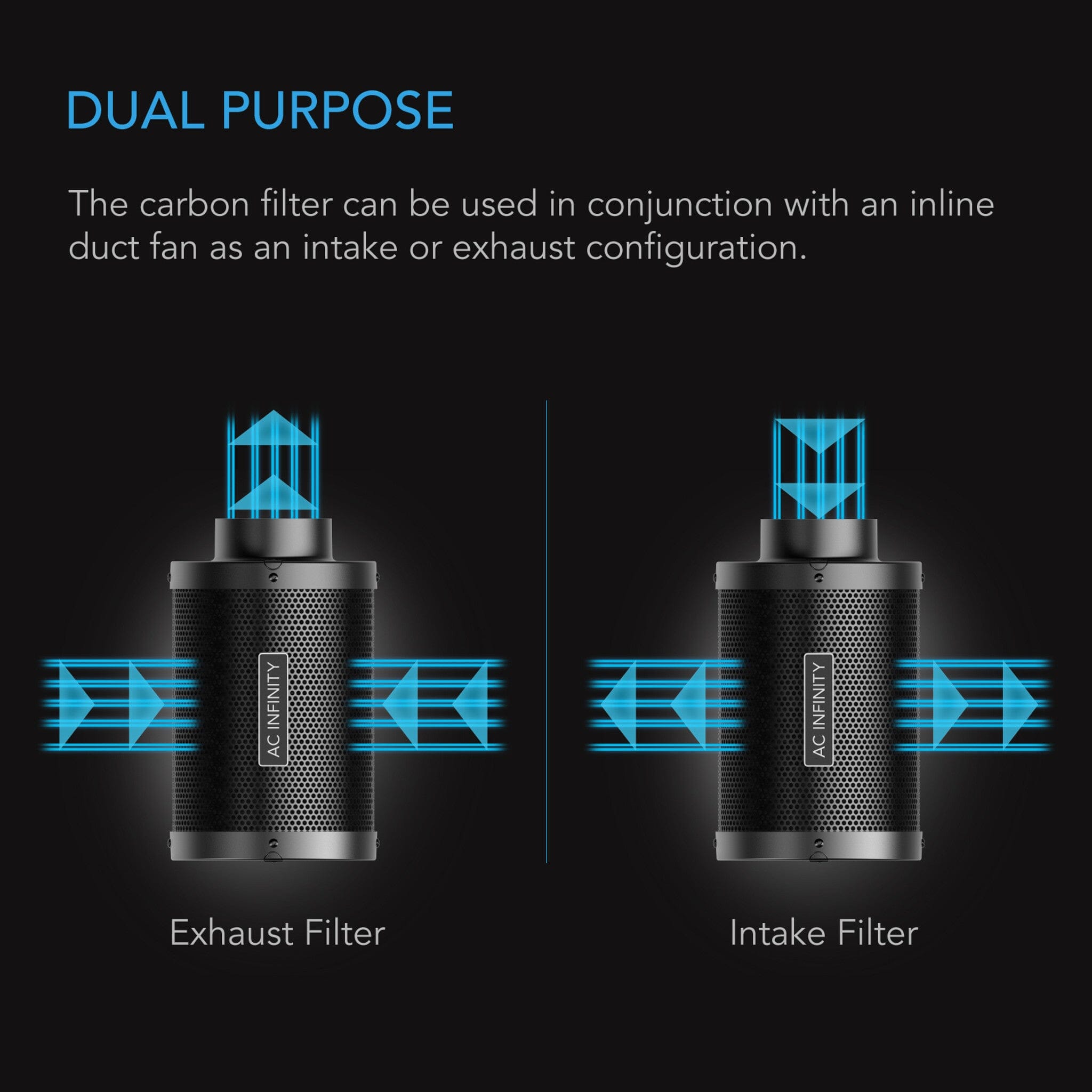
Should the filter go on the intake or exhaust side?
Exhaust, for odour control — the fan pulls air through the filter and out, scrubbing everything leaving the room. Filters can be run on the intake side to clean incoming air, but that's about dust and pollen, not smell.
What does 1200+ IAV mean, and does it matter?
IAV is the iodine adsorption value — a measure of how much odour the carbon can hold. Higher means more capacity per kilo and a longer service life. Cheap filters often use low-IAV carbon or a thin bed, which is why they seem fine for a month and then stop working. The combination here is 1200+ IAV carbon in a 38 mm bed.
Is this genuine AC Infinity stock with Australian warranty?
Yes. Quick Bloom Lights is the official Australian importer and distributor for AC Infinity. Stock is held in Sydney, orders ship domestically, and warranty is handled here rather than through an overseas seller.