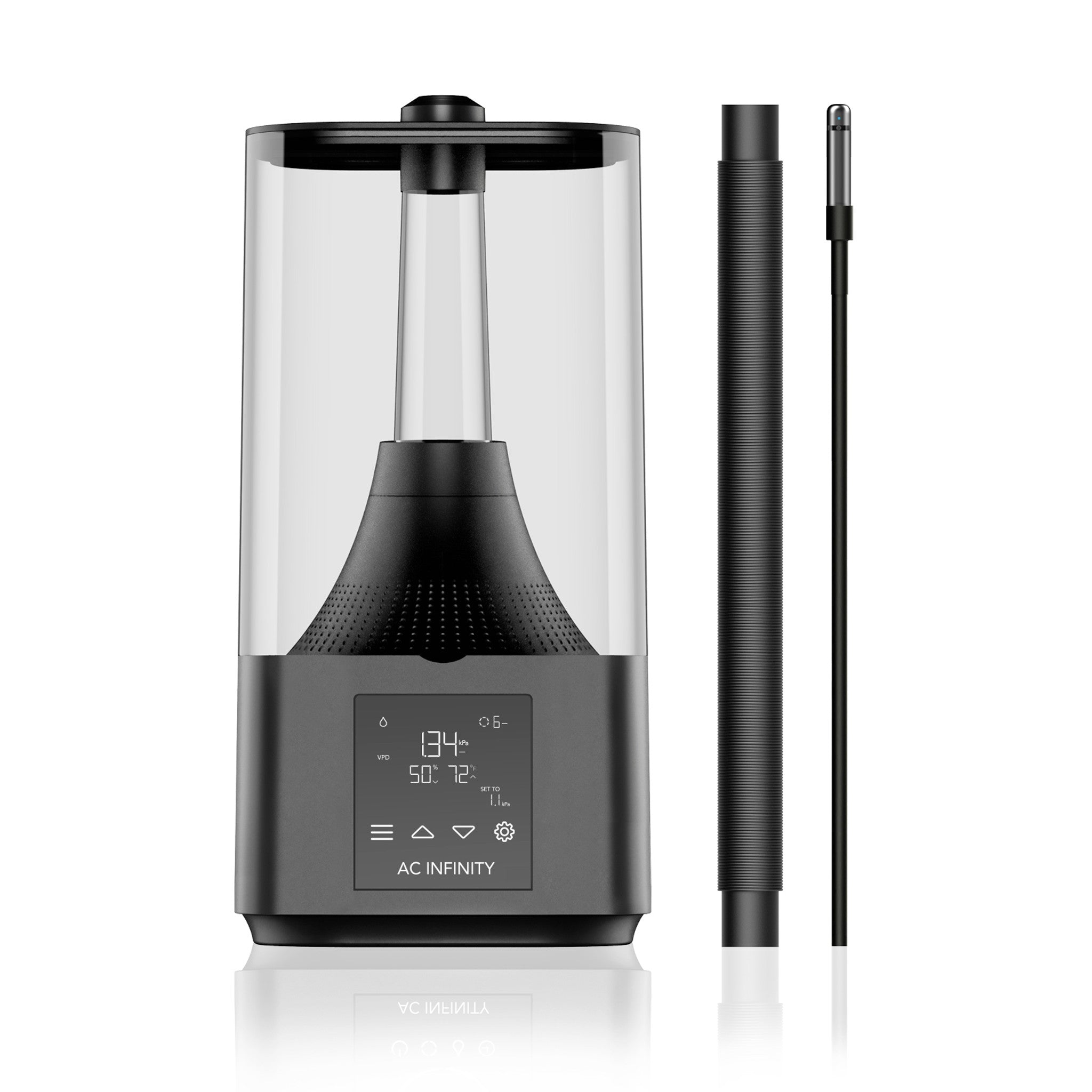
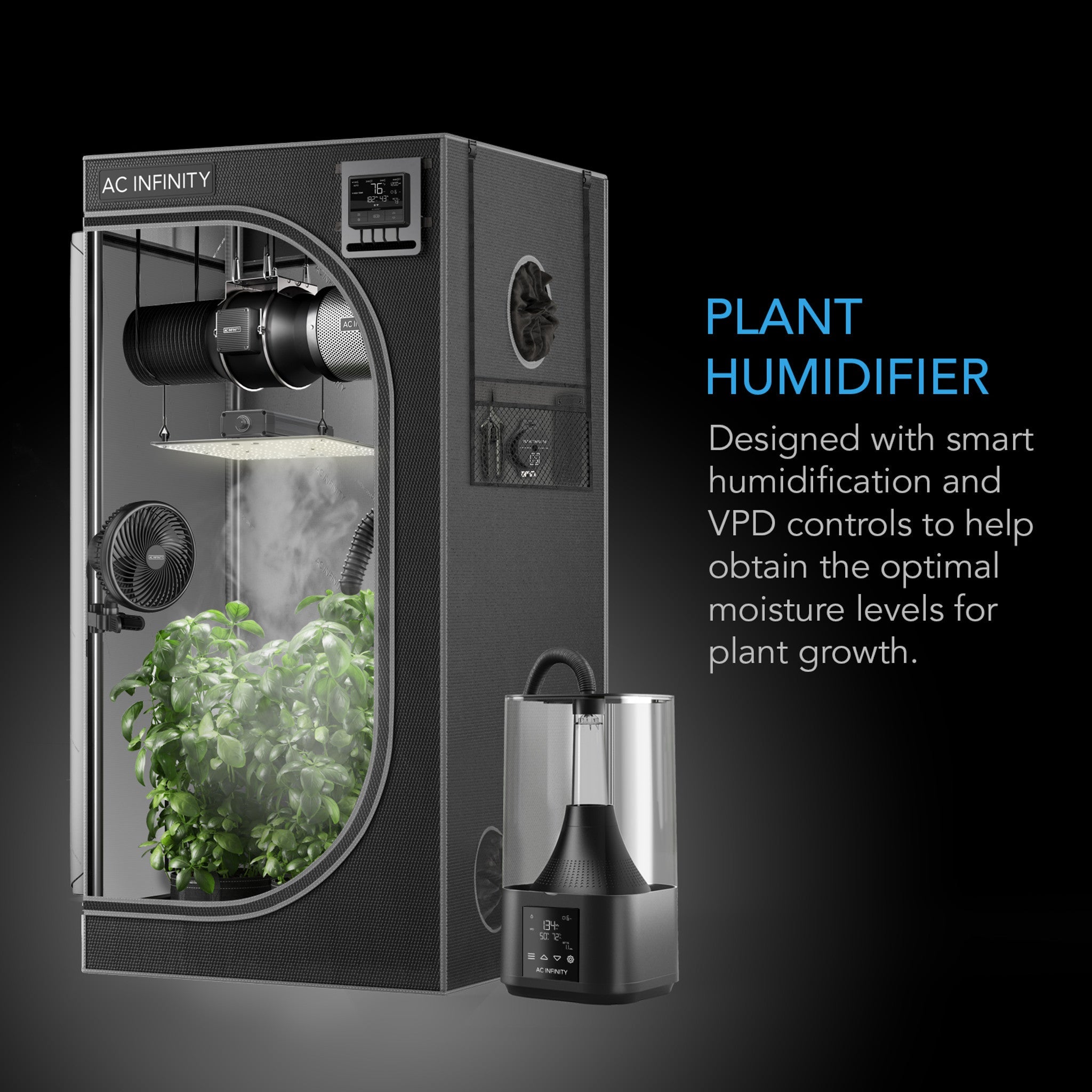
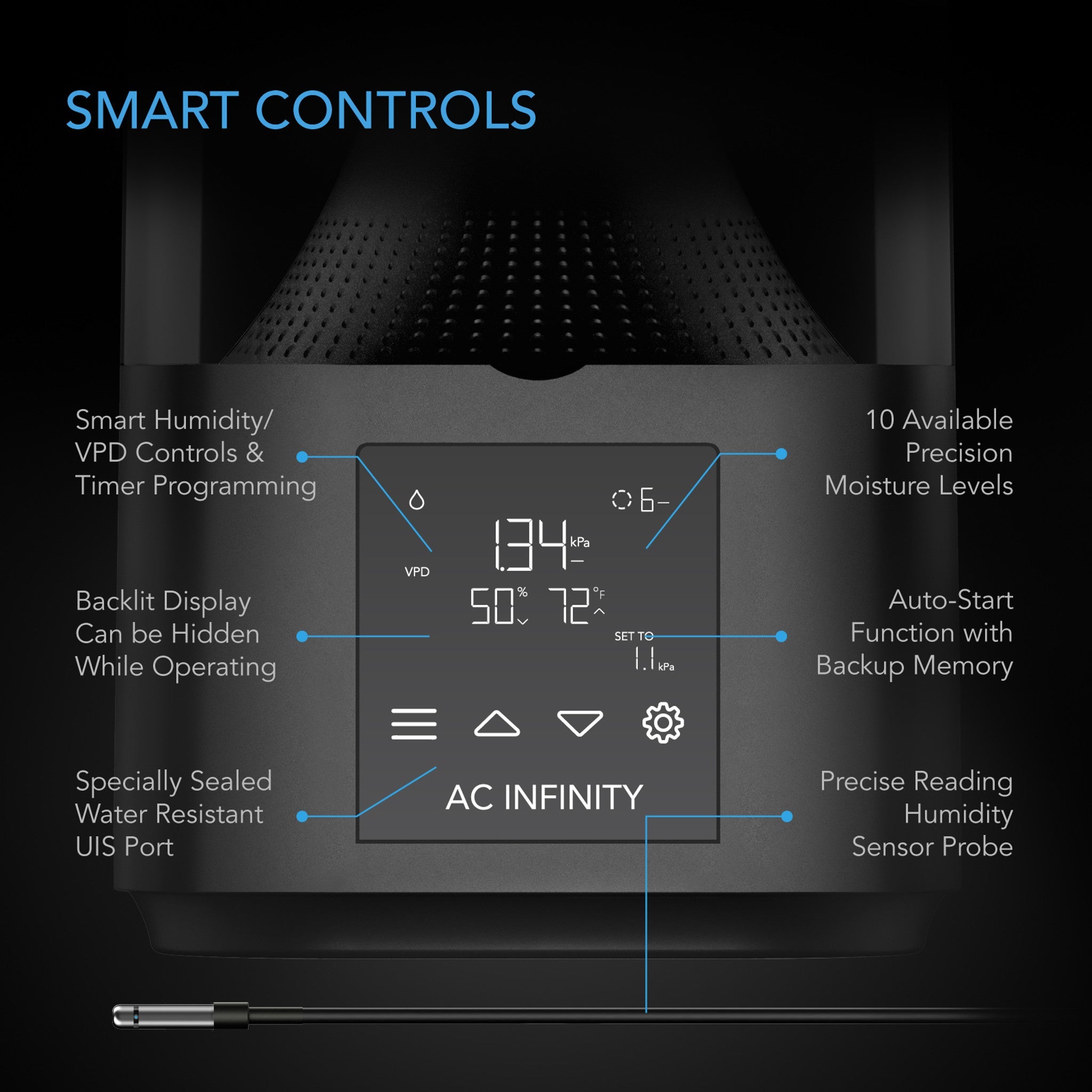
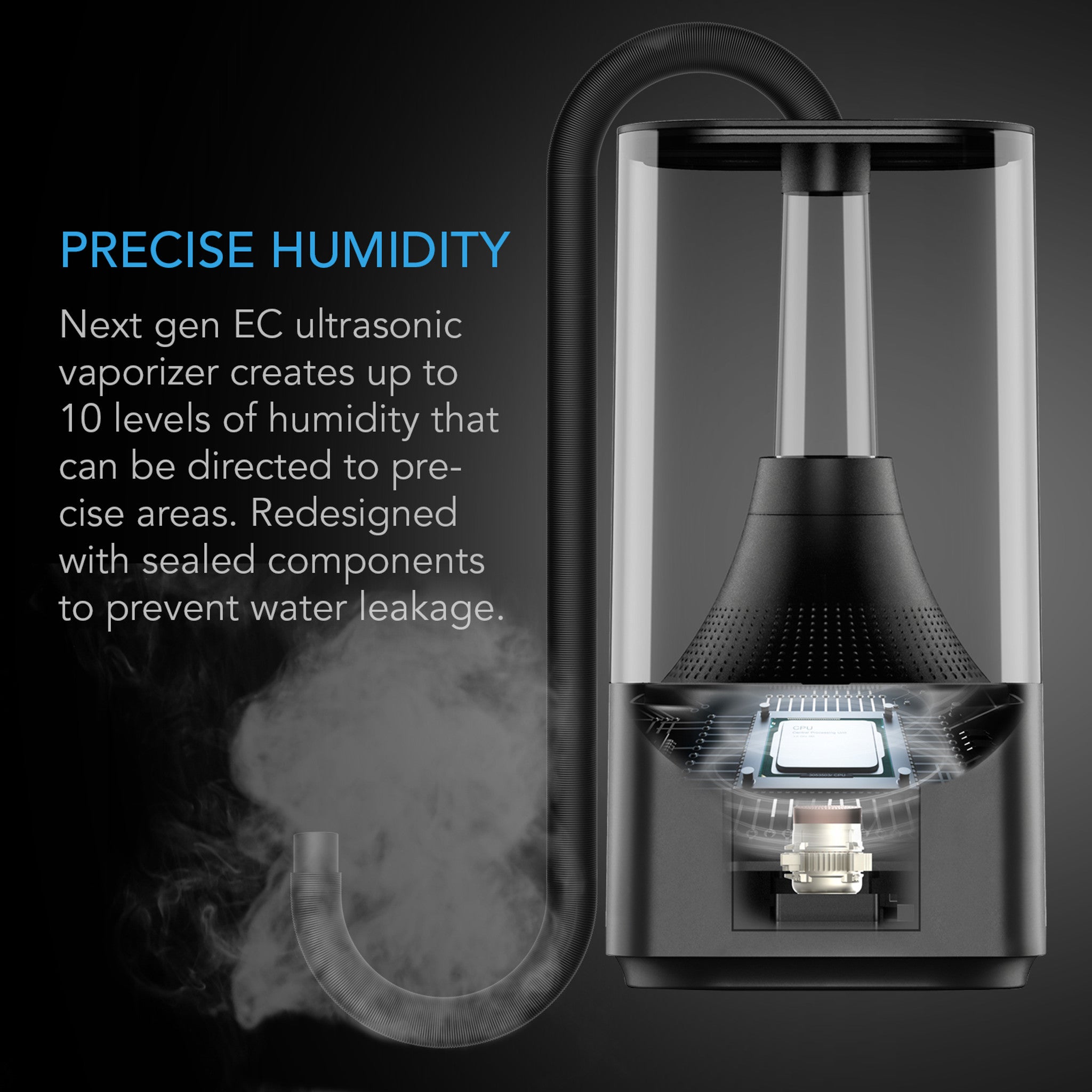
Adding humidity is the easy half. Holding it steady is the part that matters, and it's where a plant humidifier differs from a household one. The Cloudforge series uses an EC ultrasonic vaporiser with 10 output levels and a corded humidity sensor, so instead of running flat out until the tank empties it holds a target you set — by humidity, or by VPD. Quick Bloom Lights is the official Australian AC Infinity importer: stocked in Sydney, Australian plug fitted, 2-year warranty handled here.
240 / 1,300
ml per hour — T3 and T7
10 levels
PWM output, not on/off
VPD control
triggers on humidity or VPD
Cold mist
no warm-up, no heat added
T3 or T7?
Same technology, same controls. The difference is output — and output, not tank size, is what decides which one suits your space.
|
Cloudforge T3 |
Cloudforge T7 |
| Output |
~240 ml/h |
~1,300 ml/h |
| Tank |
4.5 L |
15 L |
| Max runtime |
45 hours |
30 hours |
| Noise / power |
38 dBA / 24 W |
46 dBA / 100 W |
| Distribution |
Extendable tube, reaches over 1.2 m |
Elbow and five-way nozzles included |
| Suits |
Smaller tents and cupboards |
Larger tents and full rooms |
| Shared |
EC ultrasonic vaporiser, 10-level PWM, corded humidity sensor, hidable display, auto-shutoff when empty, UIS™ compatible |
Worth knowing: the T7's bigger tank doesn't mean fewer refills at full tilt — it runs 30 hours to the T3's 45, because it produces over five times the moisture. The tank is there to feed a much larger vaporiser. What that buys is the ability to actually lift and hold humidity in a big room, where a smaller unit would run continuously and still fall short. If your space is large, size up on output; a bigger humidifier throttled back holds a target far better than a small one at maximum.
Why humidity, and why VPD
Plants transpire through their leaves, and how readily they do it depends on the difference between the moisture in the leaf and the moisture in the air around it. That difference is vapour pressure deficit — VPD. Air that's too dry pulls moisture out faster than the roots can replace it, so the plant closes its stomata and growth stalls. Air that's too wet slows transpiration and nutrient uptake with it, and invites mould.
Humidity alone doesn't tell you which of those you're in, because VPD depends on temperature as well. The same 60% RH means something quite different at 20°C than at 30°C. That's why these units can trigger on VPD rather than humidity — it's the number that actually reflects what the plant experiences.
Broadly, young plants and early growth want higher humidity and a lower VPD; as plants mature the target moves the other way. A humidifier's job is to hold whichever end you're aiming for without you watching it.
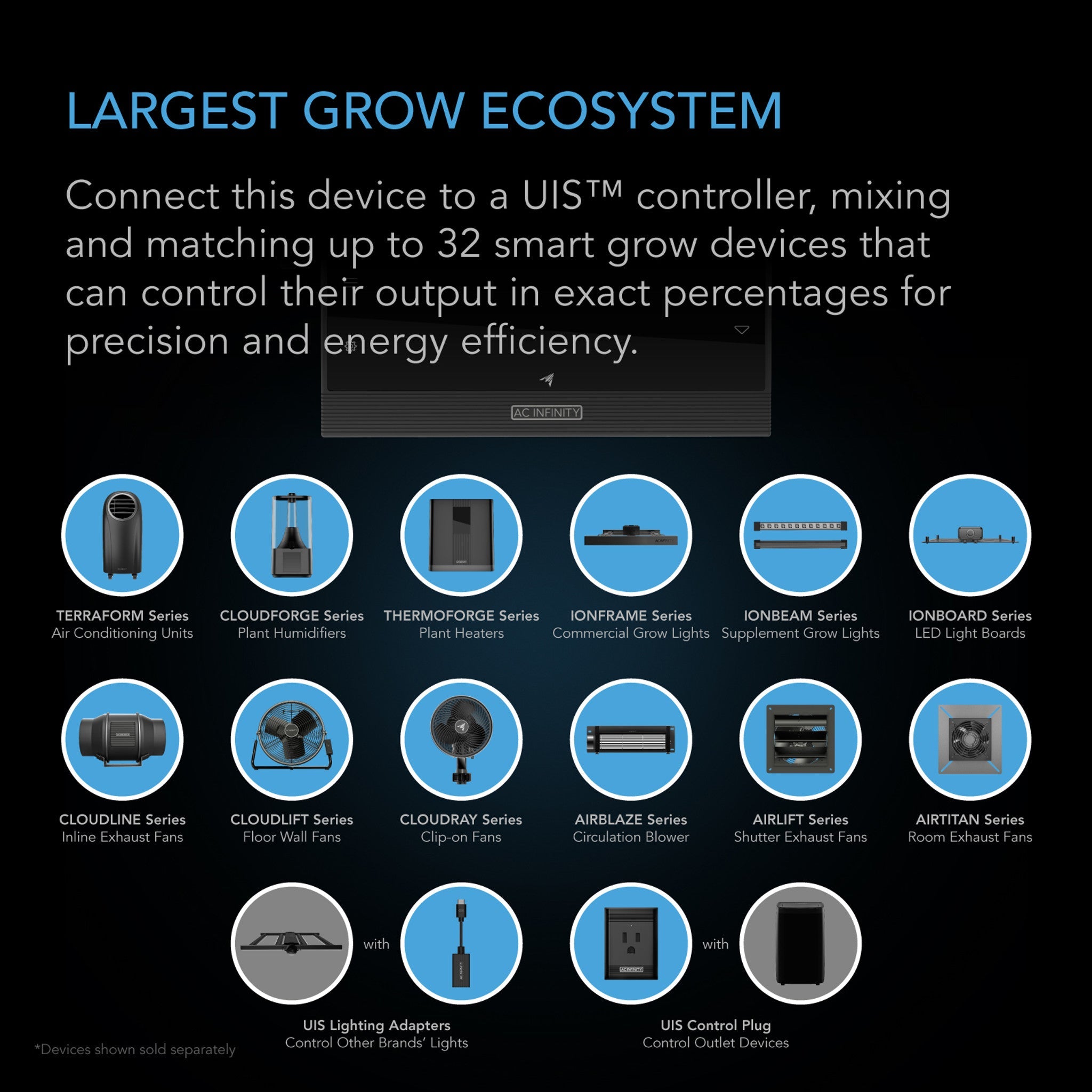
Standalone or controlled? Both units have an onboard controller with humidity and VPD triggers and their own sensor probe, so they work perfectly well on their own. They're also part of the
AC Infinity UIS™ ecosystem, so connecting one to a UIS controller brings it under the same programming as your other devices — the humidifier, extraction fan and heater all working to one target rather than against each other. That's the point at which a grow space starts managing itself.
FAQ
Can I just use a household humidifier?
You can add moisture with one, but you can't hold a target. A household unit runs to its own internal setting with no VPD awareness, no external sensor probe, and no way to coordinate with your extraction. In a space where a fan is actively pulling humid air out, that turns into a tank you're refilling constantly while the humidity still swings. The closed-loop control is the actual product here, not the mist.
Tap water or distilled?
Distilled is recommended. Ultrasonic humidifiers atomise whatever is in the water, so mineral content in tap water ends up as fine white dust on leaves and surfaces, and as scale inside the unit. Distilled or RO water avoids both and keeps the vaporiser working properly for longer.
Does it need to sit inside the tent?
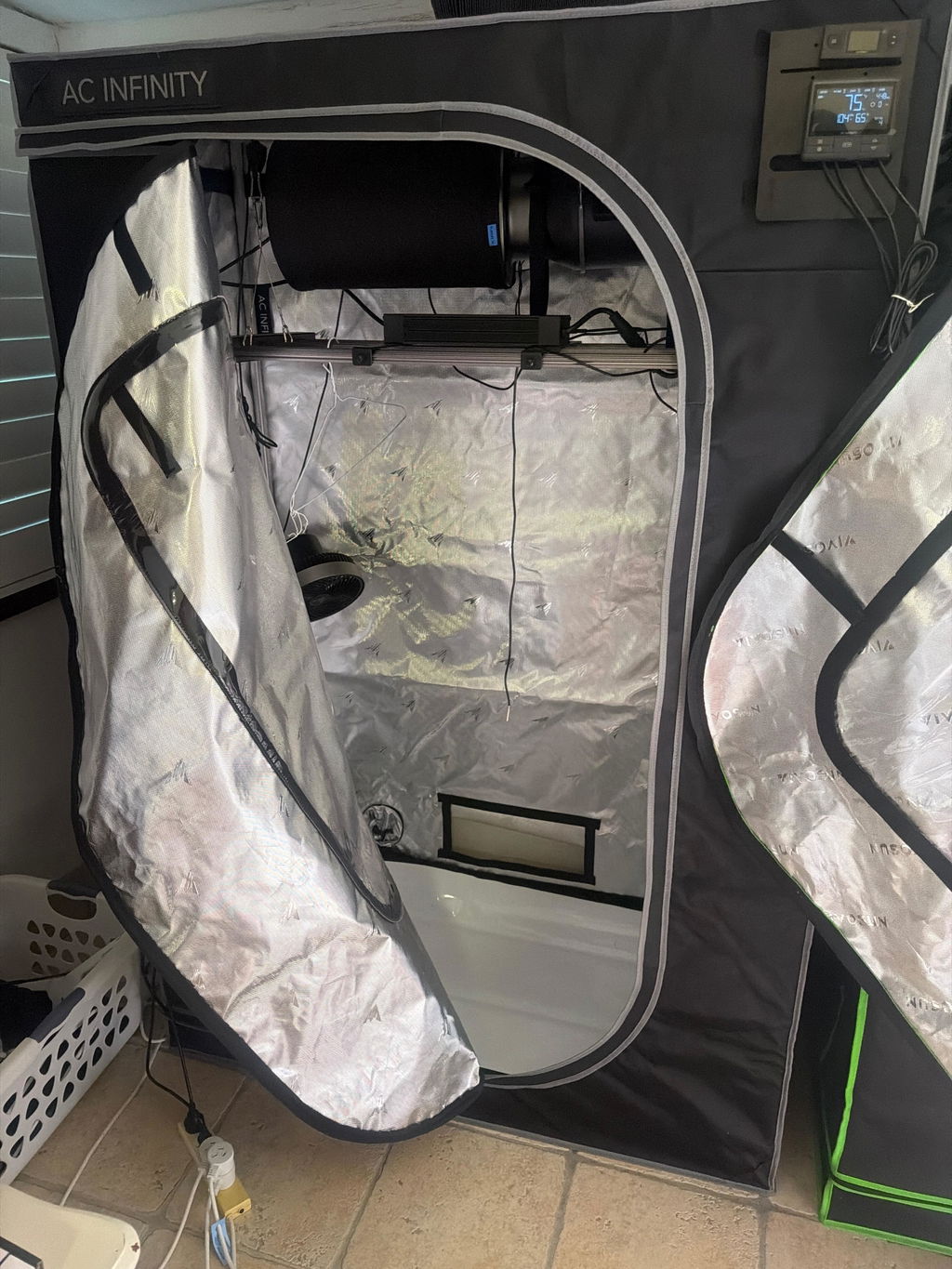
No, and often it shouldn't. The sensor probe is corded, so the unit can sit outside with only the hose or nozzle feeding in — which keeps the tank accessible for refilling and keeps the footprint out of your grow space. The T3 in particular is designed to be used this way.
Where should the mist go?
Into moving air, not straight at the plants. Aim the outlet into the path of a circulation fan so the moisture disperses through the space rather than settling as droplets on leaves. Wet leaves are a mould risk; humid air isn't.
Will it fight my extraction fan?
If they're both running blind, yes — you'll humidify air that's immediately pulled out. That's exactly what running both on the same UIS controller solves: the fan eases back when humidity is being added and the humidifier stops when extraction is running hard. Standalone, set the humidifier's minimum level thoughtfully and don't over-extract.
What happens when the tank runs dry?
Both models shut off automatically when the reservoir empties, so there's no risk of running the vaporiser dry.
What about the Automatic Water Sprayer in this collection?
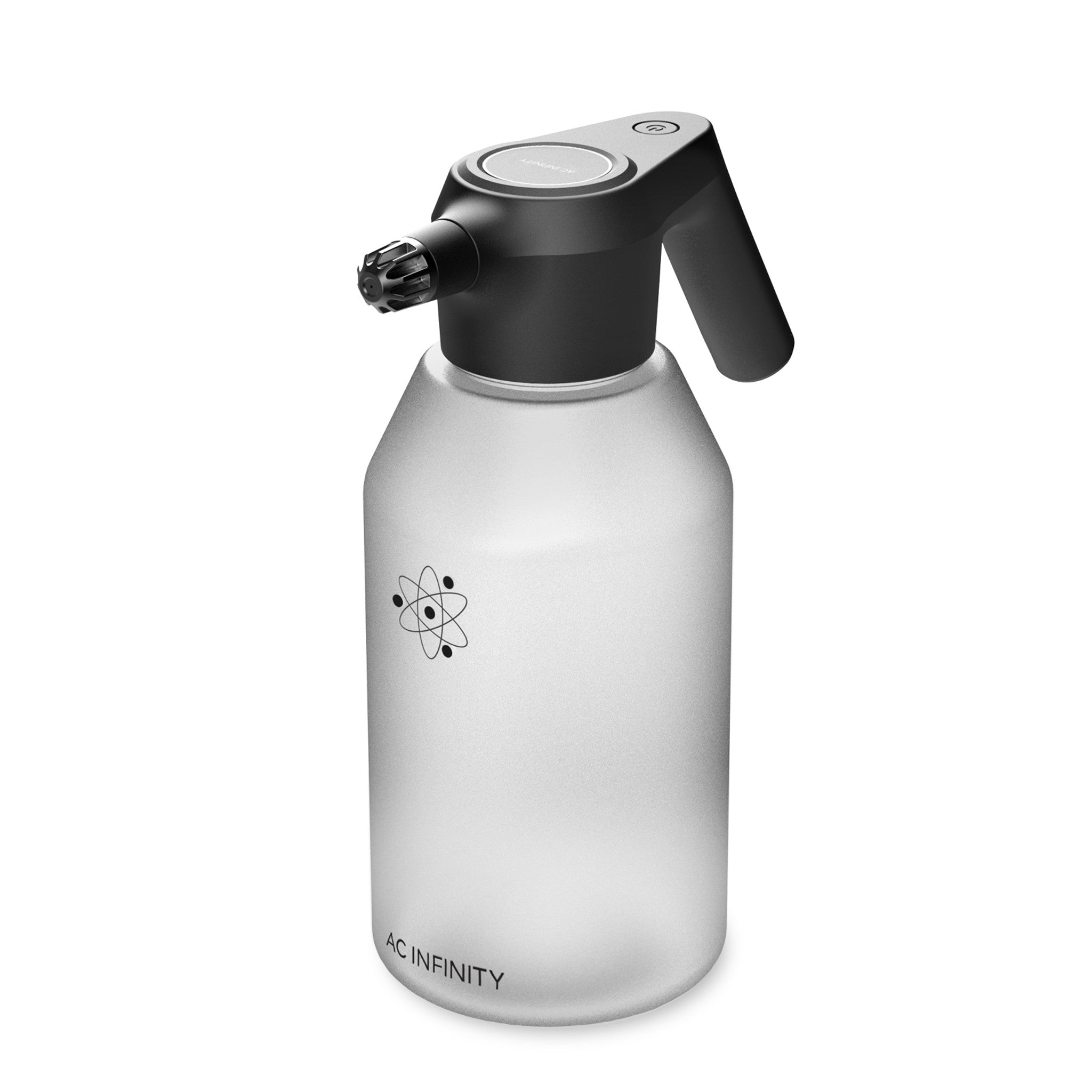
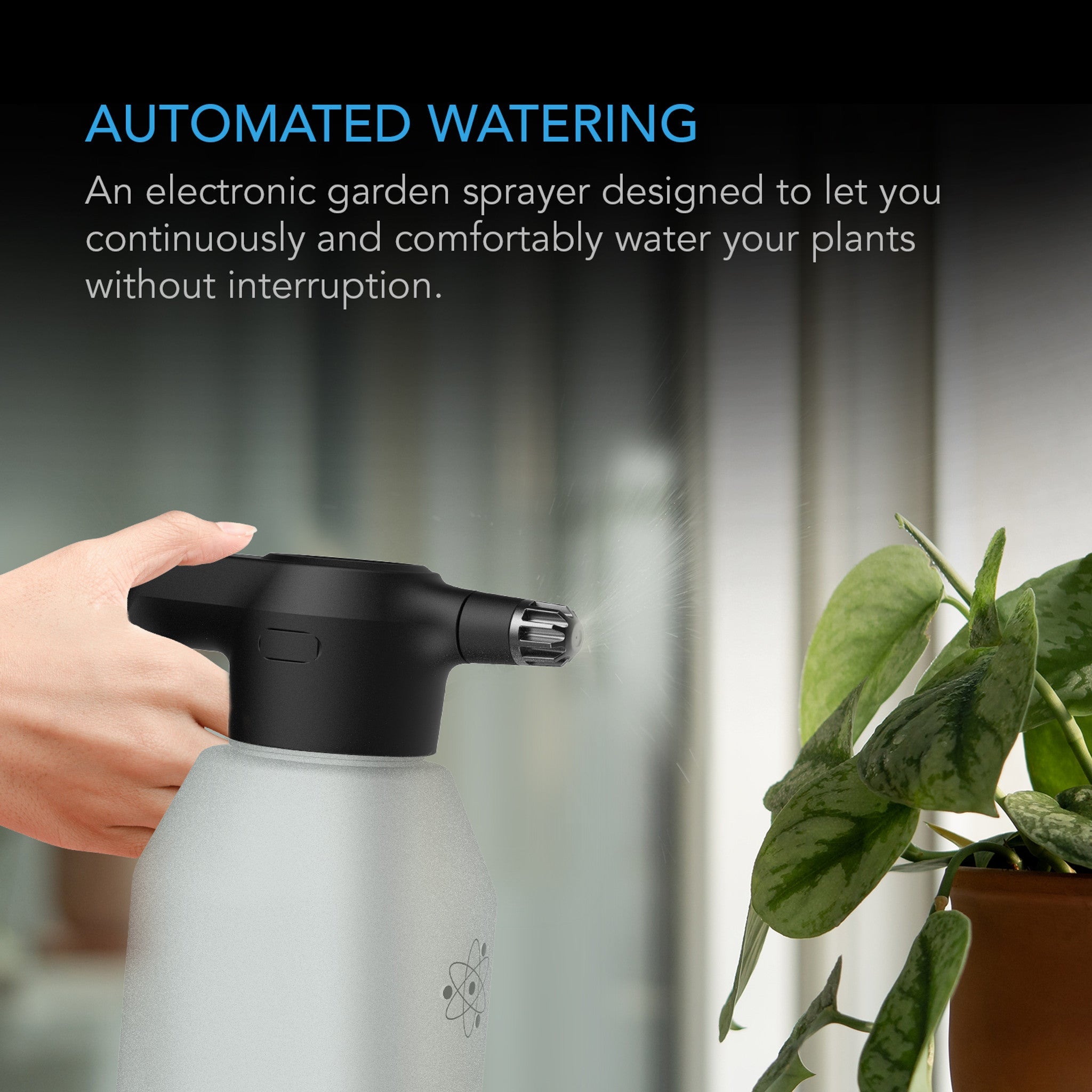
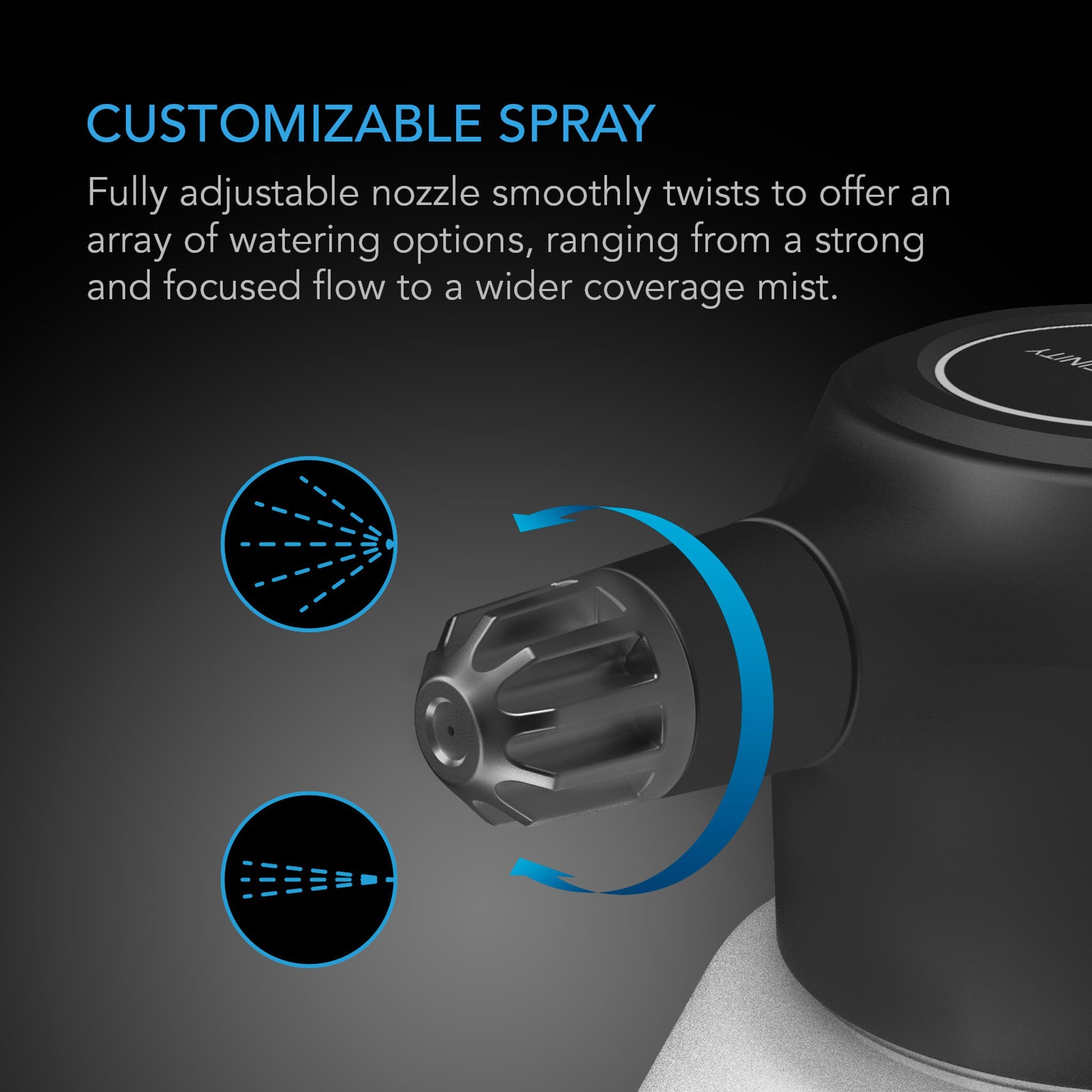
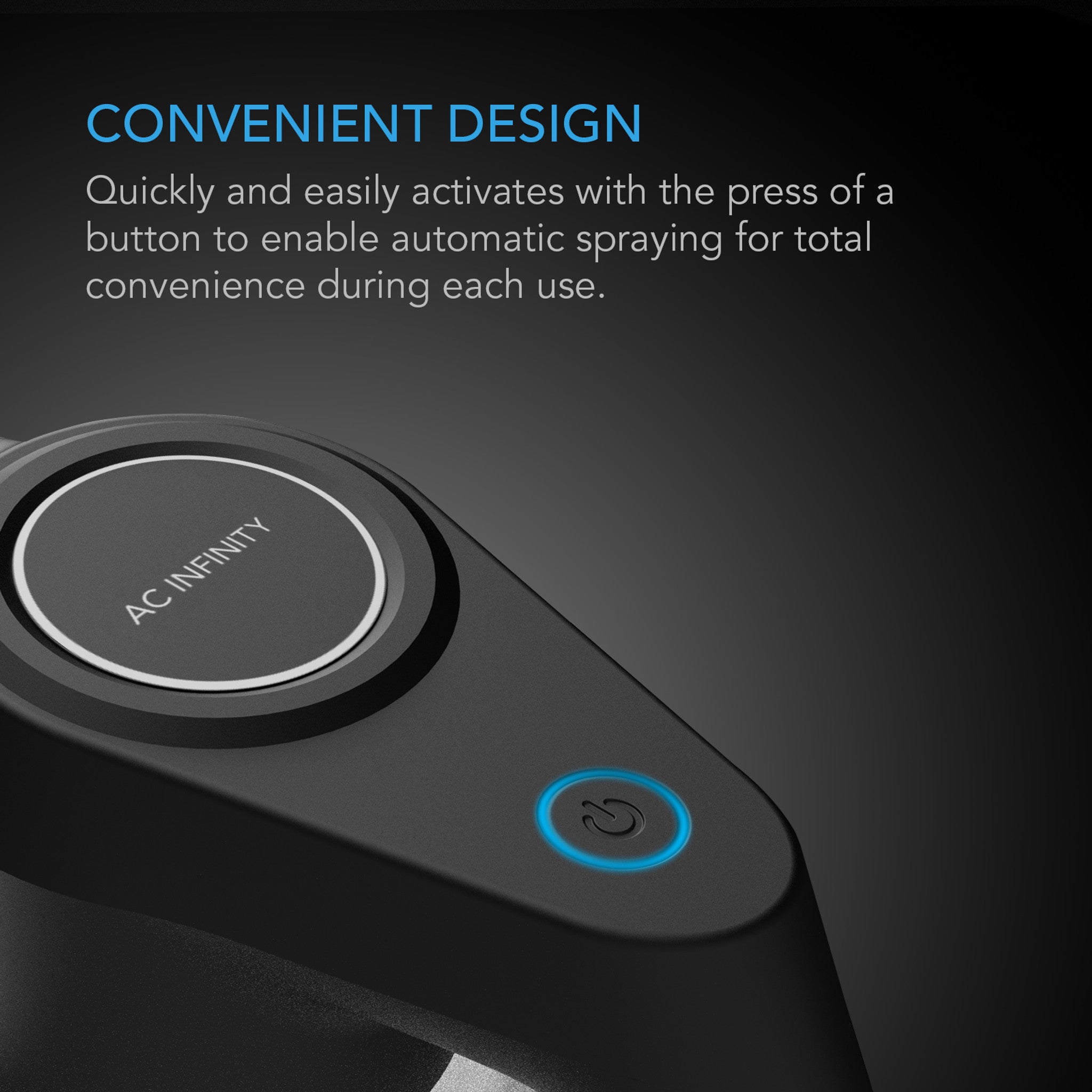
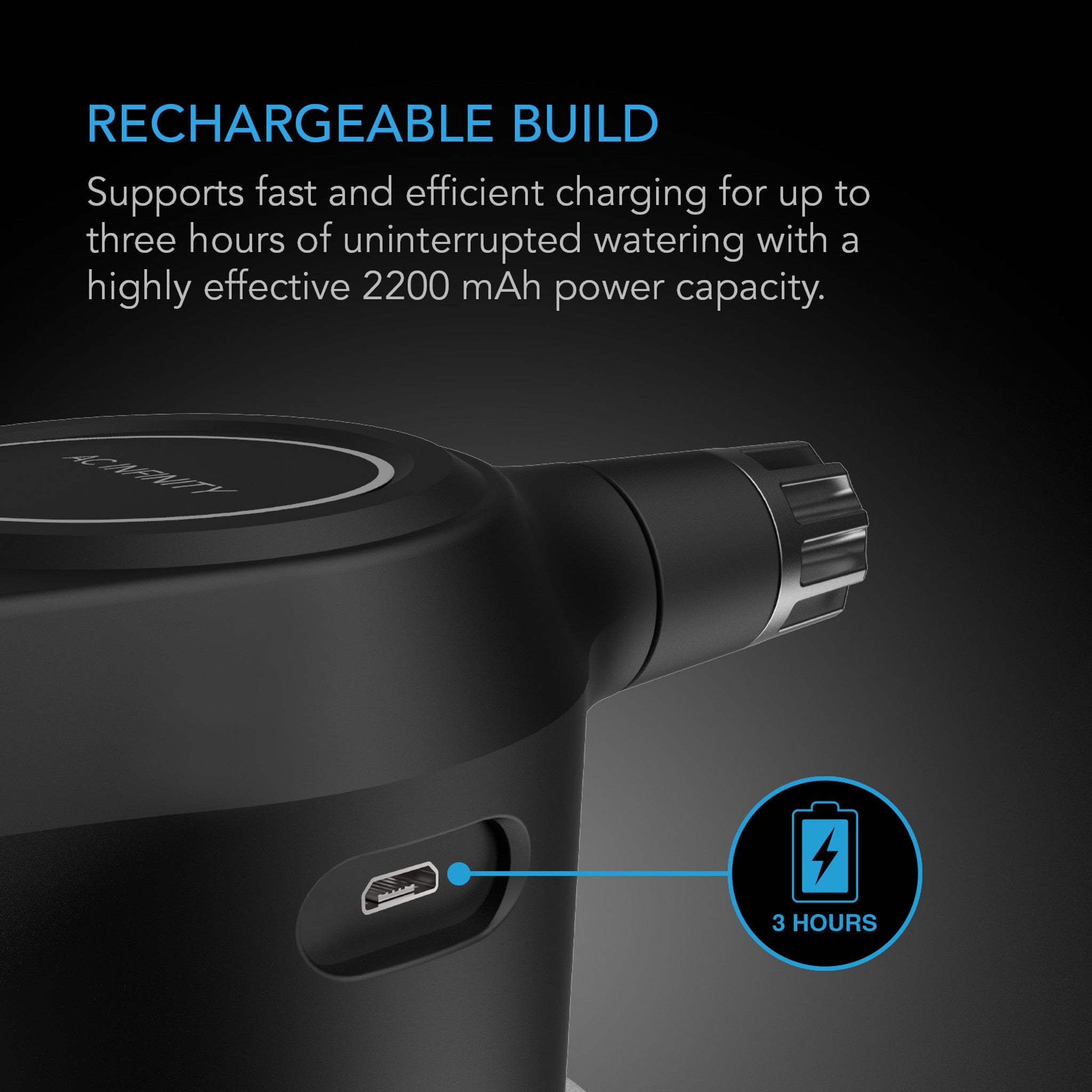
Different job. The sprayer is a 2-litre electric mister for applying water or foliar solutions directly to plants, not for raising ambient humidity. It's here because it's the other water-handling device in the range — but if you're trying to hold a humidity or VPD target, you want a Cloudforge.
Is this genuine AC Infinity stock with Australian warranty?
Yes. Quick Bloom Lights is the official Australian importer and distributor for AC Infinity. Every unit ships with a fitted Australian plug and a 2-year warranty handled here in Sydney — no sending units overseas, no dealing with an offshore seller if something goes wrong.